Active Recall vs Passive Review
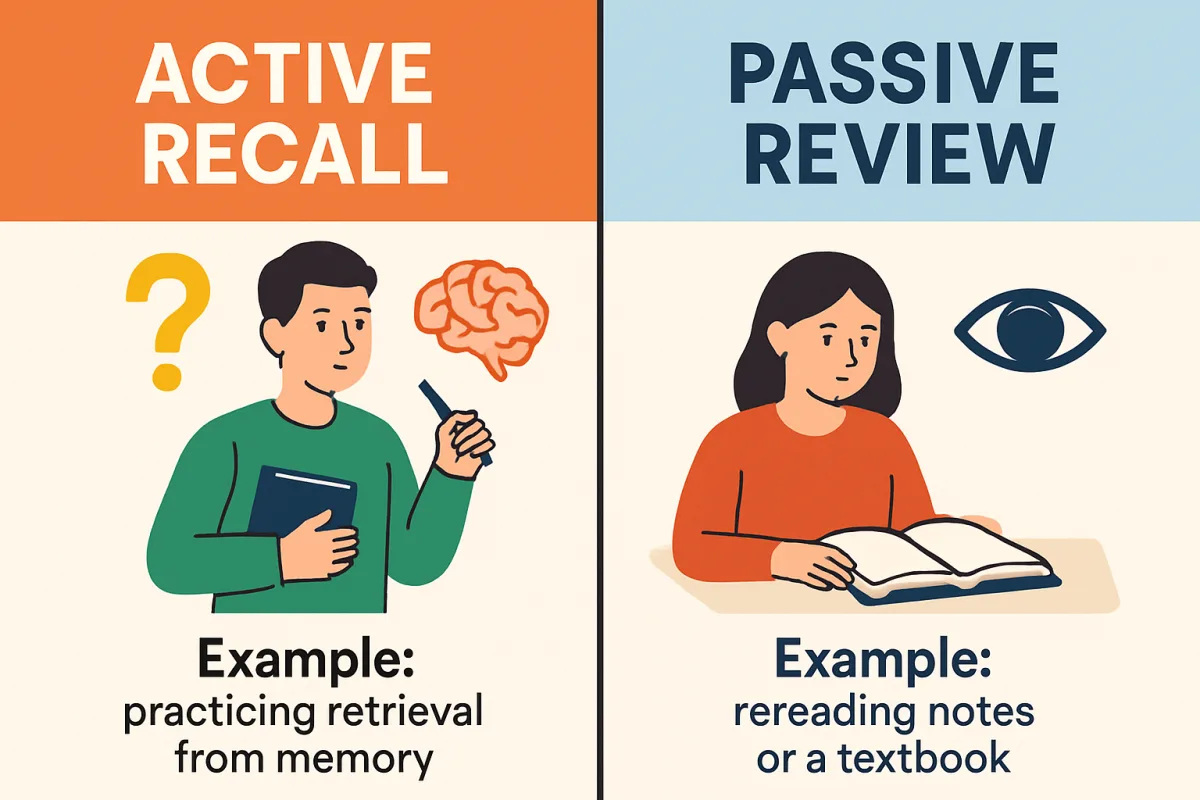
Active Recall and Passive Review are two distinct study techniques. Active Recall involves actively retrieving information from memory, which enhances retention and understanding. In contrast, Passive Review focuses on re-reading or reviewing material without active engagement. Research shows that Active Recall is generally more effective for long-term retention, while Passive Review may be easier but less effective. Choosing between them depends on your learning goals and preferences.
Quick Summary
Active Recall is a technique that promotes better retention through active engagement, while Passive Review relies on re-reading materials. Active Recall is often more effective for long-term memory, making it a preferred choice for serious learners. Understanding the differences can help you choose the best method for your study needs.
Curator Notes
Active Recall is a study method that emphasizes retrieving information from memory rather than passively reviewing it. This technique can involve using flashcards, practice tests, or self-quizzing. Studies have shown that this method significantly enhances retention and understanding of the material, making it particularly useful for subjects that require deep comprehension and long-term memory retention.
On the other hand, Passive Review involves simply re-reading notes or textbooks. While this method may seem easier and less time-consuming, it often leads to superficial understanding and poor retention. Passive Review can be beneficial for initial exposure to the material or for quick refreshers but is generally less effective for mastering complex concepts.
Ultimately, the choice between Active Recall and Passive Review should depend on your learning objectives. If your goal is to deeply understand and retain information, Active Recall is the superior choice. However, if you're looking for a quick review or are just starting to learn a topic, Passive Review may serve its purpose.
Combining both methods can also be an effective strategy, allowing for initial exposure followed by deeper engagement.
Best Sources
Videos and Community Signals
Hi friends, welcome to my channel. In this video I will go through Active Recall vs Passive Review as methods of revision.
Active Recall vs Passive Review About This Video: Active Recall vs Passive Review - This is part 5 of 5 in our What is Active ...
Comparison
| Decision Point | Good Starting Choice | When to Go Further |
|---|---|---|
| Engagement Level | Passive Review is easier and less demanding. | Active Recall requires more effort but yields better retention. |
| Retention Rate | Passive Review offers short-term familiarity. | Active Recall promotes long-term retention and understanding. |
| Learning Depth | Passive Review is suitable for surface-level learning. | Active Recall encourages deep learning and critical thinking. |
FAQ
Active Recall is generally better for exams as it enhances retention and understanding.
Yes, combining both methods can provide a balanced approach to learning.
Use flashcards, practice quizzes, or self-testing to actively engage with the material.