Will vs Trust: Key Differences
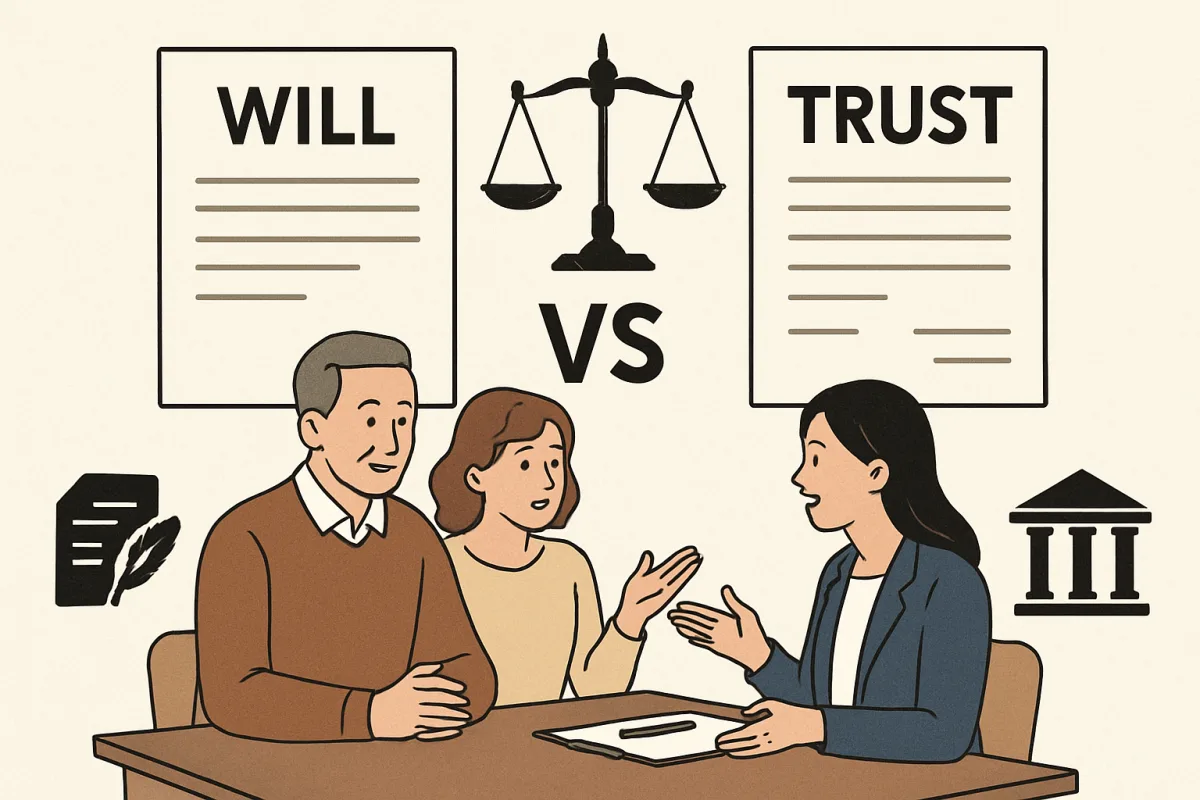
Wills and trusts serve different purposes in estate planning. A will is a legal document that outlines how your assets will be distributed after your death. It goes into effect only upon death and must go through probate, which can be time-consuming and public. In contrast, a trust is a legal entity that holds your assets during your lifetime and can dictate how they are distributed both during your life and after your death. Trusts can help avoid probate, maintain privacy, and provide more control over asset distribution. Choosing between a will and a trust depends on your specific needs, such as the complexity of your estate and your privacy preferences.
Quick Summary
Understanding the key differences between wills and trusts is essential for effective estate planning. A will dictates asset distribution after death and requires probate, while a trust manages assets during life and can bypass probate. Trusts offer more control and privacy, making them suitable for complex estates. The choice between the two hinges on individual circumstances, including estate size, privacy concerns, and specific wishes for asset distribution. Knowing these distinctions can guide you in making informed decisions about your estate planning needs.
Curator Notes
Wills and trusts are fundamental components of estate planning, but they serve distinct purposes. A will is primarily a document that specifies how your assets will be distributed upon your death. It becomes effective only after you pass away and must go through the probate process, which can be lengthy and public.
This means that your assets and their distribution may become a matter of public record, potentially exposing your estate to scrutiny and delays. On the other hand, a trust is a legal entity that can hold your assets during your lifetime and dictate how they are managed and distributed both while you are alive and after your death. One significant advantage of a trust is that it can help your heirs avoid probate, allowing for a quicker and more private transfer of assets.
This is particularly beneficial for individuals with larger estates or those who wish to maintain confidentiality regarding their financial matters. Another key difference lies in the level of control each option provides. With a will, you can specify who receives your assets, but once you pass away, the distribution is largely out of your control.
In contrast, a trust allows you to set specific conditions for asset distribution, such as age restrictions or stipulations for responsible financial management. This can be particularly useful for families with young children or beneficiaries who may not be financially savvy. When considering which option to choose, think about the complexity of your estate.
If you have a straightforward situation with minimal assets, a will may suffice. However, if your estate includes significant assets, real estate, or you have specific wishes for how your assets should be handled, a trust might be the better choice. It's also important to consider the costs associated with each option.
Wills are generally less expensive to create initially, but the probate process can incur additional costs. Trusts may require a higher upfront investment but can save money in the long run by avoiding probate fees. Ultimately, the decision between a will and a trust should be based on your individual circumstances, including your estate size, privacy preferences, and specific wishes for your heirs.
Consulting with an estate planning attorney can provide valuable insights tailored to your situation, ensuring that your estate plan aligns with your goals and protects your loved ones effectively.
Best Sources
Videos and Community Signals
Fiduciary financial advisor Wes Moss explains the difference between a will and a trust—and how to decide which is right for you.
Our national estate planning law firm website: https://aeplawyers.com/ To request a no-cost zoom estate planning design meeting: ...
Comparison
| Decision Point | Good Starting Choice | When to Go Further |
|---|---|---|
| Purpose | A will outlines asset distribution after death. | A trust manages assets during life and after death. |
| Probate | Wills require probate, which can be public and lengthy. | Trusts can avoid probate, ensuring faster and private asset transfer. |
| Control | Wills provide limited control over asset distribution post-death. | Trusts allow for specific conditions on asset distribution. |
| Cost | Wills are generally cheaper to create. | Trusts may have higher upfront costs but can save on probate fees. |
FAQ
Yes, you can modify your will at any time as long as you are of sound mind.
Yes, trusts typically have higher initial setup costs, but they can save money by avoiding probate.
It depends on your estate planning needs. Many people benefit from having both.