Stablecoins Explained and Compared
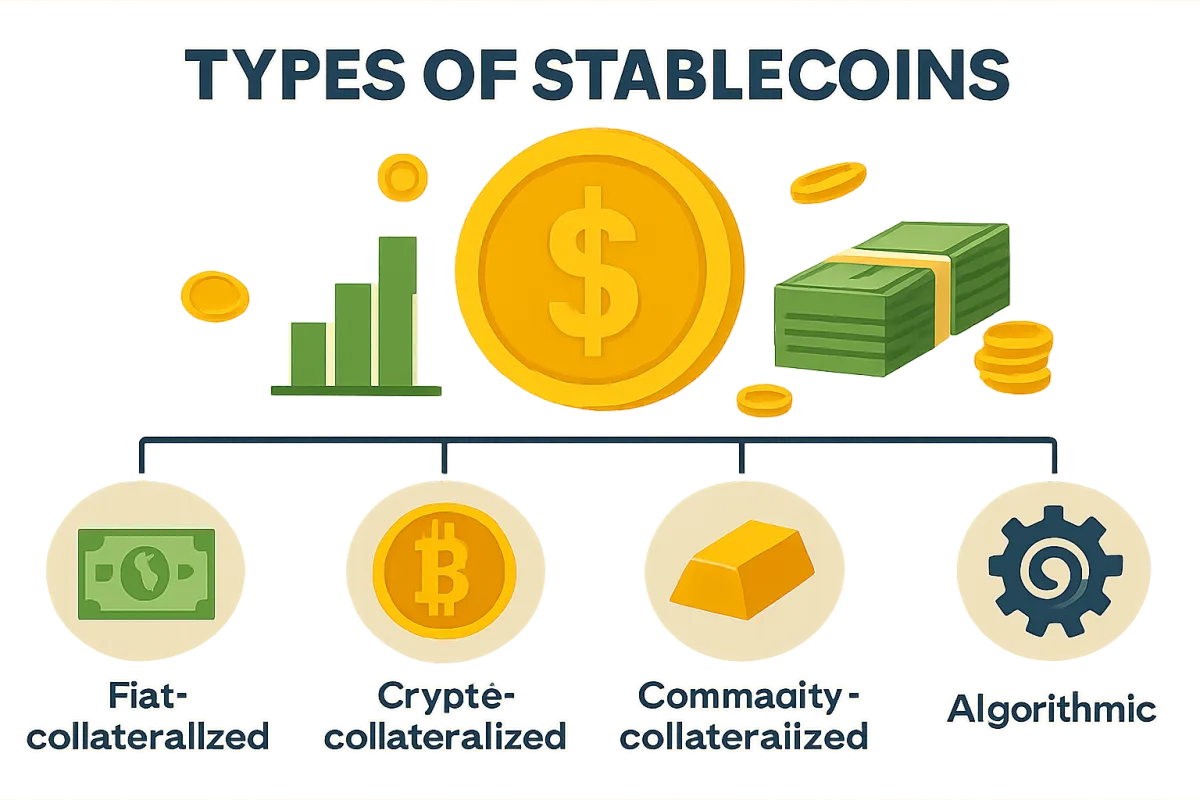
Stablecoins are cryptocurrencies designed to maintain a stable value relative to a fiat currency or a basket of goods. They are typically pegged to assets like the US dollar, making them less volatile than traditional cryptocurrencies. Common types include fiat-collateralized, crypto-collateralized, and algorithmic stablecoins. Each type has its own mechanisms for maintaining stability, which can affect their use cases and risks.
Quick Summary
Stablecoins provide a bridge between traditional finance and the crypto world by offering a stable value. They are essential for trading, remittances, and as a store of value. Understanding the different types of stablecoins—fiat-collateralized, crypto-collateralized, and algorithmic—can help users choose the right one for their needs.
Curator Notes
Stablecoins serve as a crucial link between the volatile world of cryptocurrencies and the stability of traditional fiat currencies. By pegging their value to assets like the US dollar, stablecoins mitigate the price fluctuations typically associated with cryptocurrencies. This stability makes them ideal for various applications, including trading, remittances, and as a store of value.
There are three primary types of stablecoins: fiat-collateralized, crypto-collateralized, and algorithmic. Fiat-collateralized stablecoins are backed by reserves of fiat currency, ensuring that each stablecoin is redeemable for a specific amount of fiat. Crypto-collateralized stablecoins, on the other hand, use other cryptocurrencies as collateral, which can introduce additional volatility.
Algorithmic stablecoins rely on smart contracts to manage supply and demand, adjusting the supply of coins to maintain their peg. Each type has its own advantages and risks, making it essential for users to understand their specific characteristics before choosing one.
Recommended Options
- Tether (USDT): Best for traders and investors looking for liquidity Tether is the most widely used stablecoin, providing high liquidity and a strong market presence. Signal checked: Tether has consistently been the top stablecoin by market capitalization and trading volume. Alternative to consider: USD Coin (USDC) for a more transparent and regulated option.
- USD Coin (USDC): Best for users seeking transparency and regulatory compliance USDC is backed by fully audited reserves and is known for its regulatory compliance. Signal checked: USDC has gained popularity among institutional investors and is widely accepted across platforms. Alternative to consider: Dai (DAI) for a decentralized stablecoin option.
- Dai (DAI): Best for decentralized finance (DeFi) users Dai is a decentralized stablecoin that is not pegged to a single fiat currency, providing more flexibility. Signal checked: Dai is widely used in DeFi applications and has a strong community backing. Alternative to consider: TrueUSD (TUSD) for another fiat-collateralized option.
Best Sources
Videos and Community Signals
What are stablecoins and why are they such a big deal in crypto? In just 4 minutes, we'll break down everything you need to know ...
Coins and Tokens may seem similar on the surface, but they are fundamentally different. Coins have their own blockchains ...
Comparison
| Decision Point | Good Starting Choice | When to Go Further |
|---|---|---|
| Type of collateral | Fiat-collateralized (e.g., USDT) | Crypto-collateralized (e.g., DAI) for more decentralization |
| Regulatory compliance | USDT (less transparent) | USDC (fully audited and compliant) |
| Use case | Trading and liquidity (e.g., USDT) | DeFi applications (e.g., DAI) |
FAQ
The main types of stablecoins are fiat-collateralized, crypto-collateralized, and algorithmic stablecoins.
While stablecoins aim to maintain a stable value, risks exist depending on their underlying collateral and market conditions.