Social Security Benefits Explained
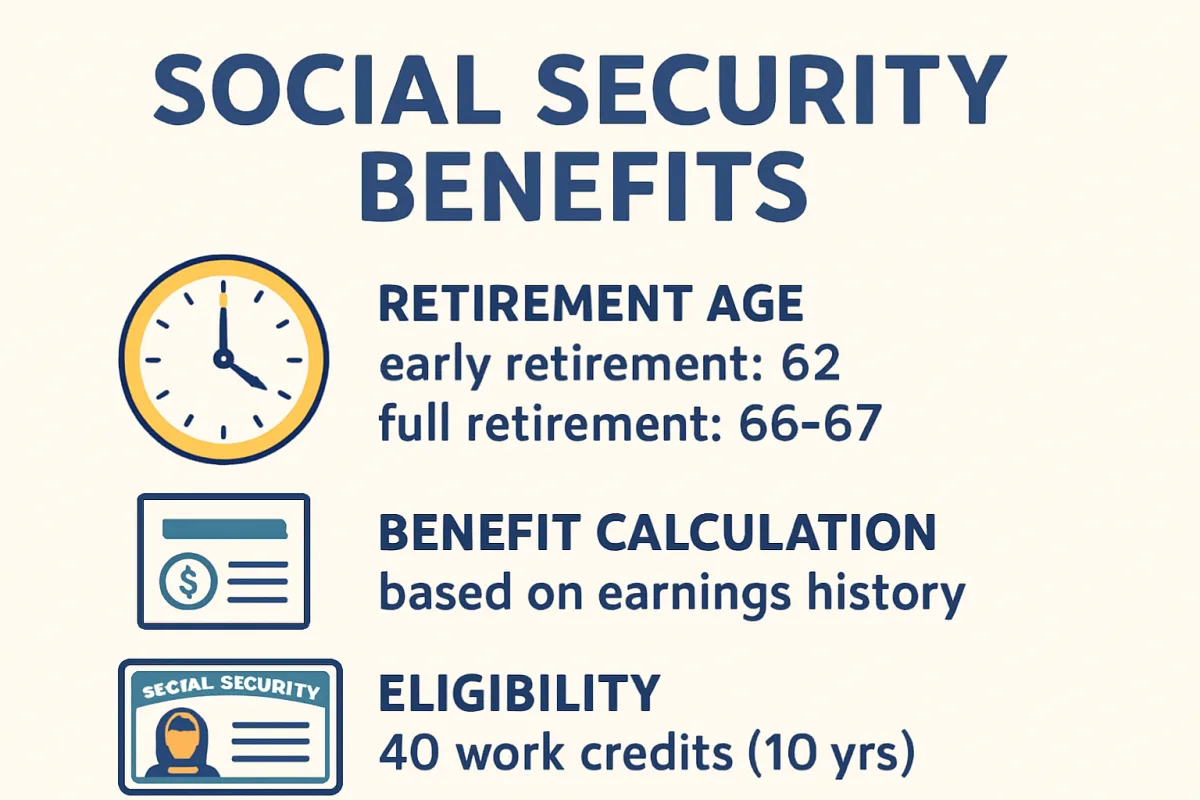
Social Security benefits are government-provided financial assistance for retirees, disabled individuals, and survivors of deceased workers. These benefits are funded through payroll taxes collected under the Federal Insurance Contributions Act (FICA). The amount you receive depends on your earnings history and the age at which you choose to start receiving benefits. Understanding the eligibility criteria and benefit calculation methods is crucial for effective financial planning.
Quick Summary
This guide provides a comprehensive overview of Social Security benefits, including eligibility, benefit calculation, and the different types of benefits available. It aims to clarify how these benefits work and their significance in personal finance.
Curator Notes
Social Security benefits serve as a critical safety net for millions of Americans. They are designed to provide financial support to retirees, disabled individuals, and the survivors of deceased workers. The program is primarily funded through payroll taxes, which means that the amount you receive is closely tied to your earnings over your working life.
Generally, the more you earn and contribute, the higher your benefits will be when you retire or if you become disabled. Eligibility for Social Security benefits typically requires you to have worked and paid into the system for a certain number of years, usually 10 years or 40 quarters. The benefits can be claimed as early as age 62, but claiming early may reduce your monthly benefit amount.
Conversely, delaying benefits until after your full retirement age can increase your monthly payments. Understanding these nuances can help you make informed decisions about when to start receiving benefits, which can significantly impact your financial stability in retirement.
Best Sources
Videos and Community Signals
The rules for Social Security Spousal and Survivor benefits made easy to understand. 62 Or 70? When To Start Collecting Social ...
In this video, we will dive into how Social Security works. Social Security is designed to supplement, not replace, your income ...
Comparison
| Decision Point | Good Starting Choice | When to Go Further |
|---|---|---|
| Online booking | A simple booking page with service duration, staff assignment and confirmation emails. | Multi-location calendars, deposits, cancellation rules and waitlist handling. |
| Client records | Basic notes, visit history and contact details are enough to start. | Segmentation, purchase history, memberships, forms and before-after notes become more important. |
| Reminders | SMS or email reminders help reduce no-shows without adding admin work. | Automated rebooking, follow-up campaigns and missed-appointment recovery matter more. |
| Payments | Card capture and checkout should be simple and transparent. | Packages, memberships, staff commissions, tips and refunds need cleaner reporting. |
| Marketing | Light email or SMS campaigns are useful if they are easy to run. | Automated win-back, birthday offers, review requests and audience segments create more leverage. |
FAQ
The main types of Social Security benefits include retirement benefits, disability benefits, and survivor benefits.
The benefit amount is calculated based on your highest 35 years of earnings, adjusted for inflation.
Yes, you may qualify for spousal or survivor benefits even if you have not worked.