Service Business Pricing Model
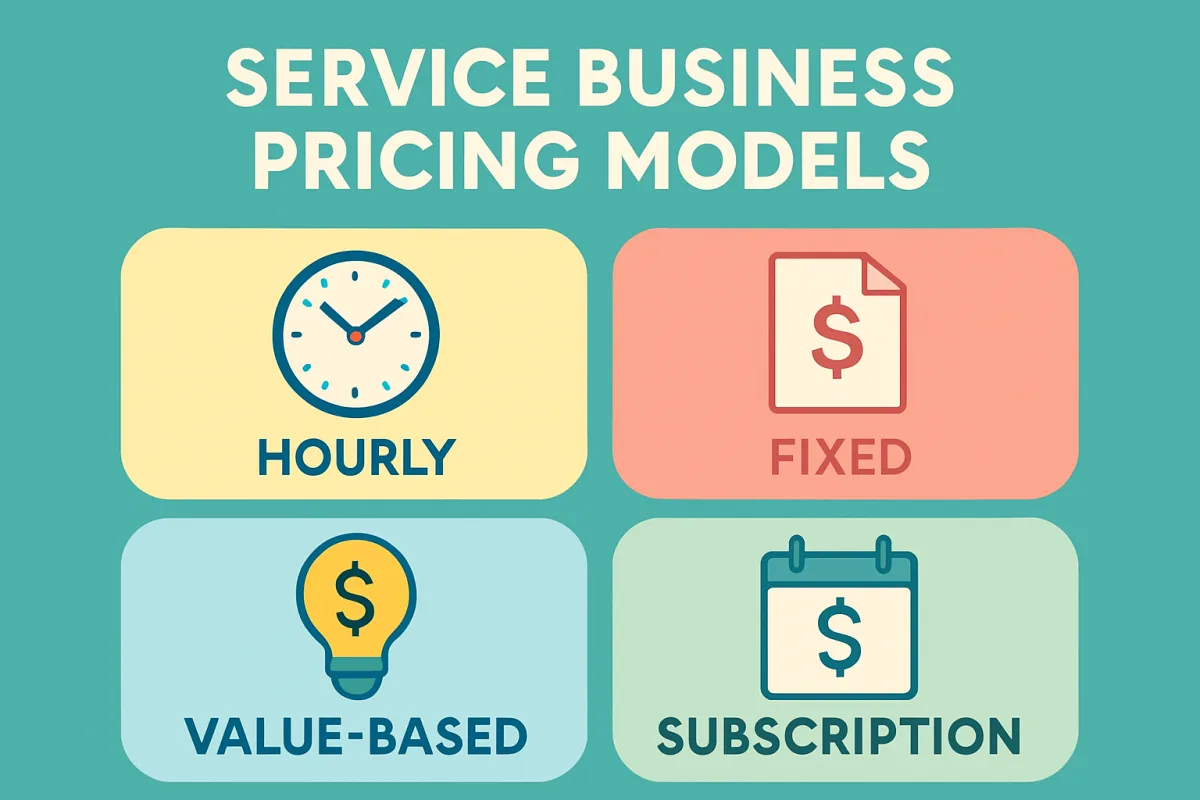
Choosing the right pricing model for a service business is crucial for profitability and customer satisfaction. Common models include hourly billing, fixed pricing, value-based pricing, and subscription models. Each has its pros and cons: hourly billing offers flexibility but can lead to unpredictable income; fixed pricing provides clarity for clients but may undervalue services; value-based pricing aligns fees with the perceived value to the customer, but requires deep market understanding; subscription models ensure steady revenue but may limit service scope. The best choice depends on your business type, customer needs, and market conditions.
Quick Summary
Selecting a pricing model for a service business is a strategic decision that impacts both revenue and client relationships. Options like hourly billing, fixed pricing, value-based pricing, and subscription models each come with unique advantages and challenges. Understanding these can help you align your pricing strategy with your business goals and customer expectations. This guide will delve into the specifics of each model, offering insights on when to use them and potential pitfalls to avoid.
Curator Notes
Understanding the nuances of pricing models is essential for service businesses aiming to optimize profitability while maintaining customer satisfaction. Each model has its unique characteristics that can significantly affect both revenue and client relationships. For instance, hourly billing is often favored for its flexibility, allowing businesses to charge based on the actual time spent on a project.
However, this can lead to unpredictable income, making financial planning challenging. Fixed pricing, on the other hand, provides clarity for clients, as they know the total cost upfront. This model can enhance trust but may undervalue services if not carefully calculated.
Businesses must ensure that they accurately assess the time and resources required to deliver the service to avoid losses. Value-based pricing aligns fees with the perceived value delivered to the customer. This model can be highly profitable, especially in industries where the service significantly impacts the client's success.
However, it requires a deep understanding of the market and customer needs, which can be a barrier for some service providers. Subscription models have gained popularity, especially in sectors like software and consulting. They offer a steady revenue stream and can enhance customer loyalty.
However, this model may limit the scope of services offered, as clients may expect ongoing support or updates without additional charges. When choosing a pricing model, consider your business type and the specific needs of your customers. For example, creative agencies may benefit from fixed pricing for project-based work, while consultants might find hourly billing more suitable for variable workloads.
Understanding your market conditions is also crucial, as competitive pricing can influence customer decisions. Ultimately, the right pricing model should reflect your business goals and align with customer expectations. Regularly reviewing and adjusting your pricing strategy in response to market changes can help maintain profitability and client satisfaction over time.
In summary, selecting a pricing model is not merely a financial decision; it’s a strategic choice that can shape your business’s future. By weighing the pros and cons of each model, you can better position your service business for success.
Recommended Options
- Harvest: Best for Freelancers and small service businesses Harvest offers time tracking and invoicing features that are ideal for hourly billing. Signal checked: Widely used with positive reviews for its user-friendly interface. Alternative to consider: Toggl, which also provides time tracking but lacks invoicing features.
- Fixed Price Contracts: Best for Agencies and project-based businesses Allows for clear project scopes and pricing, enhancing client trust. Signal checked: Commonly used in industries like construction and design. Alternative to consider: Time and Materials contracts, which can be more flexible but less predictable.
- Value-Based Pricing Strategy: Best for Consultants and specialized service providers Aligns pricing with the value delivered, maximizing profitability. Signal checked: Increasingly adopted in competitive markets where differentiation is key. Alternative to consider: Cost-Plus Pricing, which can be simpler but may not capture true value.
- Subscription Services: Best for Software and ongoing service providers Provides predictable revenue and fosters customer loyalty. Signal checked: Popular in SaaS industries with a growing number of users. Alternative to consider: One-Time Purchase models, which can lead to revenue spikes but less stability.
Best Sources
Videos and Community Signals
Pricing your services can be tricky. With a lower product cost, many small business owners underprice their services and end up ...
Want to SCALE your business? Go here: https://acquisition.com Want to START a business? Go here: https://skool.com/games If ...
Comparison
| Decision Point | Good Starting Choice | When to Go Further |
|---|---|---|
| Flexibility | Hourly billing for variable workloads | Value-based pricing for high-impact services |
| Predictability | Fixed pricing for clear project scopes | Subscription models for steady revenue |
| Client Trust | Fixed pricing for upfront clarity | Value-based pricing for perceived value alignment |
FAQ
Hourly billing is often recommended for new businesses as it allows flexibility and easier adjustments based on experience.
Consider your costs, market rates, and the value you provide to clients. Research competitors to gauge pricing standards.
Yes, many businesses adjust their pricing models as they grow and better understand their market and customer needs.