Schema Markup for Better SEO
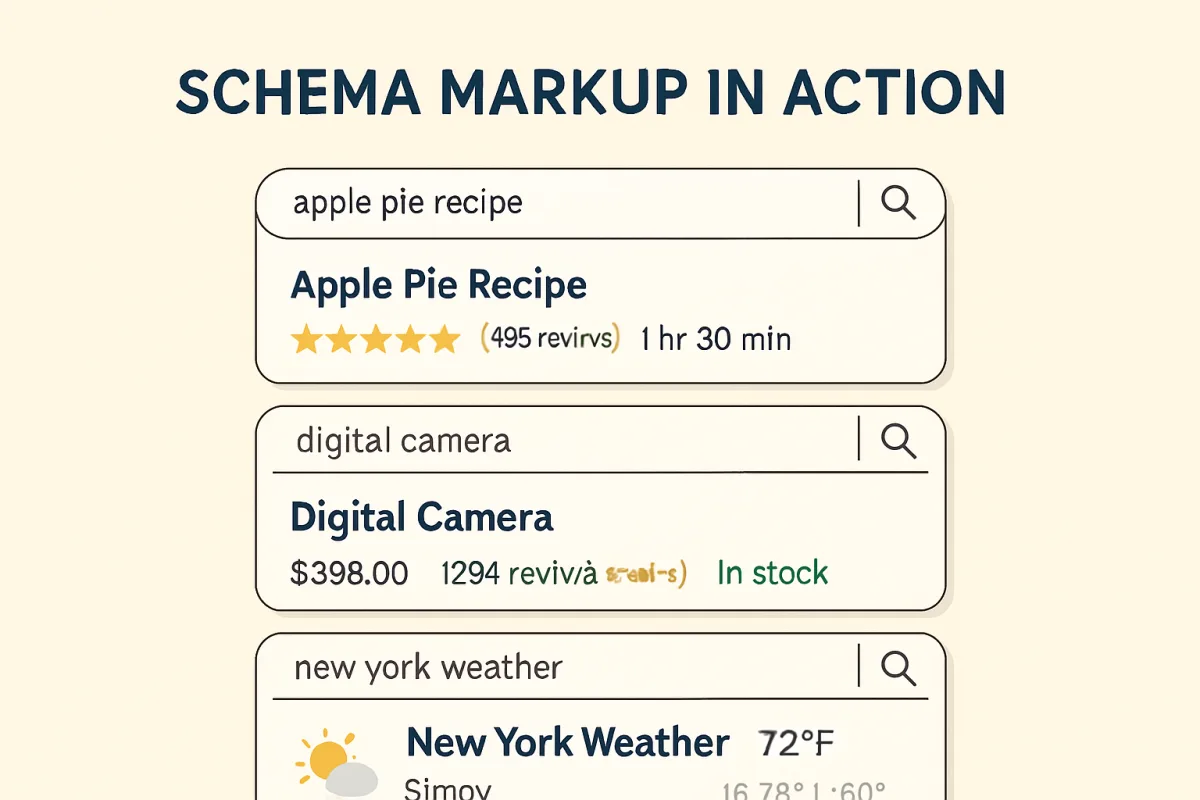
Schema markup is a powerful tool that helps search engines understand the content of your website better, leading to improved visibility in search results. By implementing structured data, you can enhance your site's appearance with rich snippets, which can increase click-through rates. Popular schema types include Article, Product, and Local Business, each serving different purposes depending on your content type. Utilizing schema markup can significantly boost your SEO efforts and user engagement.
Quick Summary
Schema markup enhances SEO by providing structured data to search engines, improving visibility and click-through rates. Key types include Article, Product, and Local Business schemas, each tailored for specific content. Implementing schema can lead to richer search results and better user engagement.
Curator Notes
Schema markup is a form of microdata that helps search engines interpret the information on your web pages more effectively. By using schema, you can create a more informative and engaging experience for users. For instance, implementing the Product schema can display price, availability, and review ratings directly in the search results, which can attract more clicks and improve conversion rates.
Different types of schema markup serve various purposes. For example, Article schema is beneficial for blogs and news sites, while Local Business schema is essential for businesses looking to enhance their local search presence. Each schema type has specific properties that can be tailored to fit your content, making it crucial to choose the right one for your needs.
The implementation process can be done through JSON-LD, Microdata, or RDFa formats, with JSON-LD being the most recommended for its simplicity and ease of use.
Recommended Options
- Schema.org: Best for Webmasters and SEO professionals Schema.org provides a comprehensive vocabulary for structured data markup, widely recognized and supported by major search engines. Signal checked: Widely used and accepted by Google, Bing, and Yahoo. Alternative to consider: Microdata and RDFa formats
- Google Structured Data Markup Helper: Best for Beginners looking to implement schema easily This tool simplifies the process of adding schema markup to your site, providing a user-friendly interface. Signal checked: Highly rated by users for its ease of use. Alternative to consider: Yoast SEO plugin for WordPress
- Yoast SEO: Best for WordPress users Yoast SEO automatically adds schema markup to your WordPress site, making it easier to optimize for search engines. Signal checked: Over 5 million active installations with positive reviews. Alternative to consider: All in One SEO Pack
Best Sources
Videos and Community Signals
In this video I explain what schema markup (also known as structured data) is, why you need schema code for SEO and how to ...
This language helps search engines understand the specific contents of your page that you markup! Doing this, Google can add ...
Comparison
| Decision Point | Good Starting Choice | When to Go Further |
|---|---|---|
| Ease of Use | Google Structured Data Markup Helper | Yoast SEO for WordPress |
| Comprehensiveness | Schema.org | Custom JSON-LD implementation for advanced users |
| Integration with CMS | Manual implementation for static sites | Yoast SEO for WordPress integration |
FAQ
Schema markup is a structured data vocabulary that helps search engines understand the content of your website, leading to improved visibility in search results.
By using schema markup, you can enhance your site's appearance in search results with rich snippets, which can increase click-through rates and user engagement.
The type of schema markup you should use depends on your content type. Common types include Article, Product, and Local Business schemas.