Salesforce vs HubSpot Compared
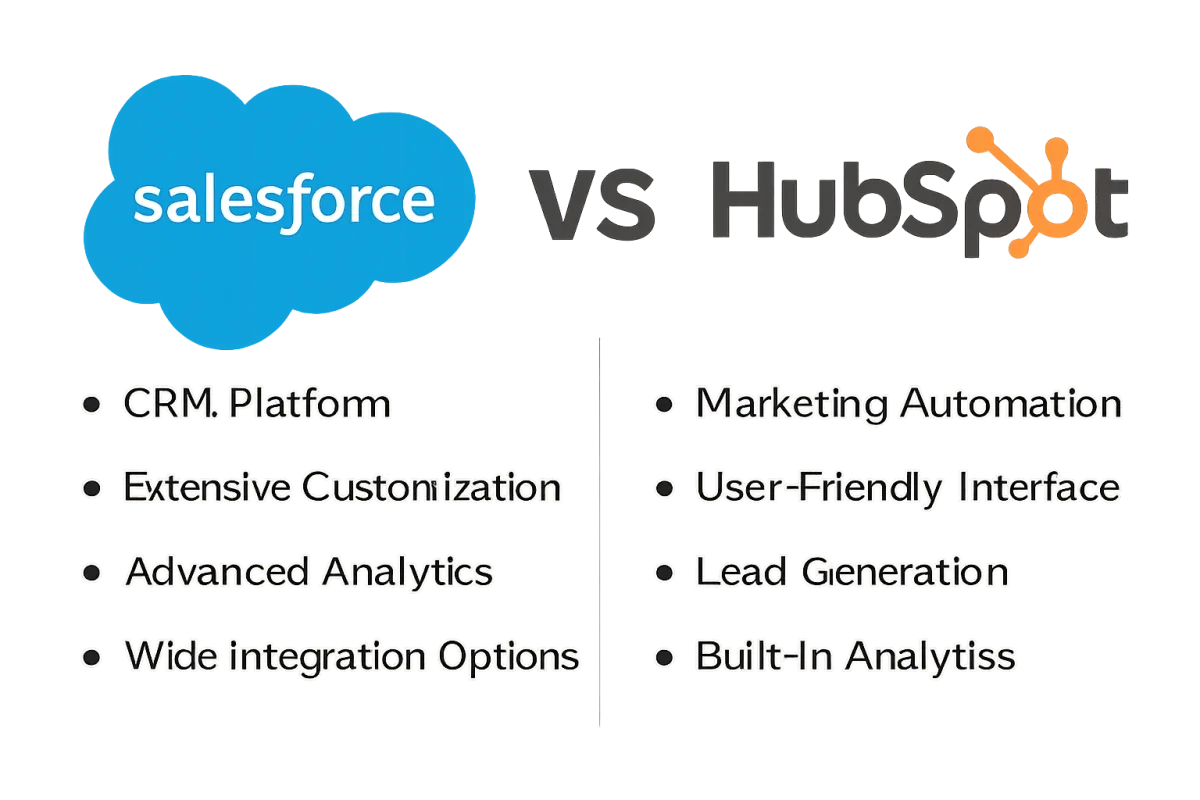
Salesforce and HubSpot are both leading CRM platforms, each catering to different business needs. Salesforce is highly customizable and suitable for larger enterprises with complex sales processes, while HubSpot offers a user-friendly interface ideal for small to medium-sized businesses looking for an all-in-one marketing and sales solution. Salesforce excels in extensive integrations and advanced analytics, whereas HubSpot provides robust inbound marketing tools and a free tier for startups.
Quick Summary
Salesforce and HubSpot are popular CRM solutions, each with unique strengths. Salesforce is best for larger organizations needing customization and advanced features, while HubSpot is ideal for smaller businesses seeking ease of use and integrated marketing tools. Understanding their differences can help businesses choose the right platform for their needs.
Curator Notes
Salesforce is known for its extensive customization capabilities and scalability, making it a preferred choice for large enterprises with complex sales processes. It offers a wide range of features, including advanced analytics, automation, and extensive third-party integrations. However, this complexity can lead to a steeper learning curve and higher costs, especially for smaller businesses that may not need all of its features.
On the other hand, HubSpot is designed with user-friendliness in mind, making it accessible for small to medium-sized businesses. It provides a comprehensive suite of marketing, sales, and customer service tools, along with a free tier that allows startups to get started without financial commitment. HubSpot's strengths lie in its inbound marketing capabilities, easy-to-use interface, and seamless integration of various tools, although it may lack some of the advanced features found in Salesforce.
Ultimately, the choice between Salesforce and HubSpot should depend on the specific needs of the business, including size, budget, and the complexity of sales processes. Companies should evaluate their requirements carefully to select the platform that aligns best with their operational goals.
Recommended Options
- Salesforce Sales Cloud: Best for Large enterprises with complex sales processes Highly customizable with extensive features and integrations. Signal checked: Widely used by Fortune 500 companies, strong market presence. Alternative to consider: Microsoft Dynamics 365 for similar enterprise-level capabilities.
- HubSpot CRM: Best for Small to medium-sized businesses looking for ease of use User-friendly interface with robust inbound marketing tools. Signal checked: Free tier available, popular among startups and SMBs. Alternative to consider: Zoho CRM for a more budget-friendly option with similar features.
Best Sources
Videos and Community Signals
Looking for the right CRM for your business? In this video, Dustin from the Gravity team breaks down the key differences between ...
When considering which CRM software to choose for your business, it's important to understand the unique features and benefits ...
Comparison
| Decision Point | Good Starting Choice | When to Go Further |
|---|---|---|
| Customization | HubSpot offers basic customization suitable for small businesses. | Salesforce provides extensive customization for complex needs. |
| User Interface | HubSpot is known for its intuitive and easy-to-navigate interface. | Salesforce has a steeper learning curve due to its complexity. |
| Pricing | HubSpot offers a free tier and affordable plans for startups. | Salesforce can be more expensive, especially with add-ons. |
| Integrations | HubSpot has essential integrations for small businesses. | Salesforce supports a vast array of third-party integrations. |
FAQ
HubSpot is generally better for small businesses due to its user-friendly interface and free tier.
Yes, Salesforce is highly customizable, making it suitable for complex business needs.
HubSpot offers a free tier, while Salesforce typically requires a subscription with higher costs.