Read Food Nutrition Labels
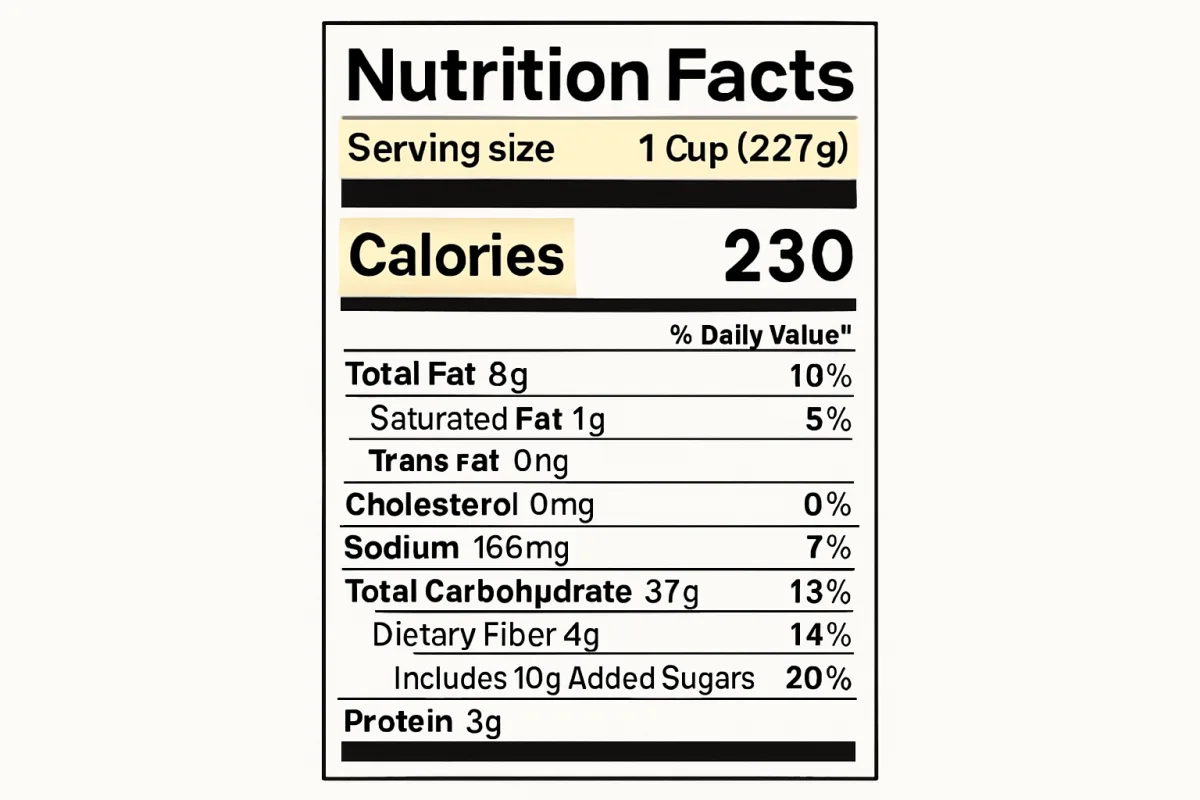
Understanding food nutrition labels is essential for making informed dietary choices. These labels provide crucial information about the nutritional content of food products, including calories, fats, carbohydrates, proteins, vitamins, and minerals. By learning to read these labels effectively, you can better manage your dietary needs, whether you're aiming for weight loss, muscle gain, or simply a healthier lifestyle. Look for serving sizes, daily value percentages, and ingredient lists to guide your choices. This knowledge empowers you to select foods that align with your health goals and dietary restrictions.
Quick Summary
Food nutrition labels are vital tools for anyone looking to make healthier eating choices. They detail essential nutritional information, including calorie counts, macronutrient breakdowns, and ingredient lists. By understanding how to read these labels, you can better navigate food options to meet your dietary goals. Key elements to focus on include serving size, daily values, and the order of ingredients. This guide will help you decode these labels effectively, ensuring you make informed decisions about what you eat.
Curator Notes
Reading food nutrition labels is a skill that can significantly impact your health and well-being. These labels are designed to provide essential information about the nutritional content of food products, helping consumers make informed choices. The first step is to familiarize yourself with the layout of a nutrition label, which typically includes sections for serving size, calories, and nutrient breakdowns.
Understanding these components is crucial for evaluating whether a food item fits your dietary needs. The serving size is a critical piece of information, as it dictates the amount of each nutrient listed on the label. Many people overlook this section, leading to miscalculations in their intake.
For instance, if a label states that a serving size is one cup but you consume two cups, you must double the nutritional values to understand your actual intake. Next, pay attention to the calories per serving. This number helps you gauge how a food item fits into your daily caloric goals.
If you’re trying to lose weight, for example, you may want to choose lower-calorie options or control portion sizes. Remember that not all calories are created equal; the source of calories—whether from fats, sugars, or proteins—also matters. The nutrient breakdown section lists macronutrients such as fats, carbohydrates, and proteins, along with micronutrients like vitamins and minerals.
Look for items low in saturated fats and sugars, as these can contribute to various health issues when consumed in excess. The % Daily Value (%DV) is another important aspect; it indicates how much a nutrient in a serving contributes to a daily diet based on a 2,000-calorie intake. This can help you determine if a food is high or low in a particular nutrient.
Ingredient lists are equally important. Ingredients are listed in descending order by weight, meaning the first few ingredients are the most significant. This can help you avoid products with excessive additives or unhealthy components.
If you see ingredients you don’t recognize or can’t pronounce, it might be worth reconsidering that product. Finally, be aware of marketing claims that can be misleading. Terms like 'low-fat' or 'sugar-free' can sometimes mask unhealthy ingredients.
Always cross-reference these claims with the nutrition label to ensure you’re making the best choice for your health. In summary, mastering the art of reading food nutrition labels can empower you to make healthier dietary choices. By focusing on serving sizes, calorie counts, nutrient breakdowns, and ingredient lists, you can navigate the grocery store with confidence and choose foods that align with your health goals.
Best Sources
Videos and Community Signals
The Nutrition Facts label can help you make food choices that support your health needs. Tips in this video help you understand ...
Did you know that the Nutrition Facts label has only been required on food and beverage packaging in the U.S. since 1990?
Comparison
| Decision Point | Good Starting Choice | When to Go Further |
|---|---|---|
| Online booking | A simple booking page with service duration, staff assignment and confirmation emails. | Multi-location calendars, deposits, cancellation rules and waitlist handling. |
| Client records | Basic notes, visit history and contact details are enough to start. | Segmentation, purchase history, memberships, forms and before-after notes become more important. |
| Reminders | SMS or email reminders help reduce no-shows without adding admin work. | Automated rebooking, follow-up campaigns and missed-appointment recovery matter more. |
| Payments | Card capture and checkout should be simple and transparent. | Packages, memberships, staff commissions, tips and refunds need cleaner reporting. |
| Marketing | Light email or SMS campaigns are useful if they are easy to run. | Automated win-back, birthday offers, review requests and audience segments create more leverage. |
FAQ
The serving size is crucial as it determines the amount of each nutrient listed. Always check this first to understand your actual intake.
Look for low levels of saturated fats and sugars, a high percentage of daily values for vitamins and minerals, and a short ingredient list with recognizable items.
% Daily Value indicates how much a nutrient in a serving contributes to a daily diet, helping you gauge if a food is high or low in that nutrient.