Proof of Work vs Proof of Stake
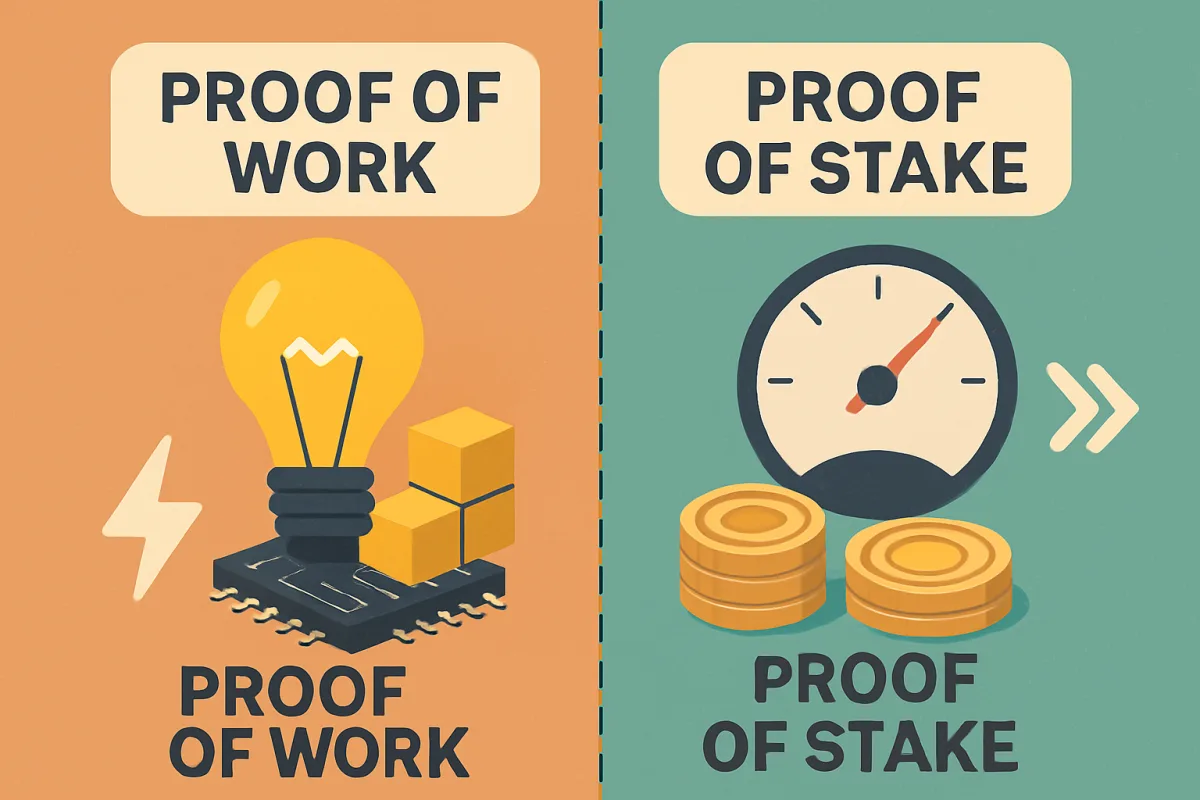
Proof of Work (PoW) and Proof of Stake (PoS) are two consensus mechanisms used in blockchain networks. PoW requires miners to solve complex mathematical problems to validate transactions, consuming significant energy. In contrast, PoS allows validators to create new blocks based on the number of coins they hold and are willing to 'stake,' leading to lower energy consumption and faster transaction times. Each method has its pros and cons, influencing security, scalability, and decentralization.
Quick Summary
This guide explores the differences between Proof of Work and Proof of Stake, two primary consensus mechanisms in blockchain technology. PoW is energy-intensive, relying on computational power, while PoS is more efficient, using the stake of coins to validate transactions. Understanding these mechanisms is crucial for evaluating blockchain projects and their sustainability.
Curator Notes
Proof of Work (PoW) was first introduced by Bitcoin and has become synonymous with blockchain technology. It requires miners to solve cryptographic puzzles to validate transactions and add new blocks to the blockchain. This process is energy-intensive and can lead to centralization as only those with significant computational resources can effectively mine.
The environmental impact of PoW has raised concerns, prompting discussions about more sustainable alternatives. On the other hand, Proof of Stake (PoS) offers a different approach by allowing validators to create new blocks based on the number of coins they hold and are willing to lock up as collateral. This method significantly reduces energy consumption and can lead to faster transaction processing times.
However, PoS can also lead to wealth concentration, as those with more coins have greater influence over the network. Understanding the trade-offs between these two mechanisms is essential for anyone interested in the future of blockchain technology.
Recommended Options
- Ethereum 2.0: Best for Developers and investors looking for a scalable blockchain solution. Ethereum 2.0 transitions from PoW to PoS, enhancing scalability and reducing energy consumption. Signal checked: Strong community support and ongoing development. Alternative to consider: Cardano
- Bitcoin: Best for Investors seeking a proven store of value. The first and most recognized cryptocurrency using PoW. Signal checked: High market capitalization and widespread adoption. Alternative to consider: Litecoin
- Cardano: Best for Users interested in a research-driven approach to blockchain. Signal checked: Strong academic backing and community engagement. Alternative to consider: Polkadot
Best Sources
Videos and Community Signals
Proof-of-Work and Proof-of-Stake are two Blockchain mechanisms that power Bitcoin and Ethereum. In today's video, you'll learn ...
In 2008, “Satoshi Nakamoto” outlined Bitcoin—and with it, the first blockchain where the network (not a bank) agrees on truth.
Comparison
| Decision Point | Good Starting Choice | When to Go Further |
|---|---|---|
| Energy Consumption | Proof of Work is energy-intensive. | Proof of Stake is energy-efficient. |
| Transaction Speed | PoW can be slower due to mining times. | PoS allows for faster transaction validation. |
| Security | PoW is secure but vulnerable to 51% attacks. | PoS is secure but can lead to wealth concentration. |
FAQ
The main difference lies in how transactions are validated; PoW requires computational power while PoS relies on the amount of cryptocurrency held.
Proof of Stake is generally more environmentally friendly due to its lower energy requirements.
Yes, some blockchains utilize a hybrid approach, incorporating elements of both mechanisms.