Pricing Strategies for New Products
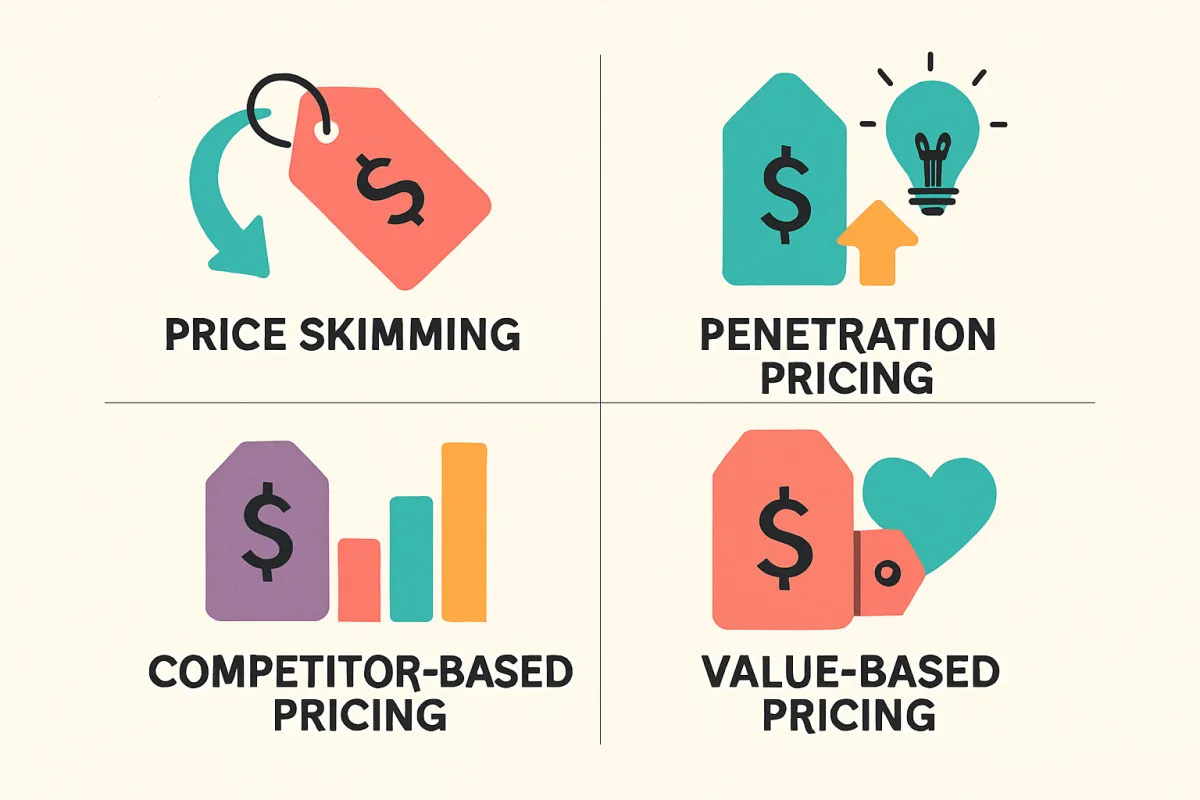
Pricing strategies for new products are crucial for market entry and long-term success. Common strategies include cost-plus pricing, value-based pricing, penetration pricing, and skimming pricing. Each has its advantages and trade-offs, depending on market conditions and business goals. For instance, penetration pricing can quickly attract customers but may lead to lower profit margins initially, while skimming pricing can maximize profits from early adopters but risks alienating price-sensitive customers.
Quick Summary
Effective pricing strategies for new products are essential for capturing market share and ensuring profitability. Key strategies include cost-plus, value-based, penetration, and skimming pricing. Each approach has unique benefits and challenges that businesses must consider based on their target market and competitive landscape.
Curator Notes
When launching a new product, selecting the right pricing strategy is vital. Cost-plus pricing involves calculating the total cost of production and adding a markup for profit. This method is straightforward but may not reflect the product's perceived value in the market.
Businesses must also consider competitor pricing and customer willingness to pay, which can be better addressed through value-based pricing. This strategy focuses on setting prices based on the product's perceived value to the customer rather than solely on costs. Penetration pricing is another common strategy, where products are introduced at a lower price to attract customers quickly.
This can be effective in gaining market share but may result in lower initial profits. Conversely, skimming pricing involves setting a high initial price to maximize profits from early adopters before gradually lowering the price. This approach can be beneficial for innovative products but may limit initial customer reach.
Ultimately, the choice of pricing strategy should align with the overall business objectives and market conditions.
Recommended Options
- Cost-Plus Pricing: Best for Businesses with clear cost structures Simple to implement and ensures coverage of costs. Signal checked: Widely used in manufacturing and retail sectors. Alternative to consider: Value-Based Pricing
- Value-Based Pricing: Best for Products with strong brand recognition Aligns price with customer perceived value, maximizing profits. Signal checked: Effective in competitive markets with differentiated products. Alternative to consider: Cost-Plus Pricing
- Penetration Pricing: Best for New market entrants Quickly builds customer base and market share. Signal checked: Common in tech and subscription services. Alternative to consider: Skimming Pricing
- Skimming Pricing: Best for Innovative or unique products Maximizes early profits from less price-sensitive customers. Signal checked: Used by tech companies for new gadgets. Alternative to consider: Penetration Pricing
Best Sources
Videos and Community Signals
Missed something in the video? Don't worry, the full notes are here: https://thinkeduca.com/ Inquiries: LeaderstalkYT@gmail.com ...
If you're a startup founder, how much should you charge for your product or service? It's a simple question that can make many ...
Comparison
| Decision Point | Good Starting Choice | When to Go Further |
|---|---|---|
| Pricing Method | Cost-Plus Pricing for straightforward cost recovery. | Value-Based Pricing for maximizing perceived value. |
| Market Entry Strategy | Penetration Pricing for rapid market share. | Skimming Pricing for high initial profits. |
FAQ
Cost-plus pricing is a strategy where a fixed percentage is added to the total cost of production to determine the selling price.
Value-based pricing sets prices based on the perceived value of a product to the customer rather than on the cost of production.
The main risks include lower profit margins initially and potential difficulties in raising prices later without losing customers.
Skimming pricing is best used for innovative products where early adopters are willing to pay a premium.