Polygon vs Arbitrum vs Optimism
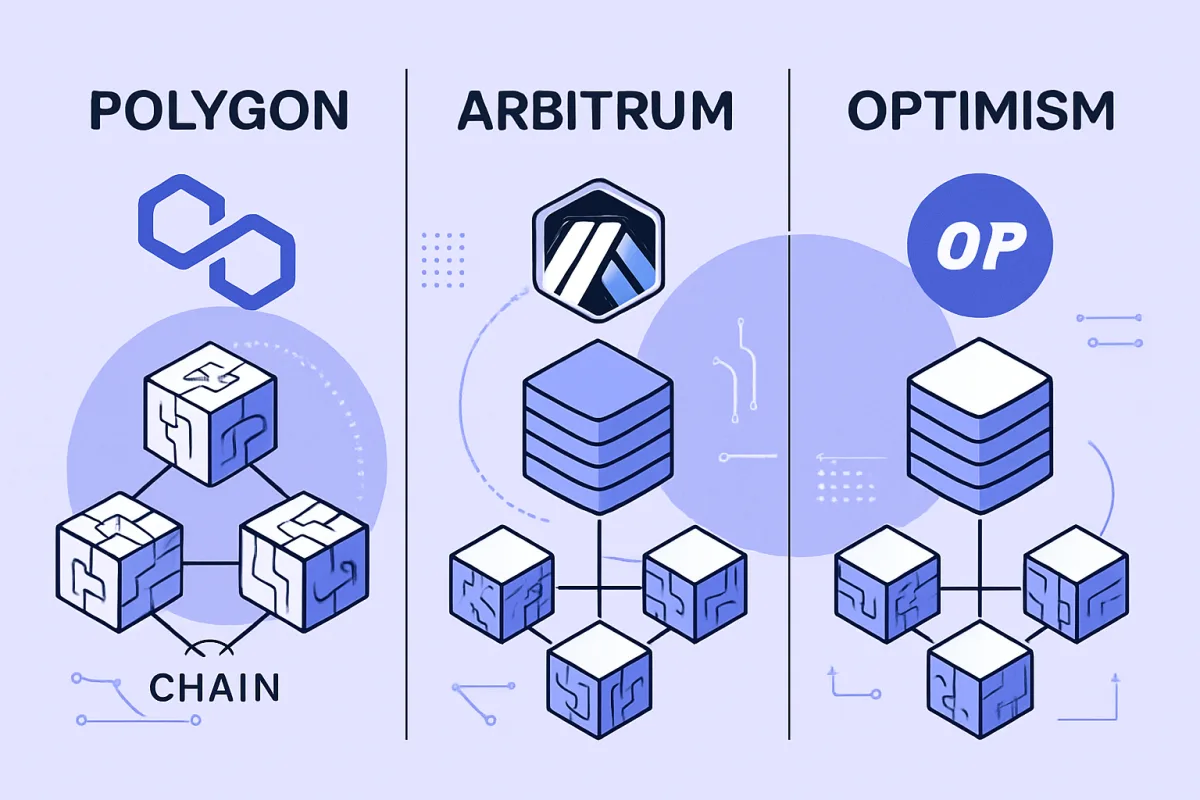
Polygon, Arbitrum, and Optimism are leading Layer 2 scaling solutions for Ethereum, each with unique features and trade-offs. Polygon excels in its versatility and broad ecosystem, making it suitable for various applications. Arbitrum focuses on providing low-cost transactions with high throughput, ideal for DeFi projects. Optimism, on the other hand, emphasizes simplicity and user experience, making it a great choice for developers looking to migrate existing Ethereum applications. Understanding these differences can help you select the best solution for your specific needs.
Quick Summary
Choosing between Polygon, Arbitrum, and Optimism requires understanding their distinct advantages. Polygon offers a robust ecosystem with diverse applications, making it versatile for developers. Arbitrum stands out for its low transaction costs and high throughput, appealing to DeFi projects. Optimism prioritizes user experience and simplicity, making it ideal for those migrating from Ethereum. Each solution has its strengths, and the right choice depends on your project's specific requirements.
Curator Notes
Polygon is often regarded as the most versatile Layer 2 solution due to its multi-chain architecture. It supports various scaling methods, including Plasma and zk-Rollups, which allows developers to choose the best fit for their applications. Its extensive ecosystem includes numerous dApps, making it a popular choice for those looking to build or integrate with existing projects.
However, its complexity can be a barrier for newcomers who may find it challenging to navigate the various options available. Arbitrum has gained traction for its focus on cost-effectiveness and speed. It utilizes optimistic rollups, which allow for faster transactions by assuming validity until proven otherwise.
This approach significantly reduces gas fees, making it particularly attractive for DeFi applications where transaction costs can quickly add up. However, the reliance on fraud proofs can introduce delays in transaction finality, which might concern some users. Optimism aims to simplify the development process by providing a straightforward migration path for existing Ethereum applications.
Its user-friendly interface and compatibility with Ethereum's tooling make it an appealing choice for developers who want to transition without significant overhead. However, it may not offer the same level of customization as Polygon or Arbitrum, which could limit advanced use cases. When considering these options, it's essential to evaluate your project's specific needs.
If you're looking for a broad ecosystem and flexibility, Polygon might be the best fit. For projects prioritizing low costs and high throughput, Arbitrum stands out. On the other hand, if ease of use and migration are your primary concerns, Optimism could be the way to go.
Community engagement is another factor to consider. Polygon has a robust developer community and numerous partnerships, which can provide additional resources and support. Arbitrum's growing popularity in the DeFi space has led to increased adoption and a vibrant ecosystem, while Optimism's focus on user experience has garnered a loyal following.
Ultimately, the decision should be based on a careful assessment of your project's goals, budget, and technical requirements. Each solution has its strengths and weaknesses, and understanding these nuances will help you make an informed choice that aligns with your objectives.
Recommended Options
- Polygon: Best for Developers seeking a versatile ecosystem for various applications. Offers multiple scaling solutions and a broad range of dApps. Signal checked: Widely adopted with numerous partnerships and integrations. Alternative to consider: Arbitrum for lower costs or Optimism for ease of use.
- Arbitrum: Best for DeFi projects needing low transaction fees and high throughput. Utilizes optimistic rollups for fast, cost-effective transactions. Signal checked: Rapidly growing ecosystem with increasing user adoption. Alternative to consider: Polygon for broader application support or Optimism for simpler migration.
- Optimism: Best for Developers migrating existing Ethereum applications. Emphasizes user experience and compatibility with Ethereum tools. Signal checked: Gaining traction among developers for its ease of use. Alternative to consider: Polygon for more flexibility or Arbitrum for lower costs.
Best Sources
Videos and Community Signals
Manage Your Crypto Portfolio with Regular Updates and Top Insights for only $15/ month. Sign up for Altcoin Buzz Alpha: ...
Is #Arbitrum at War With #Polygon and #Optimism ? The Verse Crypto Socials ➡️Twitter: https://twitter.com/7he_Verse ...
Comparison
| Decision Point | Good Starting Choice | When to Go Further |
|---|---|---|
| Transaction Costs | Polygon offers competitive fees but can vary. | Arbitrum provides the lowest fees, ideal for high-volume transactions. |
| Ecosystem Support | Optimism is great for simple migrations. | Polygon has the most extensive ecosystem with diverse applications. |
| Technical Complexity | Optimism is user-friendly for newcomers. | Polygon's complexity may require more technical knowledge. |
FAQ
The main differences lie in their transaction costs, ecosystem support, and technical complexity. Polygon is versatile, Arbitrum focuses on low fees, and Optimism emphasizes ease of use.
Arbitrum is often considered the best choice for DeFi projects due to its low transaction costs and high throughput.
Yes, both Optimism and Polygon offer pathways for migrating Ethereum applications, with Optimism being particularly user-friendly.