Perpetual Contracts in Crypto
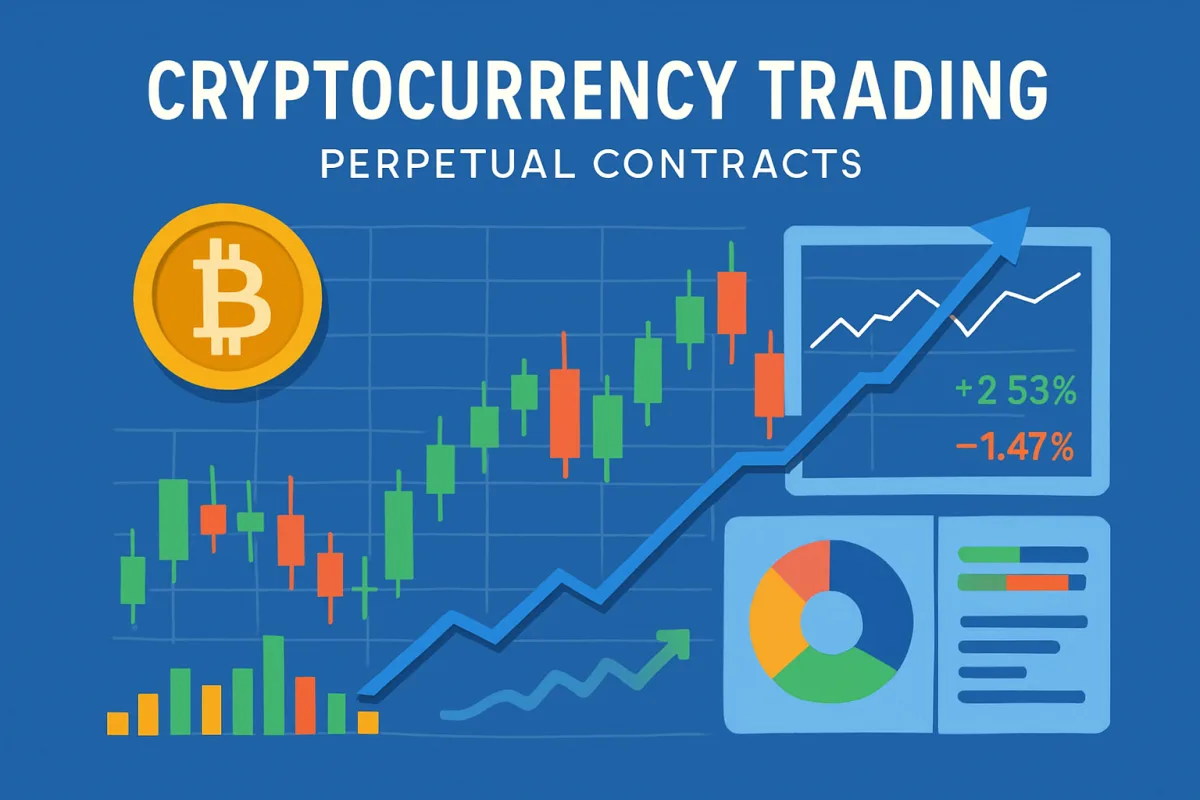
Perpetual contracts are a type of derivative in cryptocurrency trading that allow traders to speculate on the price of an asset without an expiration date. Unlike traditional futures contracts, perpetual contracts can be held indefinitely, making them popular among traders seeking flexibility. They typically involve leverage, allowing traders to control larger positions with a smaller amount of capital. However, this also increases risk, as losses can accumulate quickly. Understanding the mechanics of perpetual contracts, including funding rates and margin requirements, is crucial for effective trading.
Quick Summary
Perpetual contracts in crypto offer a unique trading opportunity by allowing indefinite holding without expiration. They enable traders to leverage their positions, enhancing potential profits but also increasing risk. Key components include funding rates, which are periodic payments between long and short positions, and margin requirements that dictate how much capital is needed to open a position. Traders must navigate these factors carefully to manage risk effectively. As the crypto market evolves, understanding perpetual contracts becomes essential for anyone looking to engage in advanced trading strategies.
Curator Notes
Perpetual contracts have gained significant traction in the cryptocurrency market due to their unique structure. Unlike traditional futures contracts, which have a set expiration date, perpetual contracts allow traders to hold their positions indefinitely. This flexibility is particularly appealing in the volatile crypto landscape, where price movements can be unpredictable.
Traders can maintain their positions as long as they meet margin requirements, making it easier to capitalize on market trends over time. One of the defining features of perpetual contracts is the funding rate mechanism. This rate is a periodic payment exchanged between long and short positions, designed to keep the contract price in line with the underlying asset's price.
If the funding rate is positive, long positions pay short positions, and vice versa. Understanding how funding rates work is crucial, as they can significantly impact profitability over time. Leverage is another critical aspect of perpetual contracts.
Traders can control larger positions than their initial capital would allow, which can amplify both profits and losses. While leverage can enhance returns, it also increases the risk of liquidation if the market moves against a trader's position. Therefore, risk management strategies, such as setting stop-loss orders, are essential when trading perpetual contracts.
The choice of trading platform is also vital. Different exchanges offer varying features, fees, and liquidity levels. Some platforms may provide better leverage options or lower trading fees, while others might have superior user interfaces or customer support.
Researching and selecting the right exchange can significantly affect a trader's experience and success. Moreover, traders should be aware of the psychological aspects of trading perpetual contracts. The ability to hold positions indefinitely can lead to emotional decision-making, especially in a volatile market.
Maintaining discipline and sticking to a trading plan is crucial for long-term success. In summary, perpetual contracts are a powerful tool for crypto traders, offering flexibility and the potential for high returns. However, they come with inherent risks that require careful consideration and management.
As the crypto market continues to evolve, staying informed about the latest trends and strategies related to perpetual contracts will be essential for traders looking to navigate this complex landscape effectively.
Best Sources
Videos and Community Signals
Perpetual contracts, or perps, are a foundational tool used by many active traders today. Disclaimer: Crypto-assets can be highly ...
What is a Perpetual Futures Contract? Unlike traditional futures, perps never expire—but they use funding rates to stay ...
Comparison
| Decision Point | Good Starting Choice | When to Go Further |
|---|---|---|
| Online booking | A simple booking page with service duration, staff assignment and confirmation emails. | Multi-location calendars, deposits, cancellation rules and waitlist handling. |
| Client records | Basic notes, visit history and contact details are enough to start. | Segmentation, purchase history, memberships, forms and before-after notes become more important. |
| Reminders | SMS or email reminders help reduce no-shows without adding admin work. | Automated rebooking, follow-up campaigns and missed-appointment recovery matter more. |
| Payments | Card capture and checkout should be simple and transparent. | Packages, memberships, staff commissions, tips and refunds need cleaner reporting. |
| Marketing | Light email or SMS campaigns are useful if they are easy to run. | Automated win-back, birthday offers, review requests and audience segments create more leverage. |
FAQ
Perpetual contracts are derivative contracts that allow traders to speculate on the price of an asset without an expiration date.
Funding rates are periodic payments exchanged between long and short positions to keep the contract price aligned with the underlying asset's price.
The main risks include high volatility, potential for liquidation due to leverage, and the psychological impact of holding positions indefinitely.
Several exchanges like Binance, BitMEX, and Bybit offer perpetual contracts with varying features and fees.
Risk management can be achieved through strategies like setting stop-loss orders, using lower leverage, and diversifying positions.