Passive Income Businesses
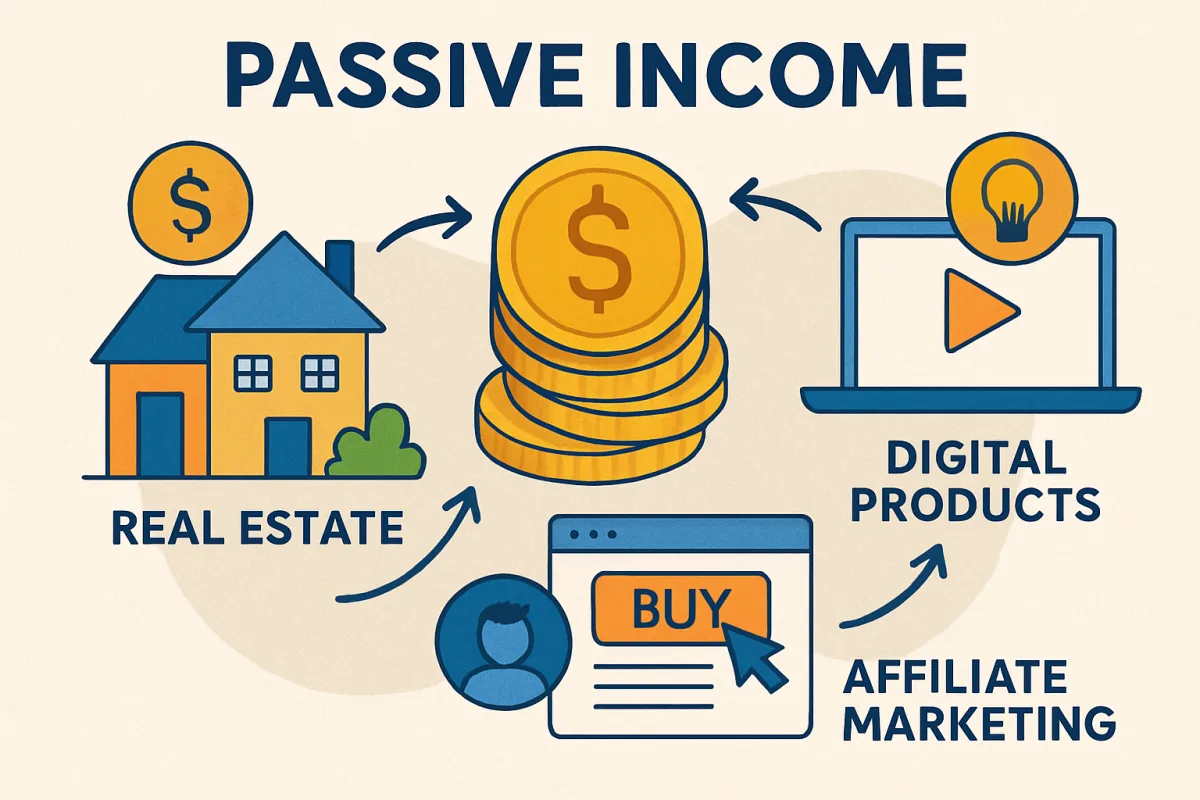
Passive income businesses are ventures that generate revenue with minimal ongoing effort. Popular options include real estate investing, affiliate marketing, and creating digital products. Real estate can provide rental income, while affiliate marketing allows you to earn commissions by promoting products online. Digital products, such as e-books or online courses, can be sold repeatedly without significant additional work. Each option has its pros and cons, and the best choice depends on your skills, resources, and risk tolerance.
Quick Summary
Exploring passive income businesses can lead to financial freedom with minimal ongoing effort. Options like real estate investing, affiliate marketing, and digital product creation stand out for their potential to generate revenue. Real estate offers steady rental income, while affiliate marketing leverages your online presence for commissions. Digital products allow for scalable sales without continuous input. Choosing the right path depends on your expertise, initial investment, and willingness to manage risks.
Curator Notes
Passive income businesses are an attractive option for those looking to earn money with less day-to-day involvement. One of the most popular avenues is real estate investing. By purchasing rental properties, you can generate a steady stream of income.
However, this requires significant upfront capital and ongoing management, which may not be ideal for everyone. The key is to research locations and property types that promise good returns. Affiliate marketing is another compelling choice.
This involves promoting products or services and earning a commission for each sale made through your referral. It’s a low-cost entry point, especially if you already have a blog or social media following. The challenge lies in building an audience and choosing the right products that resonate with your followers.
Creating digital products, such as e-books or online courses, can also yield passive income. Once developed, these products can be sold repeatedly without much additional effort. However, the initial creation process can be time-consuming and may require marketing skills to drive sales.
It’s essential to identify a niche where you can provide value and stand out from competitors. Each of these options has its trade-offs. Real estate can be lucrative but requires significant investment and risk management.
Affiliate marketing offers flexibility but depends heavily on your ability to attract and maintain an audience. Digital products can be highly scalable, but the upfront work can be daunting. Consider your personal strengths and resources when choosing a passive income business.
If you have capital and are comfortable with property management, real estate might be your best bet. If you excel in content creation and marketing, affiliate marketing or digital products could be more suitable. It’s also worth noting that many successful entrepreneurs diversify their income streams.
Combining several passive income sources can provide financial stability and reduce risk. Start small, test your ideas, and scale as you learn what works best for you. Finally, remember that while the idea of passive income is appealing, it often requires significant effort upfront.
Be prepared to invest time and resources to set up your chosen business effectively. Over time, with the right strategies, you can achieve a sustainable passive income that supports your financial goals.
Recommended Options
- Real Estate Investment: Best for Individuals with capital looking for long-term investment Provides steady rental income and potential property appreciation Signal checked: High demand in urban areas and historically stable returns Alternative to consider: REITs (Real Estate Investment Trusts) for lower capital investment
- Affiliate Marketing: Best for Content creators and marketers with an online presence Low startup costs and potential for high commissions Signal checked: Many successful bloggers and influencers earn significant income through affiliate links Alternative to consider: Sponsored content for direct income from brands
- Digital Product Creation: Best for Experts in a niche looking to monetize their knowledge Scalable sales and minimal ongoing effort after creation Signal checked: Growing market for online courses and e-books Alternative to consider: Subscription models for ongoing revenue
Best Sources
Videos and Community Signals
There needs to be a serious talk around the concept of passive income. If you think there is a special way to just have money flood ...
Want to learn how to scale your business? You can get my free personalized roadmap here: https://www.acquisition.com/roadmap ...
Comparison
| Decision Point | Good Starting Choice | When to Go Further |
|---|---|---|
| Initial Investment | Affiliate Marketing (low cost to start) | Real Estate (higher capital required) |
| Ongoing Management | Digital Products (minimal after launch) | Real Estate (requires active management) |
| Income Potential | Affiliate Marketing (variable based on traffic) | Real Estate (consistent rental income) |
FAQ
Passive income is money earned with minimal ongoing effort, often through investments or businesses that require little daily management.
The amount varies widely; affiliate marketing can start with little to no money, while real estate typically requires a significant upfront investment.
Yes, options like affiliate marketing or creating digital products can be set up with initial time investment and then generate income with minimal ongoing effort.