One-Page Business Plans Guide
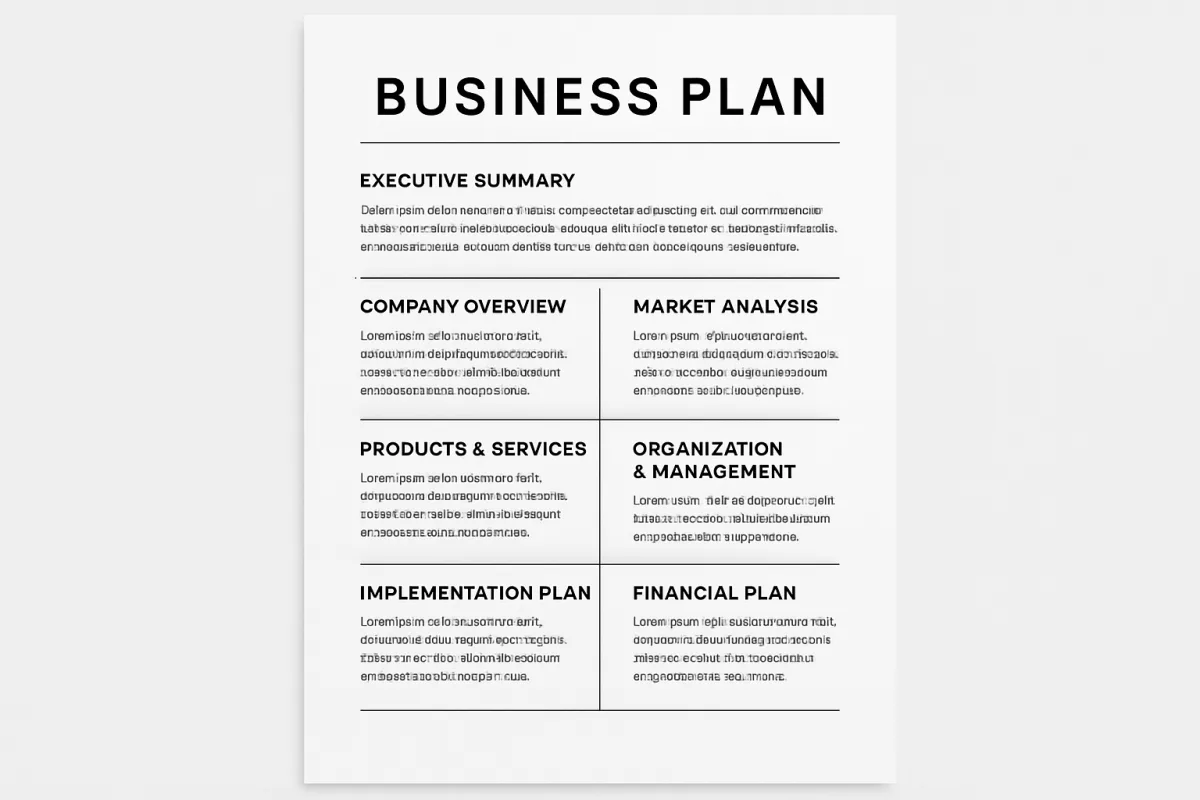
Creating a one-page business plan involves distilling your business idea into a concise format that covers key elements like value proposition, target market, and financial projections. This approach allows entrepreneurs to focus on the essentials, making it easier to communicate their vision to stakeholders. The goal is to create a clear, actionable document that can guide your business strategy without overwhelming detail. Tools like Lean Canvas or Business Model Canvas can help structure your plan effectively.
Quick Summary
A one-page business plan is a streamlined approach to outlining your business strategy, focusing on essential components such as your value proposition, target audience, and financial goals. This method is ideal for entrepreneurs who need a clear, concise document to communicate their vision. By using frameworks like Lean Canvas, you can effectively capture your business model in a single page, making it easier to share with potential investors or partners. This guide will help you understand how to create an effective one-page business plan.
Curator Notes
A one-page business plan serves as a powerful tool for entrepreneurs looking to clarify their business model and strategy. The key is to focus on the essentials: your value proposition, target market, revenue streams, and key metrics. This concise format not only simplifies the planning process but also makes it easier to communicate your ideas to others, such as investors or partners.
Using frameworks like the Lean Canvas can be particularly helpful. This model encourages you to fill in specific sections, such as customer segments, problems, and unique value propositions, which can guide your thinking and ensure you cover all necessary aspects. The visual layout also aids in quickly identifying gaps in your business strategy.
When crafting your one-page plan, prioritize clarity and brevity. Each section should be succinct yet informative, allowing anyone who reads it to grasp your business concept quickly. Avoid jargon and focus on straightforward language that conveys your message effectively.
Another advantage of a one-page business plan is its adaptability. As your business evolves, you can easily update this document to reflect new insights or changes in your strategy. This flexibility makes it a living document that grows alongside your business, rather than a static plan that becomes obsolete.
However, while a one-page plan is beneficial, it’s essential to recognize its limitations. It may not capture the depth of detail required for complex business models or industries. For more intricate strategies, consider supplementing your one-page plan with a more detailed business plan.
In summary, a one-page business plan is an excellent starting point for entrepreneurs. It helps distill complex ideas into actionable insights and serves as a useful communication tool. By focusing on the core elements of your business, you can create a roadmap that guides your decisions and strategies moving forward.
Ultimately, the effectiveness of your one-page business plan lies in its clarity and focus. Regularly revisiting and refining this document can help ensure that it remains relevant and useful as your business grows and changes.
Recommended Options
- Strategyzer Lean Canvas: Best for Entrepreneurs looking for a structured approach to business planning. Provides a clear framework for outlining business models on a single page. Signal checked: Widely used in startup communities and endorsed by business experts. Alternative to consider: Business Model Canvas, which offers a more detailed approach.
- LivePlan: Best for Small businesses needing a comprehensive business planning tool. Offers templates and financial forecasting tools that simplify the planning process. Signal checked: Highly rated by users for its user-friendly interface and support. Alternative to consider: Bizplan, which also provides a step-by-step guide for creating business plans.
- Bizplan: Best for Startups looking for a guided approach to business planning. Signal checked: Positive user reviews highlight its ease of use and effectiveness. Alternative to consider: Enloop, which focuses on automated business plan generation.
Best Sources
Videos and Community Signals
A great business plan can be the key to securing funding, attracting investors, and building a successful business. In this video, I ...
Tutorial starts at 1:20 Whether you're starting a new business or just trying to get your existing business a bit more organized, ...
Comparison
| Decision Point | Good Starting Choice | When to Go Further |
|---|---|---|
| Framework | Lean Canvas for quick, visual representation. | Business Model Canvas for detailed business modeling. |
| User-Friendliness | Lean Canvas for straightforward use. | LivePlan for comprehensive support and templates. |
| Financial Projections | Basic estimates in Lean Canvas. | Detailed forecasting in LivePlan. |
FAQ
A one-page business plan is a concise document that outlines the essential elements of a business, including its value proposition, target market, and financial goals.
You can create a one-page business plan by using frameworks like Lean Canvas, focusing on key components such as customer segments, problems, and unique value propositions.
The benefits include clarity, ease of communication, adaptability, and the ability to quickly convey your business idea to stakeholders.