NVMe SSD vs Regular SSD Explained
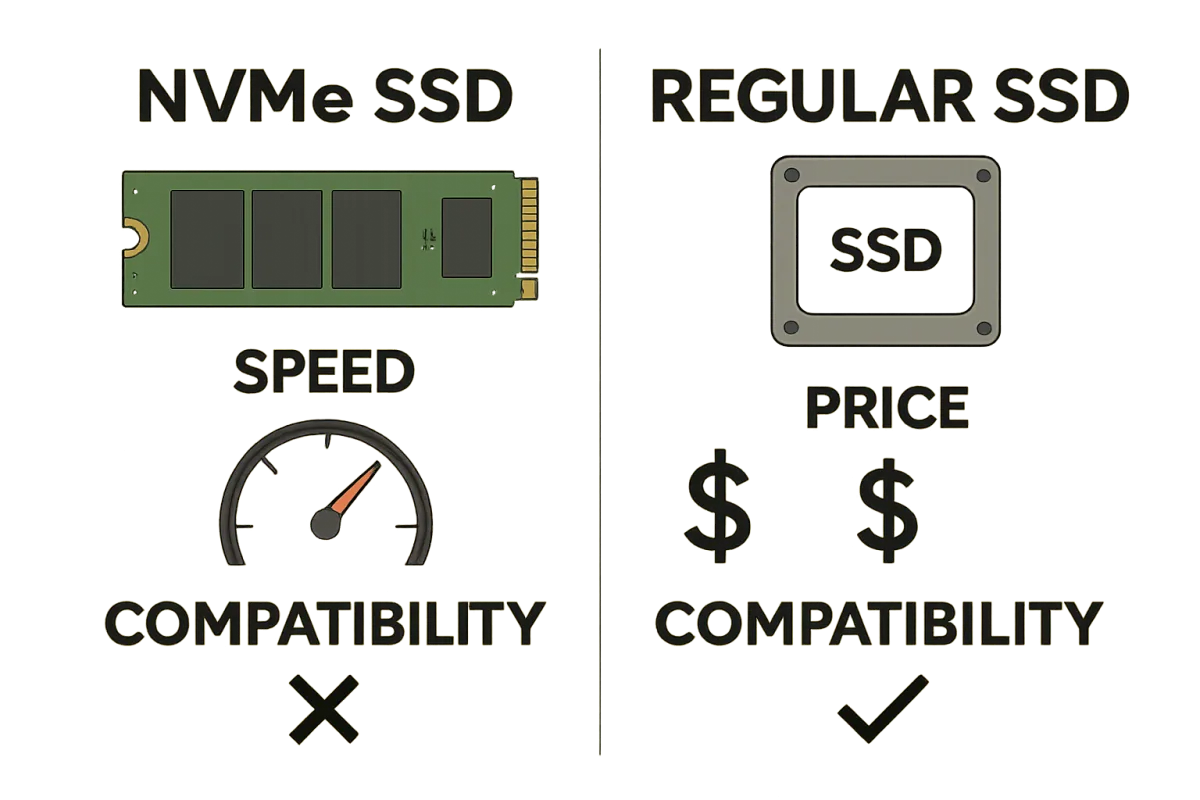
NVMe SSDs (Non-Volatile Memory Express) offer significantly faster data transfer speeds compared to regular SSDs (Solid State Drives) that use SATA (Serial ATA) connections. While regular SSDs can reach speeds up to 600 MB/s, NVMe SSDs can exceed 3,500 MB/s, making them ideal for high-performance tasks such as gaming, video editing, and data-intensive applications. However, NVMe SSDs tend to be more expensive and may require compatible motherboards, while regular SSDs are more widely compatible and cost-effective for everyday use.
Quick Summary
NVMe SSDs provide superior speed and performance over regular SSDs, making them suitable for demanding applications. Regular SSDs, while slower, are more affordable and compatible with a wider range of devices. Understanding the differences can help users choose the right storage solution for their needs.
Curator Notes
NVMe SSDs utilize the PCIe (Peripheral Component Interconnect Express) interface, which allows for multiple lanes of data transfer, resulting in much higher speeds compared to SATA-based SSDs. This makes NVMe drives particularly beneficial for tasks that require quick read/write operations, such as gaming, 3D rendering, and large file transfers. The architecture of NVMe also reduces latency, enhancing overall system responsiveness.
On the other hand, regular SSDs, which connect via SATA, are limited by the interface's bandwidth. While they still offer significant performance improvements over traditional hard drives, their speeds are capped at around 600 MB/s. Regular SSDs are generally more affordable and compatible with a broader range of devices, making them a practical choice for users who need reliable storage without the need for extreme performance.
Choosing between the two largely depends on the specific use case and budget considerations.
Recommended Options
- Samsung 970 EVO Plus: Best for High-performance gaming and professional applications Offers exceptional read/write speeds and reliability. Signal checked: Widely praised in reviews for performance and durability. Alternative to consider: Western Digital Black SN750
- Crucial MX500: Best for Everyday computing and budget builds Provides solid performance at an affordable price. Signal checked: Highly rated for value and performance in consumer reviews. Alternative to consider: Samsung 860 EVO
Best Sources
Videos and Community Signals
M.2 NVMe SSD that I recommend https://amzn.to/48fbgSP (affiliate) M.2 vs SSD comparison. What is an M.2 SSD? What is NVMe ...
To wrap up July's look at some of the lightest tech around, we're putting the spotlight on M.2, NVMe SSDs. These tiny, lightweight ...
Comparison
| Decision Point | Good Starting Choice | When to Go Further |
|---|---|---|
| Speed | Regular SSD (up to 600 MB/s) | NVMe SSD (up to 3,500 MB/s) |
| Price | More affordable options available | Higher price point for NVMe drives |
| Compatibility | Works with most older systems | Requires modern motherboards with M.2 or PCIe slots |
FAQ
The main advantage of NVMe SSDs is their significantly faster data transfer speeds, which can enhance performance in demanding applications.
Yes, regular SSDs are still a great choice for budget-conscious users and those who need reliable storage without extreme performance requirements.