Notion vs Obsidian
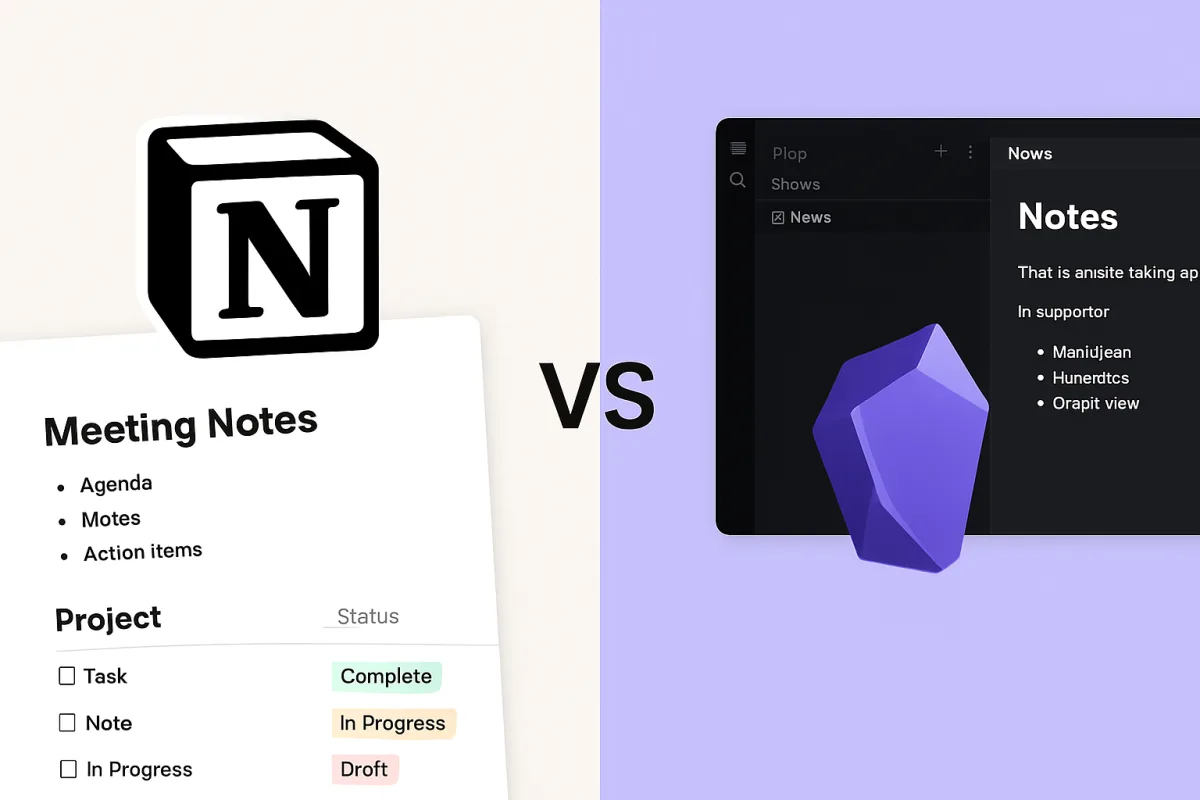
Notion and Obsidian are both powerful tools for note-taking and organization, but they cater to different user needs. Notion is ideal for team collaboration and project management, offering a flexible workspace for databases, wikis, and task lists. In contrast, Obsidian excels in personal knowledge management with its markdown-based notes and bi-directional linking, making it perfect for individuals focused on building a personal knowledge base. Choosing between them depends on whether you prioritize collaborative features or personal organization.
Quick Summary
Notion and Obsidian serve different purposes in the realm of note-taking and organization. Notion is best suited for teams needing collaboration and project management tools, while Obsidian is tailored for individuals focused on personal knowledge management. Understanding these distinctions can help users select the tool that aligns with their specific needs.
Curator Notes
Notion is a versatile workspace that combines notes, databases, and task management into one platform. Its collaborative features allow teams to work together seamlessly, making it an excellent choice for project management and documentation. Users can create custom templates, integrate various media types, and utilize a rich set of features to organize their work efficiently.
However, this complexity may overwhelm users who prefer a straightforward note-taking experience. On the other hand, Obsidian focuses on personal knowledge management, emphasizing the creation of interconnected notes through bi-directional linking. This approach allows users to visualize relationships between concepts, making it easier to build a comprehensive knowledge base.
Obsidian supports markdown formatting, which appeals to users who appreciate a text-based approach. While it lacks some collaborative features, it offers powerful plugins and customization options for advanced users. Ultimately, the choice between Notion and Obsidian hinges on your specific needs: if collaboration and project management are your priorities, Notion is the way to go; if you seek a robust personal knowledge management system, Obsidian is likely the better fit.
Recommended Options
- Notion: Best for Teams and collaborative projects Offers a flexible workspace with rich features for project management and documentation. Signal checked: Widely adopted by teams and praised for its versatility. Alternative to consider: Trello for task management.
- Obsidian: Best for Individuals focused on personal knowledge management Signal checked: Highly regarded in the personal productivity community for its unique features. Alternative to consider: Roam Research for similar linking capabilities.
Best Sources
Videos and Community Signals
EdrawMind-Perfect for visual thinkers—makes brainstorming and mind-mapping creating effortless: https://bit.ly/45YfFIV Find out ...
Most productivity apps don't fail because they're bad — they fail because you stop using them when energy drops, motivation ...
Comparison
| Decision Point | Good Starting Choice | When to Go Further |
|---|---|---|
| Collaboration Features | Notion | Obsidian (for personal use) |
| Note Formatting | Notion (rich text and media) | Obsidian (markdown-based) |
| Interlinking Notes | Notion (basic linking) | Obsidian (bi-directional linking) |
| Customization | Notion (templates) | Obsidian (plugins and themes) |
FAQ
Notion requires an internet connection for full functionality, but it has limited offline capabilities.
Obsidian offers a free version with core features, while additional features are available through a paid subscription.
Obsidian is often preferred for academic research due to its linking capabilities, allowing for better organization of complex information.