Morning vs Night Skincare Routines
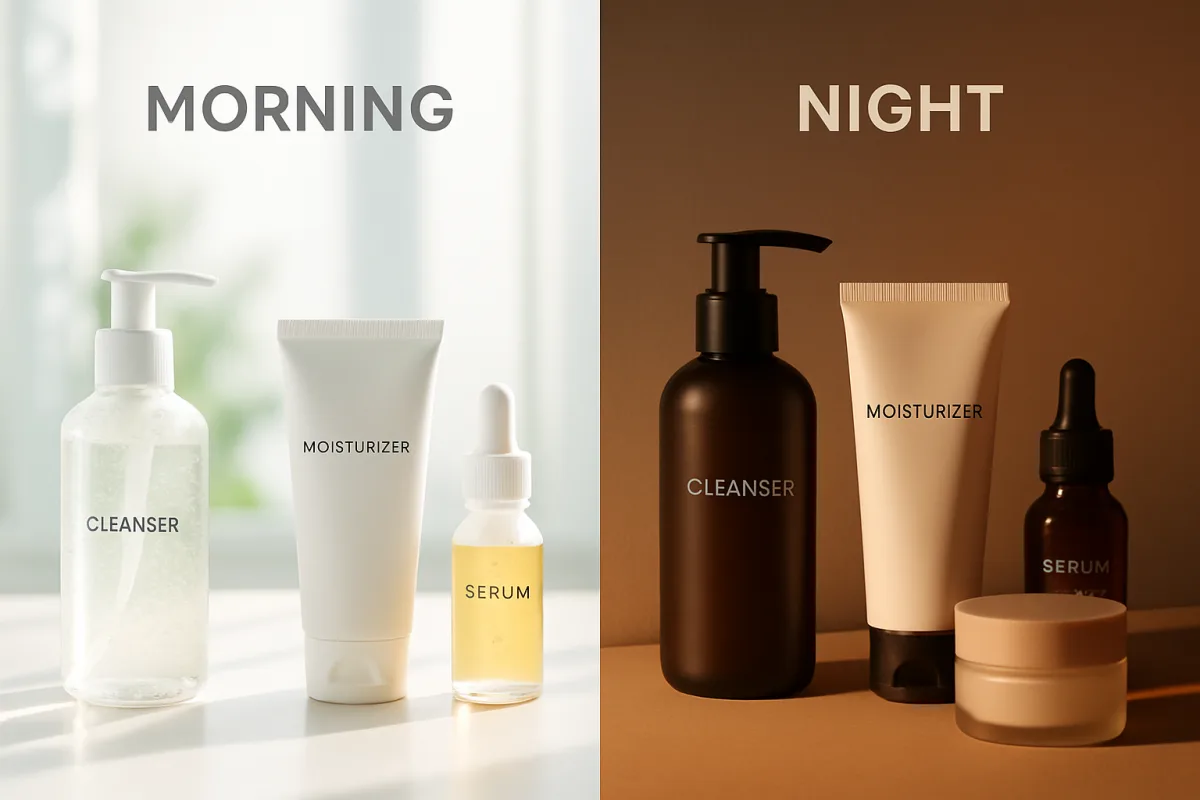
Morning and night skincare routines serve different purposes and are tailored to your skin's needs at various times of the day. A morning routine typically focuses on protection and hydration, using products like sunscreen and moisturizers to shield the skin from environmental stressors. In contrast, a night routine emphasizes repair and rejuvenation, often incorporating treatments like retinoids and serums that work best while you sleep. Understanding these differences can help you optimize your skincare regimen for better results.
Quick Summary
Morning and night skincare routines are essential for maintaining healthy skin, each serving unique functions. The morning routine focuses on protection and hydration, while the night routine prioritizes repair and rejuvenation. Tailoring your products to these needs can enhance your skin's health and appearance.
Curator Notes
A morning skincare routine is designed to prepare your skin for the day ahead. It typically includes cleansing to remove overnight oils and impurities, followed by a hydrating serum or moisturizer, and a broad-spectrum sunscreen. This routine helps protect your skin from UV rays and environmental pollutants, which can cause premature aging and other skin issues.
Products with antioxidants can also be beneficial in this phase, as they help neutralize free radicals generated by sun exposure and pollution. Conversely, a night skincare routine focuses on repair and rejuvenation. During sleep, your skin undergoes its natural repair processes, making it an ideal time to apply treatments that promote cell turnover and hydration.
Ingredients like retinoids, peptides, and hyaluronic acid are commonly used in night routines to enhance skin texture and tone. Additionally, using a heavier moisturizer or overnight mask can help lock in moisture and provide intensive nourishment, addressing any dryness or damage accumulated throughout the day.
Recommended Options
- CeraVe Hydrating Facial Cleanser: Best for All skin types, especially dry skin Gentle formula that cleanses without stripping moisture. Signal checked: Highly rated for its hydrating properties and dermatologist recommendations. Alternative to consider: Neutrogena Hydro Boost Water Gel
- La Roche-Posay Anthelios Melt-in Milk Sunscreen: Best for Sensitive skin and daily sun protection Offers broad-spectrum protection with a lightweight feel. Signal checked: Widely praised for its non-greasy formula and effectiveness. Alternative to consider: EltaMD UV Clear Broad-Spectrum SPF 46
- The Ordinary Retinol 0.5% in Squalane: Best for Anti-aging and skin texture improvement Affordable retinol option that promotes cell turnover. Signal checked: Popular among skincare enthusiasts for visible results. Alternative to consider: Paula's Choice 1% Retinol Treatment
Best Sources
Videos and Community Signals
Morning vs. Night Skincare: What Actually Matters | Dermatologist Explains Do you really need different skincare routines in the ...
We might be calling you out, but it's all out of love! (We promise) Your morning and nighttime skincare routines should NOT be ...
Comparison
| Decision Point | Good Starting Choice | When to Go Further |
|---|---|---|
| Purpose | Hydration and protection from environmental stressors. | Repair and rejuvenation of skin overnight. |
| Key Products | Cleanser, moisturizer, sunscreen. | Cleanser, retinoids, nourishing night cream. |
| Timing | Morning routine to start the day. | Night routine to enhance skin recovery. |
FAQ
While some products can be used in both routines, it's best to tailor your products to the specific needs of morning and night for optimal results.
A morning routine can take about 5-10 minutes, while a night routine might take 10-15 minutes, depending on the number of products used.