Money Market vs Checking Account
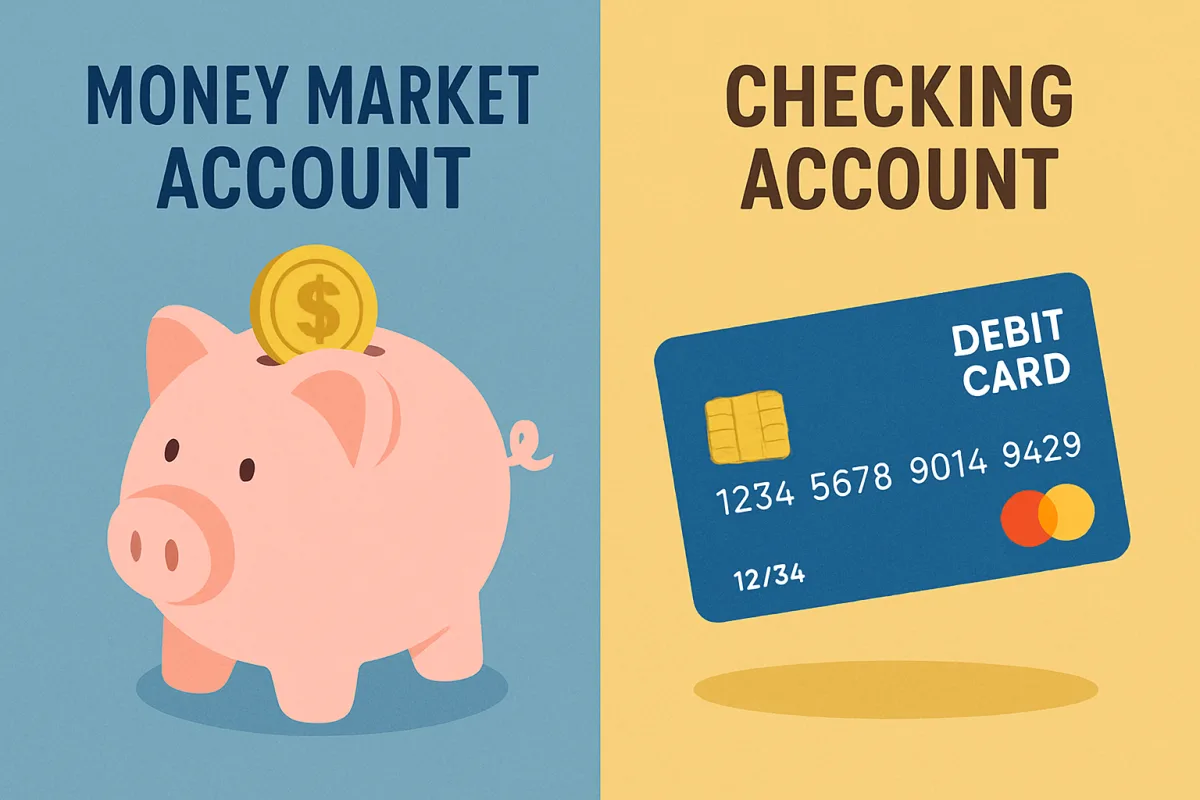
Money market accounts and checking accounts serve different financial needs. A money market account typically offers higher interest rates and limited check-writing capabilities, making it suitable for saving while maintaining some liquidity. In contrast, checking accounts provide easier access to funds for daily transactions, often with no withdrawal limits. Choose a money market account if you're looking to earn interest on savings while having some access to your funds. Opt for a checking account for everyday spending and bill payments, especially if you need frequent access to cash.
Quick Summary
Understanding the differences between money market accounts and checking accounts is crucial for effective personal finance management. Money market accounts generally offer better interest rates and are ideal for saving, while checking accounts are designed for everyday transactions. If you prioritize earning interest and can manage limited withdrawals, a money market account may be best. However, if you need easy access to your funds for regular expenses, a checking account is the way to go. Knowing these distinctions can help you make informed financial decisions.
Curator Notes
Money market accounts (MMAs) and checking accounts are both essential tools in personal finance, but they cater to different needs. MMAs typically offer higher interest rates compared to checking accounts, making them an attractive option for individuals looking to grow their savings. However, they often come with restrictions on the number of transactions allowed each month, which can be a drawback for those who need frequent access to their funds.
On the other hand, checking accounts are designed for everyday use. They provide unlimited transactions, making them ideal for paying bills, making purchases, and withdrawing cash. Most checking accounts come with debit cards and checks, which facilitate easy access to funds.
However, the trade-off is that checking accounts usually offer little to no interest on the balance, which can be a disadvantage for those looking to save. When considering which account to open, think about your financial habits. If you find yourself frequently withdrawing cash or making purchases, a checking account is likely the better choice.
However, if you can limit your transactions and are focused on saving, an MMA could be more beneficial in the long run. It's also worth noting that some financial institutions offer hybrid accounts that combine features of both MMAs and checking accounts. These accounts may provide higher interest rates while allowing for more transactions than a traditional money market account, making them a versatile option for many consumers.
Fees can also play a significant role in your decision. Many checking accounts have monthly maintenance fees, but these can often be waived by meeting certain criteria, such as maintaining a minimum balance. Conversely, MMAs may have higher minimum balance requirements to avoid fees, which could be a barrier for some.
Ultimately, the choice between a money market account and a checking account depends on your financial goals and spending habits. Assess your needs carefully, and consider how each account type aligns with your overall financial strategy. Understanding these distinctions can empower you to make more informed decisions about where to keep your money and how to manage it effectively.
Recommended Options
- Ally Money Market Account: Best for Individuals looking for high interest rates on savings with easy access. Offers competitive interest rates and no monthly maintenance fees. Signal checked: Highly rated by users for customer service and ease of use. Alternative to consider: Marcus by Goldman Sachs Money Market Account
- Chase Total Checking Account: Best for Those needing a widely accepted checking account with easy access to funds. Offers extensive ATM access and online banking features. Signal checked: Popular among consumers for its convenience and robust mobile app. Alternative to consider: Bank of America Advantage Plus Banking
Best Sources
Videos and Community Signals
In this video, we're going to compare high yield savings account vs. money market mutual fund. We'll discuss the pros and cons of ...
Start eliminating debt for free with EveryDollar - https://ter.li/3w6nto Have a question for the show? Call 888-825-5225 ...
Comparison
| Decision Point | Good Starting Choice | When to Go Further |
|---|---|---|
| Interest Rates | Checking accounts usually offer low or no interest. | Money market accounts typically provide higher interest rates. |
| Transaction Limits | Checking accounts allow unlimited transactions. | Money market accounts often limit withdrawals to six per month. |
| Access to Funds | Checking accounts provide easy access via debit cards and checks. | Money market accounts may require transfers to access funds. |
| Fees | Many checking accounts have waivable monthly fees. | Money market accounts may have higher minimum balance requirements. |
FAQ
While you can use a money market account for some transactions, they are not designed for frequent use due to withdrawal limits.
Money market accounts generally offer higher interest rates, making them better for saving compared to checking accounts.
Both account types may have fees, but they can often be waived by meeting certain requirements.