Ledger vs Trezor Security Tech
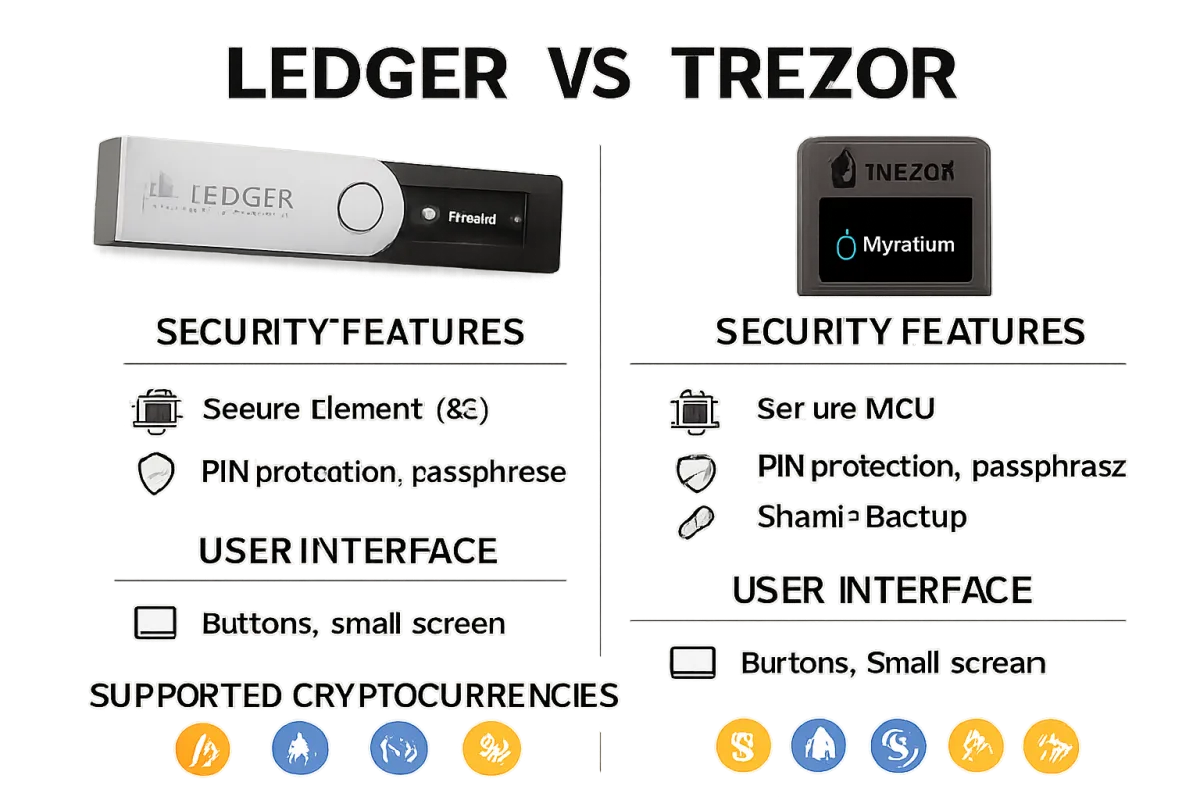
Ledger and Trezor are two leading hardware wallet brands in the cryptocurrency space, each offering unique security features. Ledger wallets, such as the Ledger Nano X, utilize a proprietary operating system and secure element technology, making them highly secure against physical and remote attacks. Trezor wallets, like the Trezor Model T, focus on open-source software, allowing for greater transparency and community audits. Both brands provide robust security, but the choice often depends on user preference for features like interface, supported cryptocurrencies, and price.
Quick Summary
Choosing between Ledger and Trezor for cryptocurrency storage hinges on several key factors, including security features, user interface, and supported coins. Ledger's proprietary technology offers a strong defense against attacks, while Trezor's open-source approach appeals to users who value transparency. Both brands have their strengths, making it essential to consider what aspects matter most to your crypto management strategy.
Curator Notes
Ledger wallets, particularly the Ledger Nano X, are known for their advanced security features. They use a secure element chip, which is designed to withstand physical tampering. This makes Ledger a strong choice for users who prioritize security above all else.
Additionally, Ledger's proprietary operating system is tailored for optimal performance and security, though it may limit some customization options that advanced users might seek. On the other hand, Trezor wallets, such as the Trezor Model T, emphasize transparency through their open-source software. This allows users to review the code and verify the security measures in place.
For those who appreciate community-driven development and the ability to customize their experience, Trezor may be the better option. However, this openness can sometimes introduce vulnerabilities if not properly managed. Both brands support a wide range of cryptocurrencies, but there are differences in the specific coins supported.
Ledger tends to have a broader range of altcoins, while Trezor focuses on the most popular cryptocurrencies. Users should consider which coins they plan to store when making their decision. User experience also varies significantly between the two.
Ledger wallets often feature a more user-friendly interface, which can be appealing for beginners. Trezor's interface, while functional, may require a bit more learning for new users. This difference can impact the overall user experience, especially for those less tech-savvy.
Pricing is another factor to consider. Ledger wallets generally fall into a mid-range price category, while Trezor's offerings can be slightly more expensive. Users should weigh the cost against the features they find most valuable.
Finally, customer support and community resources are crucial. Both companies offer support, but the quality and responsiveness can vary. Trezor's open-source community often provides additional resources and troubleshooting help, which can be a significant advantage for users who prefer community engagement.
In summary, the choice between Ledger and Trezor should be guided by individual needs and preferences. Security features, supported coins, user interface, and community support all play vital roles in determining which hardware wallet is the best fit for your cryptocurrency storage needs.
Recommended Options
- Ledger Nano X: Best for Users prioritizing security and a wide range of supported cryptocurrencies. Utilizes a secure element chip and proprietary OS for enhanced security. Signal checked: Widely reviewed and recommended by crypto experts. Alternative to consider: Ledger Nano S for a more budget-friendly option.
- Trezor Model T: Best for Users who value transparency and open-source software. Offers a touchscreen interface and open-source code for community verification. Signal checked: Highly rated for usability and security in community forums. Alternative to consider: Trezor One for a more affordable entry point.
Best Sources
Videos and Community Signals
Bybit $4000 Bonus (Global): https://bit.ly/Bybit-ZG MoneyZG Crypto Investor Course: https://moneyzg.academy Bitget $8000 ...
BTC With Ledger Flex: https://shop.ledger.com/products/ledger-flex/graphite?r=6c9fa5530a57 How does the @Ledger Flex ...
Comparison
| Decision Point | Good Starting Choice | When to Go Further |
|---|---|---|
| Security Technology | Ledger's secure element chip for strong physical security. | Trezor's open-source software for transparency and community audits. |
| User Interface | Ledger's user-friendly design for beginners. | Trezor's customizable interface for advanced users. |
| Supported Cryptocurrencies | Ledger supports a broader range of altcoins. | Trezor focuses on popular cryptocurrencies with strong community support. |
| Price | Ledger Nano S for budget-conscious users. | Trezor Model T for those willing to invest in premium features. |
FAQ
Both wallets offer strong security, but Ledger's use of a secure element chip provides an edge in physical security.
While both support many of the same cryptocurrencies, Ledger generally has a broader selection of altcoins.
While open-source software can introduce vulnerabilities, Trezor's community actively audits and improves its code.