Lean Startup Method Explained
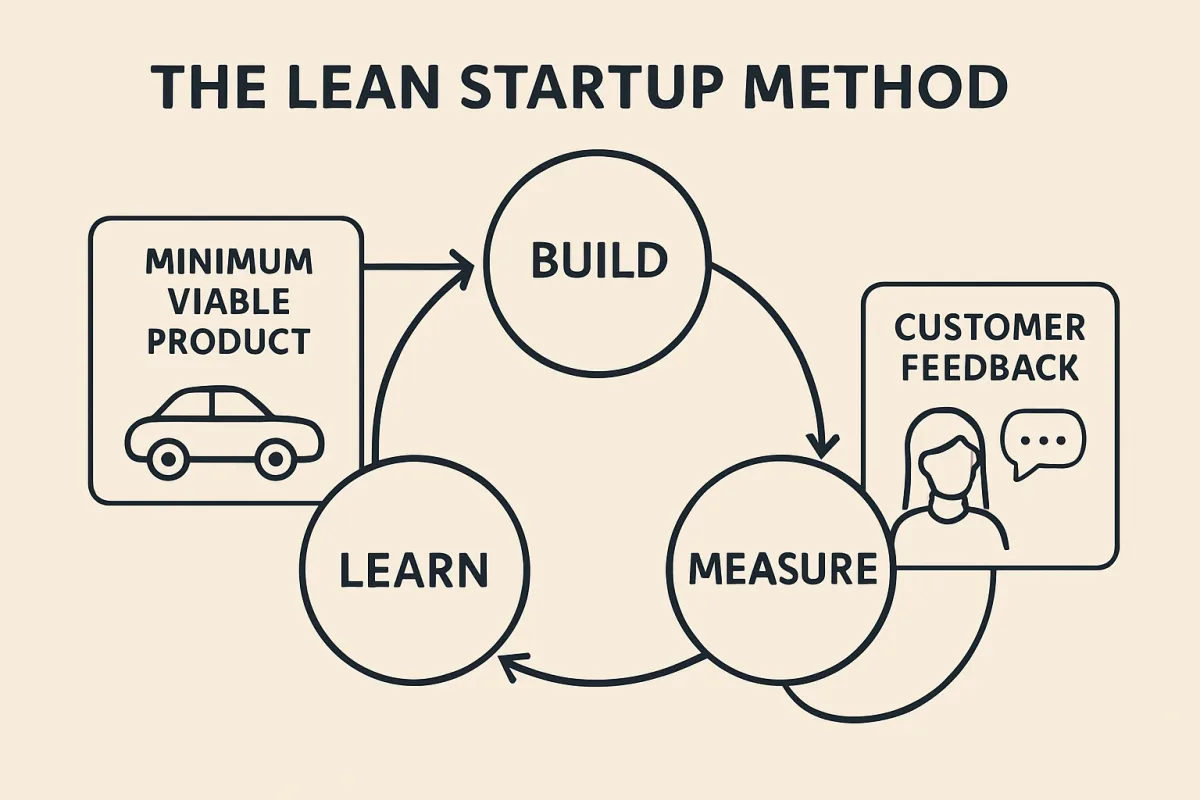
The Lean Startup Method is a systematic approach to developing businesses and products that aims to shorten product development cycles and discover what customers really want. It emphasizes rapid prototyping, validated learning, and iterative product releases to reduce market risks and avoid unnecessary costs. By focusing on customer feedback and data-driven decisions, startups can pivot or persevere based on real-world insights, ultimately leading to more successful outcomes.
Quick Summary
The Lean Startup Method provides a framework for entrepreneurs to efficiently develop products and services by focusing on customer feedback and iterative testing. This approach helps minimize risks and costs associated with launching new ventures by validating ideas early in the development process.
Curator Notes
The Lean Startup Method, developed by Eric Ries, is designed to help entrepreneurs build successful businesses by emphasizing a cycle of build-measure-learn. This iterative process allows startups to test their ideas quickly and adapt based on real customer feedback, rather than relying on assumptions. By creating a Minimum Viable Product (MVP), businesses can enter the market faster and gather valuable insights without significant upfront investment.
One of the core principles of the Lean Startup Method is validated learning, which encourages entrepreneurs to use data to inform their decisions. This approach not only reduces the risk of failure but also helps in identifying the right product-market fit. By continuously iterating on their product based on user feedback, startups can pivot when necessary, ultimately leading to more successful outcomes and efficient use of resources.
Best Sources
Videos and Community Signals
Support the channel by getting The Lean Startup by Eric Ries here: https://amzn.to/2IM6JLp As an Amazon Associate I earn from ...
Everything You Need to Know About Lean Startup in 12 Minutes In this insightful video, Steve Blank shares the big idea that ...
Comparison
| Decision Point | Good Starting Choice | When to Go Further |
|---|---|---|
| Build-Measure-Learn Cycle | Focus on rapid prototyping and customer feedback. | Integrate advanced analytics for deeper insights. |
| Minimum Viable Product (MVP) | Launch a basic version to test market response. | Develop a more refined MVP based on initial feedback. |
| Validated Learning | Use customer feedback to guide product development. | Employ A/B testing for more precise decision-making. |
FAQ
The main goal is to shorten product development cycles and discover what customers truly want through validated learning and iterative testing.
By focusing on customer feedback and data-driven decisions, startups can pivot or persevere based on real-world insights, minimizing the risk of launching unsuccessful products.