Layer 1 vs Layer 2 Blockchains
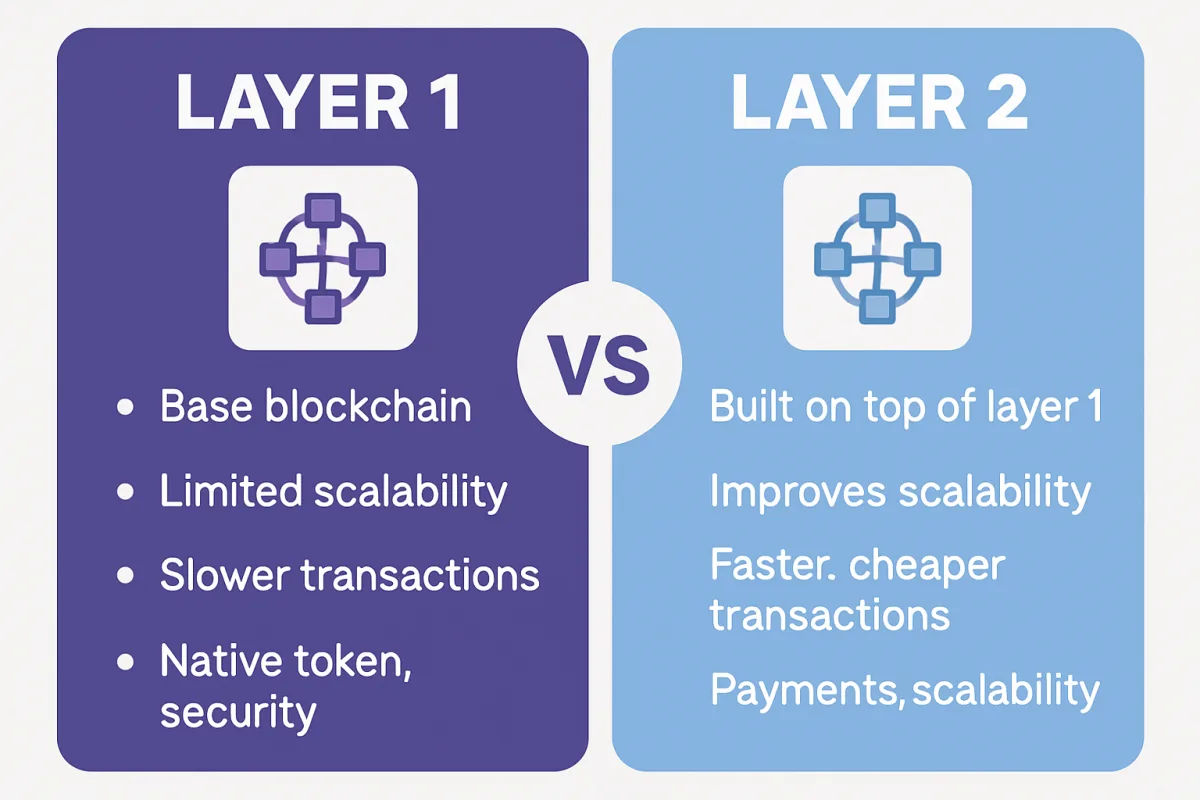
Layer 1 blockchains, like Bitcoin and Ethereum, operate independently, providing the foundational layer for transactions and smart contracts. Layer 2 solutions, such as Lightning Network and Optimistic Rollups, enhance scalability and transaction speed by processing transactions off the main chain. Choosing between them depends on your needs: Layer 1 offers security and decentralization, while Layer 2 focuses on efficiency and lower fees. Understanding the trade-offs can guide your blockchain strategy effectively.
Quick Summary
Layer 1 and Layer 2 blockchains serve different purposes in the crypto ecosystem. Layer 1 blockchains are the core networks that handle all transactions, while Layer 2 solutions enhance these networks by improving speed and reducing costs. If you're looking for security and decentralization, Layer 1 is ideal. However, for faster transactions and lower fees, Layer 2 options are preferable. Knowing these distinctions helps in making informed decisions about blockchain technology.
Curator Notes
Layer 1 blockchains are the foundational networks that host cryptocurrencies and smart contracts. Examples include Bitcoin, which focuses on secure peer-to-peer transactions, and Ethereum, which allows for complex smart contracts. These blockchains are known for their security and decentralization, but they often face scalability issues, leading to slower transaction speeds and higher fees during peak times.
The trade-off here is that while they provide a robust infrastructure, they may not be the best choice for applications requiring high throughput. In contrast, Layer 2 solutions are built on top of Layer 1 blockchains to address scalability and efficiency. Technologies like the Lightning Network for Bitcoin and Optimistic Rollups for Ethereum allow for faster transactions by processing them off the main blockchain.
This significantly reduces congestion and transaction costs. However, these solutions can introduce complexities, such as reliance on the underlying Layer 1 for security and potential centralization risks. When deciding between Layer 1 and Layer 2, consider your specific use case.
If your priority is security and you are dealing with high-value transactions, Layer 1 might be the safer choice. On the other hand, if you are developing applications that require quick transactions and lower fees, Layer 2 solutions are worth exploring. The choice often comes down to balancing security with efficiency.
Another aspect to consider is the maturity and adoption of these technologies. Layer 1 blockchains have a longer track record and are widely recognized, while Layer 2 solutions are still evolving. This can affect the level of community support, available resources, and integration options.
As Layer 2 technologies mature, they may become more attractive for a broader range of applications. It's also essential to stay updated on the latest developments in both Layer 1 and Layer 2 technologies. The blockchain space is rapidly evolving, with new solutions and improvements emerging frequently.
Engaging with community forums and following industry news can provide insights into which technologies are gaining traction and why. In summary, both Layer 1 and Layer 2 blockchains have their strengths and weaknesses. Understanding these can help you make informed decisions that align with your goals, whether you're an investor, developer, or enthusiast in the crypto space.
Always weigh the trade-offs between security, speed, and cost when selecting a blockchain solution for your needs.
Recommended Options
- Bitcoin: Best for Secure peer-to-peer transactions Pioneering blockchain with high security and decentralization Signal checked: Widely adopted and recognized as digital gold Alternative to consider: Ethereum for smart contracts
- Ethereum: Best for Smart contracts and decentralized applications Robust ecosystem with extensive developer support Signal checked: Second largest cryptocurrency by market cap Alternative to consider: Cardano for a different approach to smart contracts
- Lightning Network: Best for Fast and low-cost Bitcoin transactions Enables instant payments and scalability for Bitcoin Signal checked: Growing adoption among merchants and users Alternative to consider: Liquid Network for asset transfers
- Optimistic Rollups: Best for Scaling Ethereum applications Significantly reduces gas fees and increases throughput Signal checked: Adoption by major Ethereum projects Alternative to consider: zk-Rollups for enhanced privacy
Best Sources
Videos and Community Signals
This video breaks down the differences between Layer 1 and Layer 2 solutions in blockchain technology, focusing on how these ...
What's the difference between Layer 1 and Layer 2 blockchains? In this video, we break it down in simple terms. Layer 1s like ...
Comparison
| Decision Point | Good Starting Choice | When to Go Further |
|---|---|---|
| Security | Layer 1 offers high security | Layer 2 relies on Layer 1 for security |
| Transaction Speed | Layer 1 can be slow during congestion | Layer 2 provides faster transactions |
| Cost | Layer 1 fees can be high | Layer 2 reduces transaction costs |
| Decentralization | Layer 1 is fully decentralized | Layer 2 may introduce centralization risks |
FAQ
A Layer 1 blockchain is the base network that processes transactions and smart contracts independently, like Bitcoin or Ethereum.
Layer 2 solutions are built on top of Layer 1 blockchains to improve scalability and transaction speed, such as the Lightning Network or Optimistic Rollups.
It depends on your needs; Layer 1 offers security and decentralization, while Layer 2 focuses on efficiency and lower costs.
Layer 2 solutions rely on the security of their underlying Layer 1, but they can introduce new risks, so it's essential to evaluate each solution carefully.