Inherited IRA Rules Explained
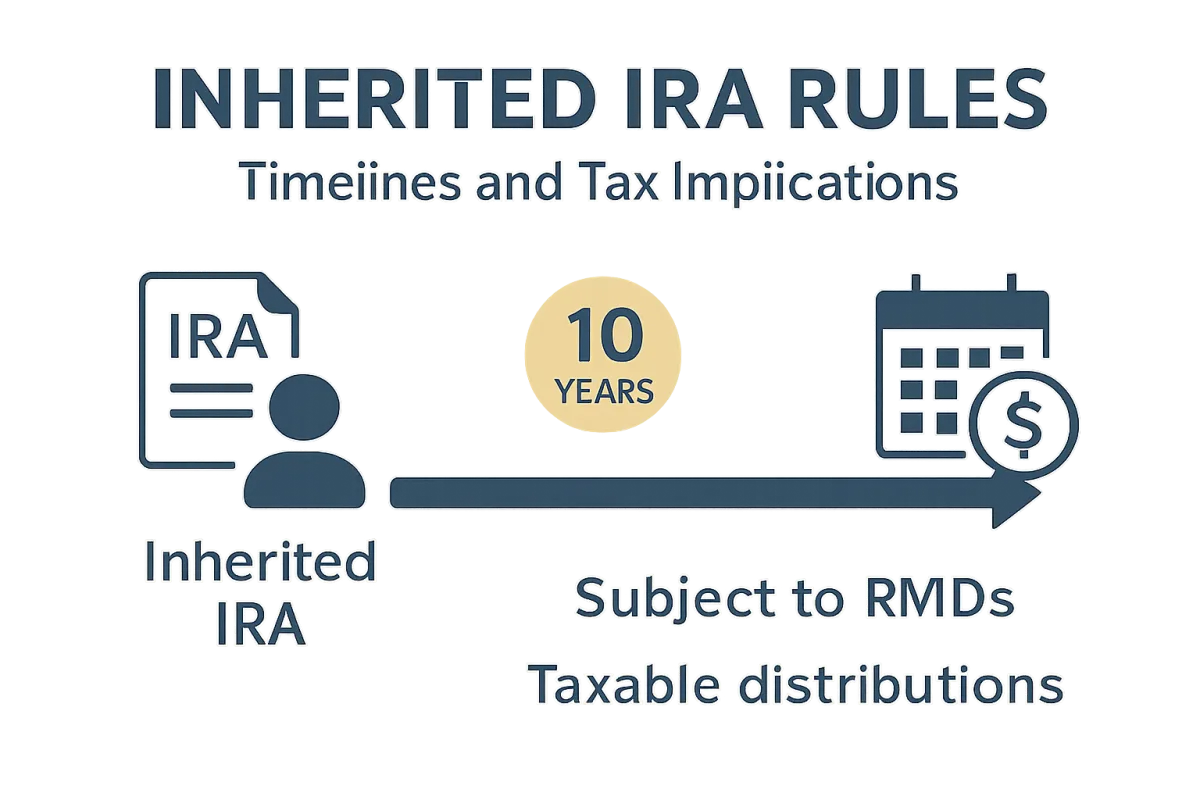
Inherited IRAs allow beneficiaries to receive retirement funds from deceased account holders, but specific rules govern their distribution. Generally, beneficiaries must withdraw funds within a certain timeframe, which varies based on their relationship to the deceased and the type of IRA. Understanding these rules is crucial to avoid penalties and ensure tax compliance.
Quick Summary
Inherited IRA rules dictate how beneficiaries can access retirement funds from a deceased account holder. Key factors include the relationship to the deceased, the type of IRA, and specific withdrawal timelines. Familiarizing oneself with these rules is essential to avoid tax penalties and ensure proper fund management.
Curator Notes
When a person inherits an IRA, they must navigate specific rules that dictate how and when they can access the funds. The IRS has established guidelines that vary based on the beneficiary's relationship to the deceased and whether the IRA is a traditional or Roth account. For instance, spouses have more flexible options compared to non-spouse beneficiaries, who must typically withdraw all funds within ten years of the account holder's death.
This is known as the '10-Year Rule.' Additionally, the tax implications of withdrawing from an inherited IRA can differ significantly. Traditional IRAs require beneficiaries to pay income tax on distributions, while Roth IRAs allow tax-free withdrawals if certain conditions are met. Understanding these nuances is vital for beneficiaries to make informed decisions about their inherited assets, ensuring they comply with IRS regulations and avoid unnecessary penalties.
Best Sources
Videos and Community Signals
When inheriting an Individual Retirement Account (IRA), it's essential to understand the rules surrounding distributions, as they ...
Comments have been disabled as of 06/06/2025. The SEC mandates that Youtube Comments be automatically archived (like ...
Comparison
| Decision Point | Good Starting Choice | When to Go Further |
|---|---|---|
| Beneficiary Type | Spouse - can treat as own IRA or withdraw | Non-spouse - must withdraw within 10 years |
| Tax Implications | Roth IRA - tax-free withdrawals | Traditional IRA - taxed as ordinary income |
| Withdrawal Timeline | Immediate access for spouses | 10 years for non-spouse beneficiaries |
FAQ
An inherited IRA is a retirement account that a beneficiary receives after the account holder's death, allowing them to access the funds under specific IRS rules.
Yes, traditional inherited IRAs are subject to income tax on distributions, while Roth IRAs may allow tax-free withdrawals if certain conditions are met.
No, non-spouse beneficiaries must withdraw all funds within ten years of the account holder's death, according to the 10-Year Rule.