Ikigai Concept and Finding Your Why
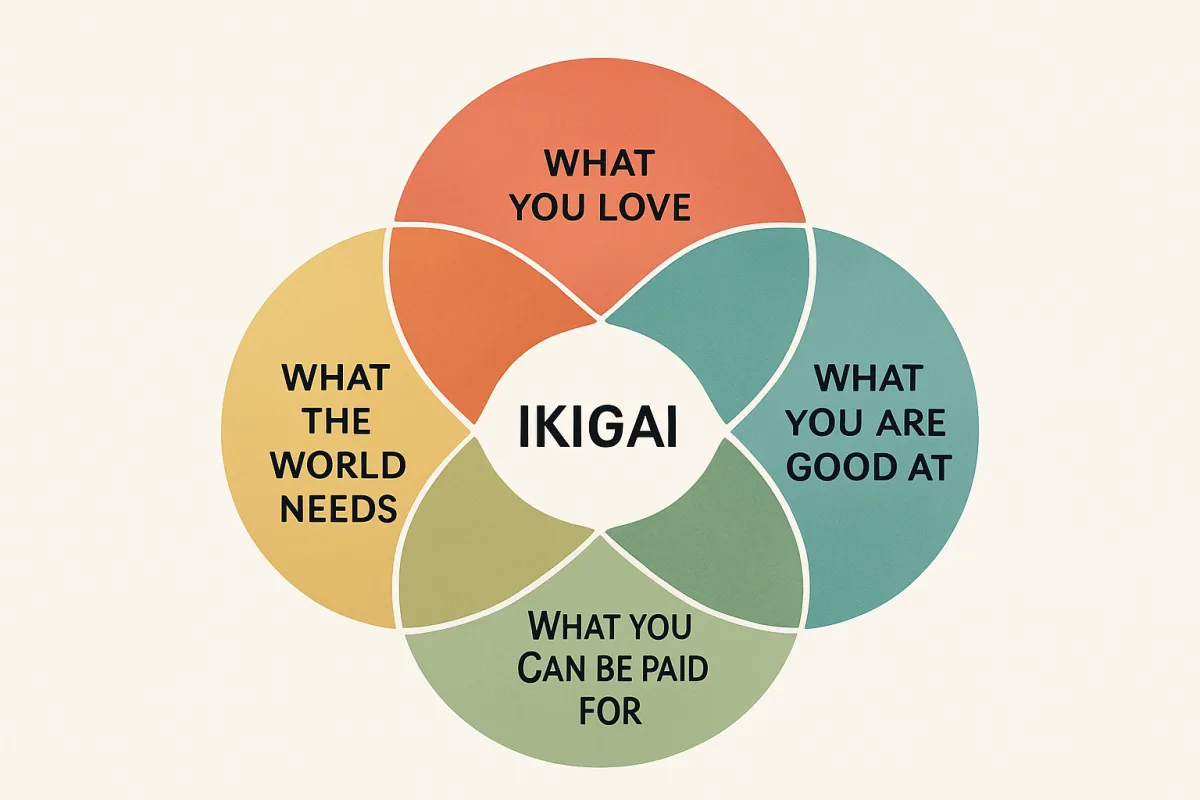
The Ikigai concept, originating from Japan, represents the intersection of four key elements: what you love, what you are good at, what the world needs, and what you can be paid for. This framework helps individuals discover their purpose or 'why' in life. By identifying these overlapping areas, one can achieve personal fulfillment and professional satisfaction. The practical application of Ikigai encourages self-reflection and proactive exploration of passions, skills, and market needs, ultimately guiding individuals towards a more meaningful life.
Quick Summary
Understanding the Ikigai concept can transform your approach to finding purpose in life. By exploring the four key elements—what you love, what you are good at, what the world needs, and what you can be paid for—you can identify your unique 'why.' This framework not only promotes self-discovery but also aligns your passions with practical opportunities. Engaging with Ikigai encourages a balanced life where personal fulfillment meets professional viability, making it a valuable tool for anyone seeking direction.
Curator Notes
Ikigai, a Japanese term that translates to 'a reason for being,' is a powerful framework for self-discovery and personal fulfillment. It encompasses four essential elements: what you love, what you are good at, what the world needs, and what you can be paid for. The intersection of these elements is where your true purpose lies.
By understanding and exploring these areas, individuals can gain clarity on their passions and how they can contribute to the world around them. The first element, 'what you love,' encourages introspection about your passions and interests. This is not just about hobbies but also about what excites you and brings joy.
The second element, 'what you are good at,' involves recognizing your skills and strengths. This self-awareness is crucial as it helps you understand how you can apply your talents in meaningful ways. Next, 'what the world needs' prompts you to consider the broader context of your skills and passions.
This element challenges you to think about how your unique contributions can address societal needs or gaps. Finally, 'what you can be paid for' ties your passions and skills to market realities, ensuring that your pursuits can also sustain you financially. Finding your Ikigai is not a one-time task but a continuous journey of exploration and adjustment.
It requires regular reflection and openness to change. Many people find that their Ikigai evolves over time as they gain new experiences and insights. Therefore, it's essential to remain adaptable and willing to reassess your position in relation to these four elements.
Common misconceptions about Ikigai include the belief that it must lead to a singular career path or that it is only applicable to certain professions. In reality, Ikigai can manifest in various forms, including side projects, volunteer work, or even hobbies that bring fulfillment outside of traditional employment. Engaging with the Ikigai framework can lead to a more balanced life.
It encourages individuals to pursue not just financial success but also personal satisfaction and societal contribution. By aligning your work with your passions and the needs of the world, you create a more meaningful existence. In practice, many find it helpful to create a visual representation of their Ikigai.
This can be a simple Venn diagram illustrating the four elements, allowing for a clearer view of where they intersect. This visual tool can serve as a constant reminder of your purpose and guide your decisions moving forward.
Best Sources
Videos and Community Signals
Have you ever wondered what your purpose in life is? Tim Tamashiro delights us with a journey into the discovery of Ikigai, ...
Want a long, happy life? The Japanese IKIGAI philosophy reveals 10 powerful rules—from staying active to practicing gratitude.
Comparison
| Decision Point | Good Starting Choice | When to Go Further |
|---|---|---|
| Online booking | A simple booking page with service duration, staff assignment and confirmation emails. | Multi-location calendars, deposits, cancellation rules and waitlist handling. |
| Client records | Basic notes, visit history and contact details are enough to start. | Segmentation, purchase history, memberships, forms and before-after notes become more important. |
| Reminders | SMS or email reminders help reduce no-shows without adding admin work. | Automated rebooking, follow-up campaigns and missed-appointment recovery matter more. |
| Payments | Card capture and checkout should be simple and transparent. | Packages, memberships, staff commissions, tips and refunds need cleaner reporting. |
| Marketing | Light email or SMS campaigns are useful if they are easy to run. | Automated win-back, birthday offers, review requests and audience segments create more leverage. |
FAQ
Ikigai is a Japanese concept that means 'a reason for being.' It represents the intersection of what you love, what you are good at, what the world needs, and what you can be paid for.
To find your Ikigai, reflect on your passions, skills, societal needs, and potential income sources. Consider creating a Venn diagram to visualize these elements.
No, Ikigai can apply to various aspects of life, including hobbies, volunteer work, and personal projects that bring fulfillment.