Ideal Daily Calorie Goal Plan
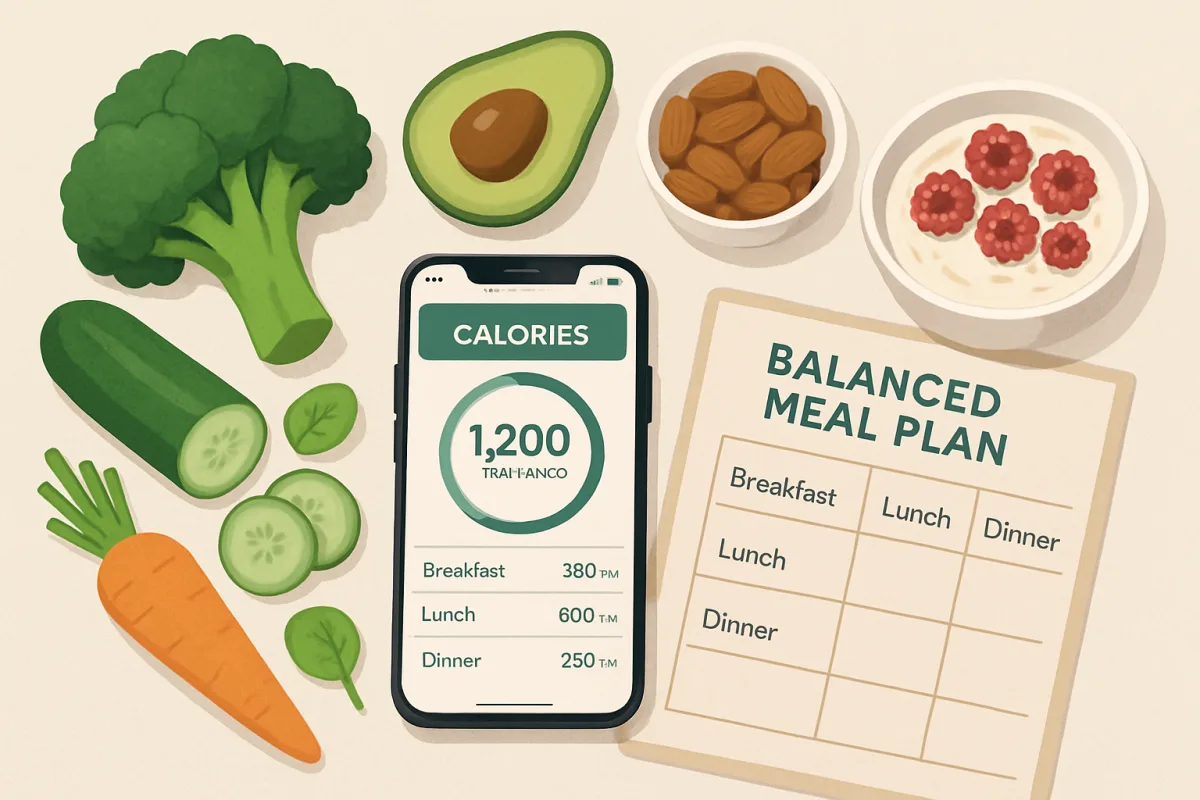
Determining your ideal daily calorie goal is crucial for effective weight loss. Generally, a safe deficit is about 500-1000 calories below your Total Daily Energy Expenditure (TDEE), leading to a weight loss of approximately 1-2 pounds per week. Factors influencing your calorie needs include age, gender, weight, height, and activity level. Tools like the Mifflin-St Jeor equation can help calculate your TDEE. For personalized plans, consider consulting a registered dietitian or using apps like MyFitnessPal or Lose It!, which offer tailored calorie goals based on your specific data.
Quick Summary
Setting an ideal daily calorie goal is essential for weight loss success. A common approach is to create a calorie deficit of 500-1000 calories from your Total Daily Energy Expenditure (TDEE), which can help you lose 1-2 pounds weekly. Factors such as age, gender, and activity level play a significant role in determining your calorie needs. Tools like the Mifflin-St Jeor equation and apps like MyFitnessPal can assist in creating a personalized plan. Consulting a registered dietitian can also provide tailored guidance for optimal results.
Curator Notes
Establishing an ideal daily calorie goal is a fundamental step in any weight loss journey. The most effective method involves calculating your Total Daily Energy Expenditure (TDEE) and then creating a calorie deficit. Typically, a deficit of 500-1000 calories per day is recommended, as this can lead to a sustainable weight loss of about 1-2 pounds per week.
However, it's essential to ensure that your calorie intake remains above 1200 calories for women and 1500 for men to avoid nutritional deficiencies. To calculate your TDEE, you can use the Mifflin-St Jeor equation, which factors in your age, gender, weight, height, and activity level. This equation provides a solid estimate of how many calories you burn daily.
Once you have your TDEE, subtracting 500-1000 calories will give you a target calorie intake for weight loss. While these calculations provide a good starting point, individual variations can significantly affect results. Factors such as muscle mass, metabolic rate, and even hormonal changes can influence how many calories you need.
Therefore, monitoring your progress and adjusting your calorie intake accordingly is crucial. Apps like MyFitnessPal and Lose It! can simplify tracking your calorie intake and expenditure.
These tools allow you to log meals and exercise, providing insights into your eating habits and helping you stay accountable. They also offer community support, which can be motivating. Consulting with a registered dietitian can provide personalized insights tailored to your lifestyle and health goals.
A dietitian can help you navigate food choices, ensuring you meet your nutritional needs while staying within your calorie goals. This professional guidance can be especially beneficial if you have specific dietary restrictions or health conditions. It's also important to consider the quality of the calories you consume.
Focusing on whole foods, such as fruits, vegetables, lean proteins, and whole grains, can enhance your weight loss efforts while providing essential nutrients. Avoiding highly processed foods can help you feel fuller and more satisfied, making it easier to stick to your calorie goals. Lastly, remember that weight loss is not a linear process.
Plateaus are common, and it may be necessary to reassess your calorie goals periodically. Staying flexible and open to adjustments can help you maintain progress over the long term.
Recommended Options
- MyFitnessPal: Best for Individuals seeking an easy way to track calories and exercise. Offers a vast food database and community support. Signal checked: Highly rated with millions of downloads and positive user reviews. Alternative to consider: Lose It!
- Lose It!: Best for Users looking for a straightforward interface for calorie tracking. User-friendly design and effective goal-setting features. Signal checked: Popular among users for its simplicity and effectiveness. Alternative to consider: MyFitnessPal
- Mifflin-St Jeor Calculator: Best for Individuals wanting to calculate their TDEE accurately. Widely recognized as a reliable method for estimating calorie needs. Signal checked: Backed by research and commonly used in nutrition science. Alternative to consider: Harris-Benedict Equation
Best Sources
Videos and Community Signals
Work with me https://go.alexsolomin.com/as-appform ▻Use my calorie calculator https://calculator.alexsolomin.com ▻Get my ...
Will you lose weight by severely restricting your calories? Absolutely. Will you be able to sustain that weight loss? Probably not.
Comparison
| Decision Point | Good Starting Choice | When to Go Further |
|---|---|---|
| Calorie Tracking | Use MyFitnessPal for comprehensive tracking. | Consider Lose It! for a simpler interface. |
| TDEE Calculation | Mifflin-St Jeor for a reliable estimate. | Harris-Benedict for a more detailed calculation. |
| Community Support | MyFitnessPal offers extensive community features. | Lose It! provides a more focused support experience. |
FAQ
You can calculate your TDEE using the Mifflin-St Jeor equation, which factors in your age, gender, weight, height, and activity level.
A safe calorie deficit is typically between 500-1000 calories per day, leading to a weight loss of about 1-2 pounds per week.
Yes, consulting a registered dietitian can provide personalized guidance tailored to your specific health needs and goals.