Fiduciary vs Non-Fiduciary Advisors
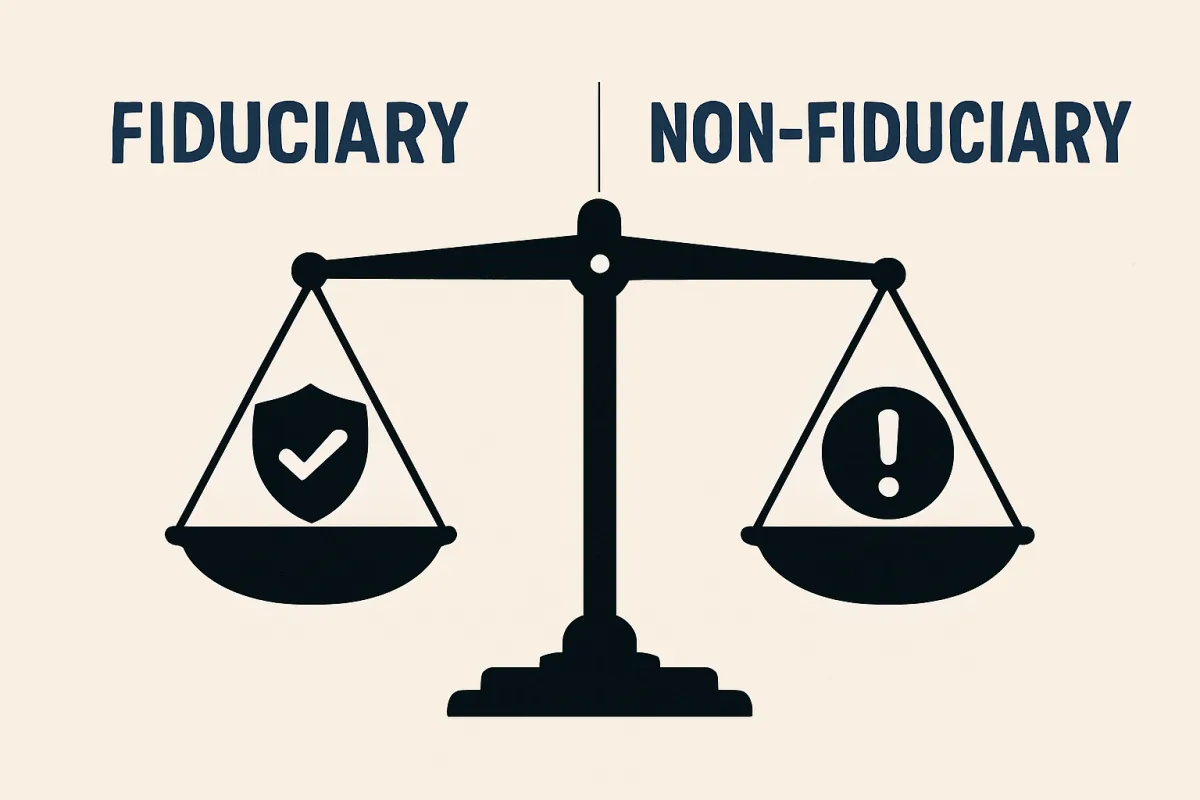
Fiduciary advisors are legally obligated to act in their clients' best interests, providing a higher level of trust and accountability. Non-fiduciary advisors, on the other hand, may have conflicts of interest and are only required to recommend suitable products, which can lead to less transparency. Choosing between the two depends on your financial needs and comfort with potential conflicts. For those seeking personalized, unbiased advice, fiduciary advisors are generally the safer choice.
Quick Summary
Understanding the differences between fiduciary and non-fiduciary advisors is crucial for making informed financial decisions. Fiduciary advisors prioritize their clients' best interests and are bound by law to provide transparent advice. Non-fiduciary advisors may recommend products that benefit them financially, which can create conflicts of interest. Evaluating your financial goals and the level of trust you require will help you choose the right advisor for your needs.
Curator Notes
Fiduciary advisors operate under a legal obligation to act in their clients' best interests. This means they must prioritize your financial well-being over their own profit motives. They typically provide comprehensive financial planning, investment management, and ongoing support, ensuring that their recommendations align with your goals.
This level of accountability can foster a stronger trust relationship, which is essential for effective financial planning. In contrast, non-fiduciary advisors are not bound by the same legal standards. They may recommend products that are suitable but not necessarily the best for you.
This can lead to potential conflicts of interest, where the advisor's financial incentives may influence their recommendations. While many non-fiduciary advisors are ethical and provide valuable services, the lack of a fiduciary duty means you should approach their advice with caution. When deciding between the two, consider your financial situation and the complexity of your needs.
If you have straightforward financial goals, a non-fiduciary advisor might suffice. However, if you require personalized advice, especially for retirement planning or investment strategies, a fiduciary advisor is likely the better choice. Another factor to consider is the fee structure.
Fiduciary advisors often charge a percentage of assets under management or a flat fee, which can be more transparent. Non-fiduciary advisors may work on a commission basis, which can lead to higher costs if they recommend products that pay them more. It's also worth noting that fiduciary advisors may have a more extensive range of investment options, as they are not limited to recommending proprietary products.
This can provide you with a more tailored investment strategy that aligns with your risk tolerance and financial goals. Ultimately, the choice between fiduciary and non-fiduciary advisors hinges on your comfort level with potential conflicts of interest and the complexity of your financial needs. Conducting thorough research and asking pointed questions during initial consultations can help you make an informed decision.
In summary, fiduciary advisors offer a higher level of trust and accountability, making them suitable for those seeking comprehensive financial guidance. Non-fiduciary advisors may still provide valuable services but come with potential conflicts that you should be aware of. Your financial future deserves careful consideration of who you choose to guide you.
Recommended Options
- Vanguard Personal Advisor Services: Best for Investors seeking low-cost fiduciary advice Vanguard offers a blend of automated investing and personalized advice, making it accessible for various investors. Signal checked: High customer satisfaction ratings and low fees. Alternative to consider: Fidelity Wealth Services
- Charles Schwab Intelligent Portfolios Premium: Best for Investors wanting a mix of robo-advising and human guidance Combines automated investing with access to certified financial planners. Signal checked: Strong reputation and extensive resources. Alternative to consider: Betterment Premium
- Personal Capital: Best for Individuals needing comprehensive financial planning Signal checked: Popular for its user-friendly interface and robust financial tools. Alternative to consider: Wealthfront
Best Sources
Videos and Community Signals
In this episode, Mike Palmer, CFP and founder of Ark Royal Wealth Management explains why not all fiduciary advisors are the ...
We delve deep into the world of financial advisors to shed light on a critical distinction: fiduciary vs. non-fiduciary. Join us as we ...
Comparison
| Decision Point | Good Starting Choice | When to Go Further |
|---|---|---|
| Legal obligation to act in clients' best interests | Non-fiduciary advisors may not have this obligation. | Fiduciary advisors are legally bound to prioritize your interests. |
| Fee structure transparency | Non-fiduciary advisors may charge commissions. | Fiduciary advisors typically use flat fees or asset-based fees. |
| Range of investment options | Non-fiduciary advisors may be limited to proprietary products. | Fiduciary advisors can offer a broader selection of investments. |
FAQ
A fiduciary advisor is legally required to act in your best interests, providing unbiased financial advice.
While many non-fiduciary advisors are ethical, they may have conflicts of interest that can affect their recommendations.
Consider your financial needs, the complexity of your situation, and your comfort level with potential conflicts of interest.