Feynman Learning Technique
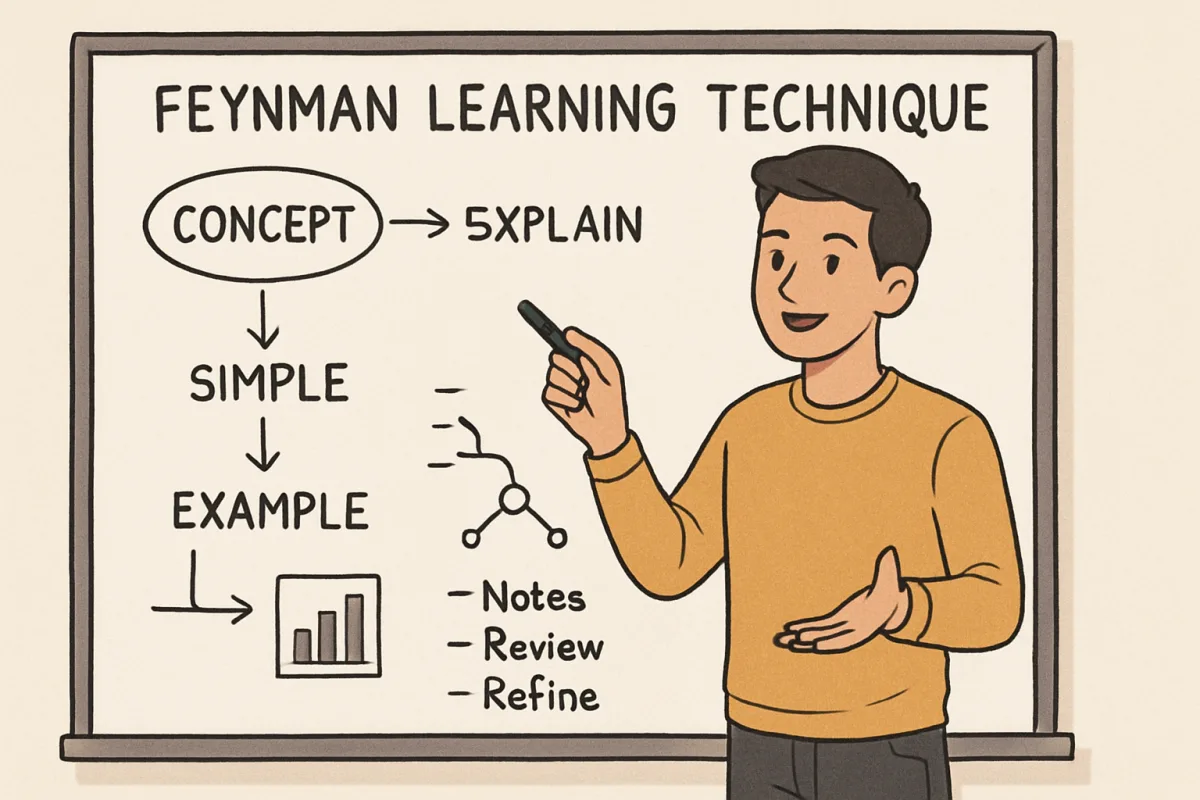
The Feynman Learning Technique is a powerful method for mastering concepts through simplified explanations. Named after physicist Richard Feynman, it involves four key steps: identifying the topic, teaching it to someone else, identifying gaps in your understanding, and reviewing the material until you can explain it clearly. This technique emphasizes active learning and self-explanation, making it particularly effective for students and professionals alike. By breaking down complex ideas into simpler terms, learners can enhance retention and comprehension, ultimately leading to deeper understanding.
Quick Summary
Mastering complex concepts can be challenging, but the Feynman Learning Technique offers a structured approach to enhance understanding. This method involves four steps: selecting a topic, teaching it to someone else, identifying knowledge gaps, and refining your explanation. By simplifying ideas, learners can improve retention and clarity. This technique is especially beneficial for students and professionals seeking to deepen their grasp of intricate subjects. Engaging in active learning through self-explanation fosters a more profound comprehension of the material.
Curator Notes
The Feynman Learning Technique is not just a study method; it's a philosophy of learning that encourages deep understanding. The first step is to choose a concept you want to learn. This could be anything from a scientific principle to a historical event.
The key is to select something that challenges you and piques your interest, as this will make the learning process more engaging. Once you've selected your topic, the next step is to explain it as if you were teaching it to someone else. This could be a friend, a family member, or even an imaginary audience.
The act of verbalizing your understanding forces you to clarify your thoughts and identify any areas where your knowledge might be lacking. This is where the technique shines, as it highlights gaps in your comprehension that you may not have noticed before. After teaching the concept, take a moment to reflect on your explanation.
What parts were easy to explain? Which sections left you stumbling or unsure? This self-assessment is crucial, as it allows you to pinpoint specific areas that require further study.
You might find that certain terms or ideas are still unclear, prompting you to revisit your sources or seek additional information. The final step involves reviewing the material and refining your explanation. This iterative process not only solidifies your understanding but also helps you articulate the concept more clearly.
The goal is to simplify your explanation until it is straightforward and easy to understand, even for someone with no background in the subject. What makes the Feynman Technique particularly effective is its emphasis on active engagement. Rather than passively reading or listening, you are actively constructing knowledge.
This method is especially beneficial for students preparing for exams or professionals needing to grasp complex topics quickly. However, it's important to note that this technique may not suit everyone. Some learners might find it challenging to articulate their thoughts verbally, while others may prefer visual aids or written notes.
It's crucial to adapt the technique to fit your personal learning style, perhaps by incorporating diagrams or written summaries alongside verbal explanations. In summary, the Feynman Learning Technique is a versatile and effective approach to mastering new concepts. By teaching what you learn, identifying gaps, and refining your understanding, you can achieve a deeper and more lasting comprehension of the material.
This method encourages curiosity and fosters a love for learning, making it a valuable tool for anyone looking to expand their knowledge.
Best Sources
Videos and Community Signals
Richard Feynman was a physicist who received a Nobel prize for his work in quantum electrodynamics. He was notorious for ...
Richard Feynman on the differences of merely knowing how to reason mathematically and understanding how and why things are ...
Comparison
| Decision Point | Good Starting Choice | When to Go Further |
|---|---|---|
| Online booking | A simple booking page with service duration, staff assignment and confirmation emails. | Multi-location calendars, deposits, cancellation rules and waitlist handling. |
| Client records | Basic notes, visit history and contact details are enough to start. | Segmentation, purchase history, memberships, forms and before-after notes become more important. |
| Reminders | SMS or email reminders help reduce no-shows without adding admin work. | Automated rebooking, follow-up campaigns and missed-appointment recovery matter more. |
| Payments | Card capture and checkout should be simple and transparent. | Packages, memberships, staff commissions, tips and refunds need cleaner reporting. |
| Marketing | Light email or SMS campaigns are useful if they are easy to run. | Automated win-back, birthday offers, review requests and audience segments create more leverage. |
FAQ
The Feynman Learning Technique is a method for mastering concepts by teaching them to others, identifying gaps in understanding, and refining explanations.
Students and professionals alike can benefit from this technique, as it promotes active learning and deeper comprehension of complex topics.
Select a topic, explain it as if teaching someone else, identify gaps in your understanding, and refine your explanation until it's clear and simple.