Feature Flagging Tools Compared
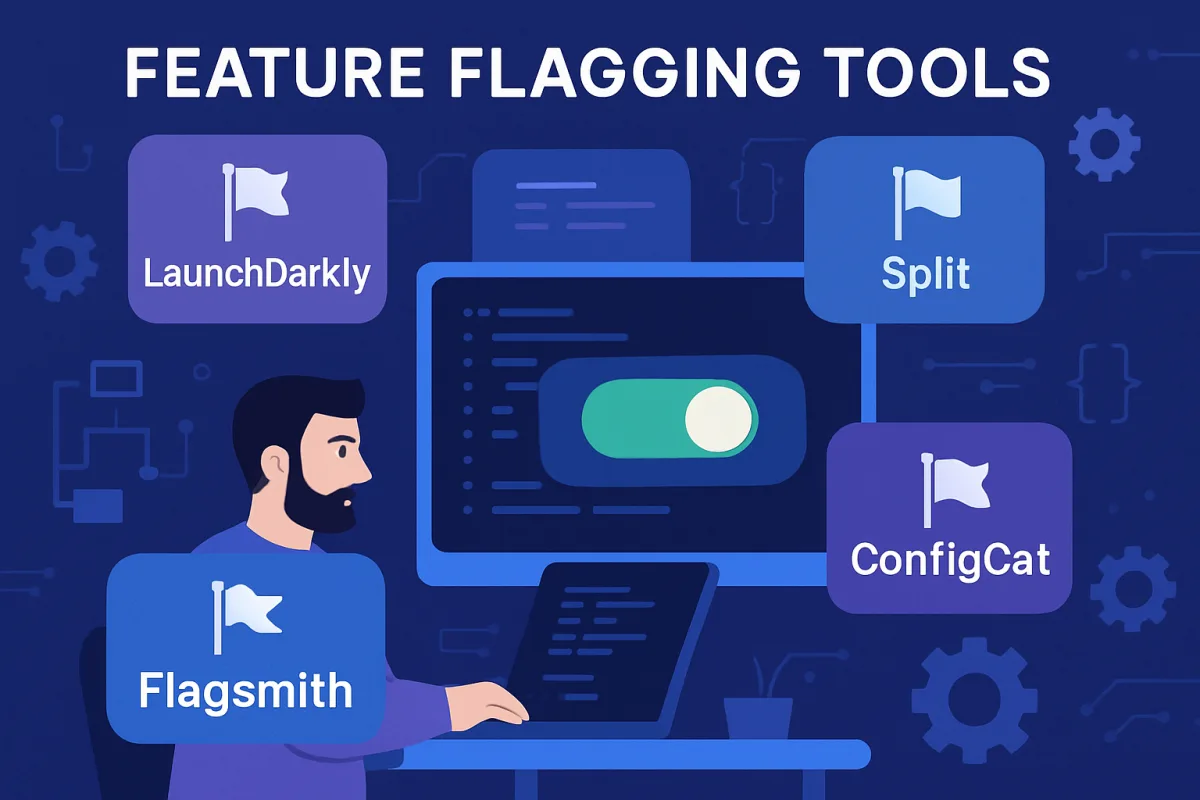
Feature flagging tools allow developers to enable or disable features in real-time without deploying new code. Popular options include LaunchDarkly, Optimizely, and Flagsmith, each offering unique capabilities for managing feature releases, A/B testing, and user targeting. Choosing the right tool depends on your team's size, budget, and specific needs.
Quick Summary
This guide compares leading feature flagging tools like LaunchDarkly, Optimizely, and Flagsmith. It highlights their unique features, pricing, and ideal use cases to help you select the best solution for your development needs.
Curator Notes
Feature flagging tools are essential for modern software development, enabling teams to control feature releases and conduct A/B testing without the need for continuous deployment. These tools provide a layer of flexibility, allowing developers to roll out features to specific user segments or revert changes quickly if issues arise. This capability is particularly valuable in agile environments where rapid iteration is crucial.
Among the leading options, LaunchDarkly stands out for its robust targeting capabilities and extensive integrations with other tools, making it suitable for larger teams with complex needs. Optimizely, on the other hand, excels in A/B testing and user experience optimization, making it ideal for marketing teams focused on conversion rates. Flagsmith offers an open-source alternative that appeals to developers looking for customizable solutions without vendor lock-in.
When selecting a feature flagging tool, consider factors such as team size, budget, and specific use cases. Each tool has its strengths and weaknesses, so understanding your requirements will help you make an informed decision.
Recommended Options
- LaunchDarkly: Best for Large teams needing extensive targeting and integrations Offers robust feature management and real-time analytics. Signal checked: Widely used by enterprises and praised for its scalability. Alternative to consider: Optimizely for A/B testing focus.
- Optimizely: Best for Marketing teams focused on user experience and conversion rates Strong A/B testing capabilities and user-friendly interface. Signal checked: Popular among marketers, with numerous case studies demonstrating ROI. Alternative to consider: LaunchDarkly for broader feature management.
- Flagsmith: Best for Developers looking for an open-source solution Customizable and avoids vendor lock-in. Signal checked: Gaining traction in the developer community for its flexibility. Alternative to consider: LaunchDarkly for more enterprise features.
Best Sources
Videos and Community Signals
Feature flags are something you have probably never included in any of your apps, but they are an incredible feature that pretty ...
Learn more about API Management → http://ibm.biz/api-mgmt-guide Learn more about REST APIs → http://ibm.biz/learn-rest-apis ...
Comparison
| Decision Point | Good Starting Choice | When to Go Further |
|---|---|---|
| Targeting Capabilities | Flagsmith for basic needs with open-source flexibility | LaunchDarkly for advanced targeting and analytics |
| A/B Testing | Optimizely for straightforward A/B testing | LaunchDarkly for integrated feature management with A/B testing |
| Integration Options | Flagsmith for basic integrations | LaunchDarkly for extensive third-party integrations |
FAQ
A feature flagging tool allows developers to enable or disable features in real-time without deploying new code, facilitating controlled feature releases.
Consider your team's size, budget, and specific needs, and evaluate tools based on their targeting capabilities, A/B testing features, and integration options.