Equity Compensation Plans Explained
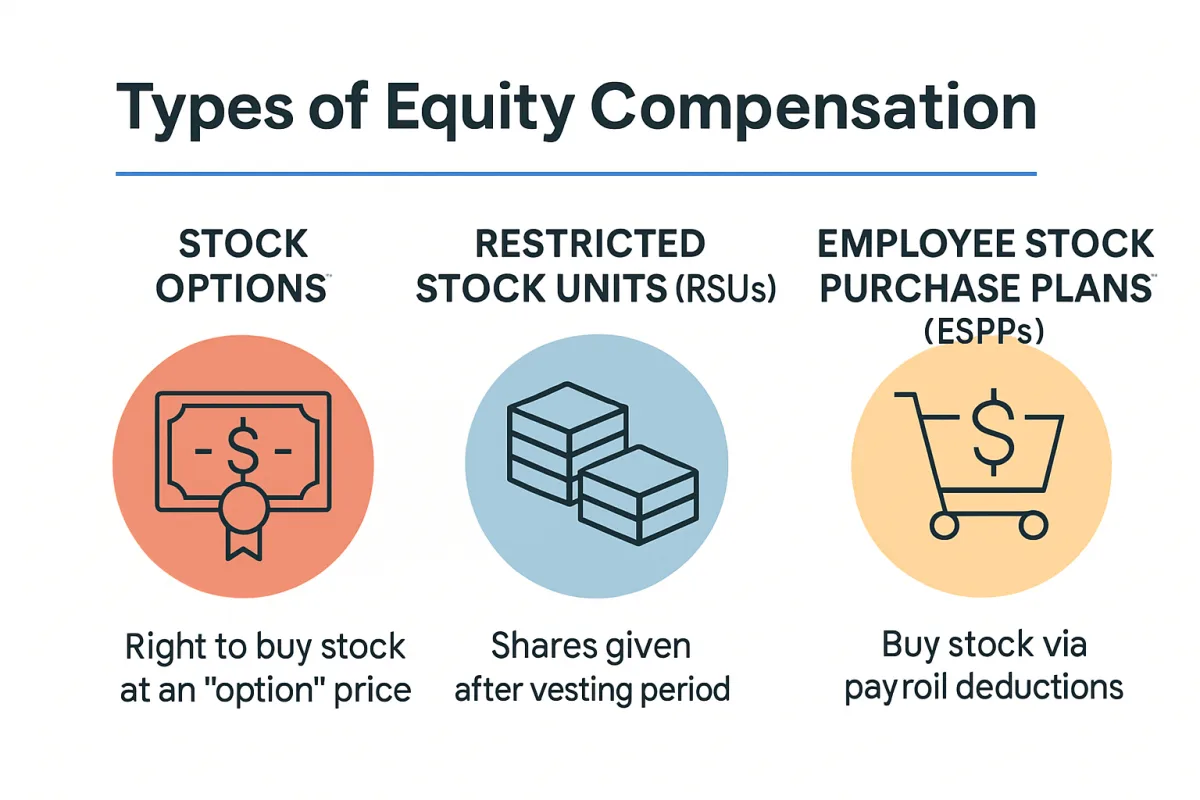
Equity compensation plans are strategies used by companies to reward employees with shares or stock options, aligning their interests with those of shareholders. These plans can take various forms, including stock options, restricted stock units (RSUs), and employee stock purchase plans (ESPPs). Each type has unique benefits and drawbacks, influencing employee motivation and retention. Understanding these plans is crucial for both employers and employees to maximize their potential benefits and navigate tax implications effectively.
Quick Summary
Equity compensation plans serve as a powerful tool for companies to incentivize employees by offering them ownership stakes in the business. Options like stock options, RSUs, and ESPPs each come with distinct advantages and challenges. For employers, these plans can enhance employee loyalty and performance, while employees gain financial benefits tied to the company's success. A thorough understanding of these plans is essential for making informed decisions about compensation strategies and personal financial planning.
Curator Notes
Equity compensation plans are designed to align the interests of employees with those of shareholders, fostering a sense of ownership and commitment. Common forms include stock options, restricted stock units (RSUs), and employee stock purchase plans (ESPPs). Each type has its own set of rules, tax implications, and potential benefits, making it essential for both employers and employees to understand their options.
Stock options give employees the right to purchase shares at a predetermined price, often referred to as the exercise price. This can be highly beneficial if the company's stock price rises significantly. However, the risk lies in the possibility that the stock price may not exceed the exercise price, rendering the options worthless.
Employees must also consider the tax implications, as exercising options can lead to substantial tax liabilities. Restricted stock units (RSUs) are another popular form of equity compensation. Unlike stock options, RSUs are granted outright but are subject to vesting periods.
Once vested, employees own the shares outright, which can provide immediate value. The downside is that RSUs are taxed as ordinary income upon vesting, which can lead to unexpected tax burdens. Employee stock purchase plans (ESPPs) allow employees to buy company stock at a discount, typically through payroll deductions.
These plans can be an excellent way for employees to invest in their company, but they often come with specific holding periods and tax considerations that must be navigated carefully. Choosing the right equity compensation plan involves weighing the benefits against potential risks and tax implications. Companies should consider their financial goals, employee demographics, and market conditions when designing these plans.
For employees, understanding the intricacies of each option can lead to better financial outcomes and career satisfaction. It's also important to note that equity compensation plans can vary significantly between companies, influenced by industry standards and company culture. Employees should actively engage in discussions about their compensation packages and seek clarity on how these plans work.
In conclusion, equity compensation plans are a vital aspect of modern employment that can enhance motivation and retention. Both employers and employees must approach these plans with a clear understanding of their mechanics and implications to maximize their benefits.
Recommended Options
- Stock Options: Best for Companies looking to incentivize high-performing employees Offers potential for significant financial gain if the company performs well Signal checked: Widely used in tech startups and high-growth companies Alternative to consider: Restricted Stock Units (RSUs)
- Restricted Stock Units (RSUs): Best for Companies wanting to provide guaranteed value to employees Provides immediate ownership upon vesting, reducing risk for employees Signal checked: Commonly offered by established companies for employee retention Alternative to consider: Employee Stock Purchase Plans (ESPPs)
- Employee Stock Purchase Plans (ESPPs): Best for Employees looking to invest in their company at a discount Allows employees to buy shares at a reduced price, promoting investment Signal checked: Popular among companies aiming to boost employee morale and loyalty Alternative to consider: Direct Stock Purchase Plans (DSPPs)
Best Sources
Videos and Community Signals
Special guest Meg Bartelt, founder of Flow Financial Planning, discusses equity compensation. Meg and I talk about the ...
Are you interested in learning about equity compensation plans? In this video, we'll explain the basics of how these types of plans ...
Comparison
| Decision Point | Good Starting Choice | When to Go Further |
|---|---|---|
| Tax implications | Stock Options are taxed upon exercise, potentially leading to high tax bills. | RSUs are taxed as ordinary income upon vesting, which can be more predictable. |
| Risk of loss | Stock Options can become worthless if stock price falls below the exercise price. | RSUs provide guaranteed shares upon vesting, minimizing risk. |
| Employee engagement | Stock Options can motivate employees to increase company performance. | ESPPs encourage employees to invest in their company, fostering loyalty. |
FAQ
The main types include stock options, restricted stock units (RSUs), and employee stock purchase plans (ESPPs). Each has unique benefits and tax implications.
Stock options give employees the right to purchase shares at a set price, which can be profitable if the company's stock price increases.
RSUs are taxed as ordinary income when they vest, which can lead to a significant tax burden for employees.