Delaware C-Corp vs LLC for Startups
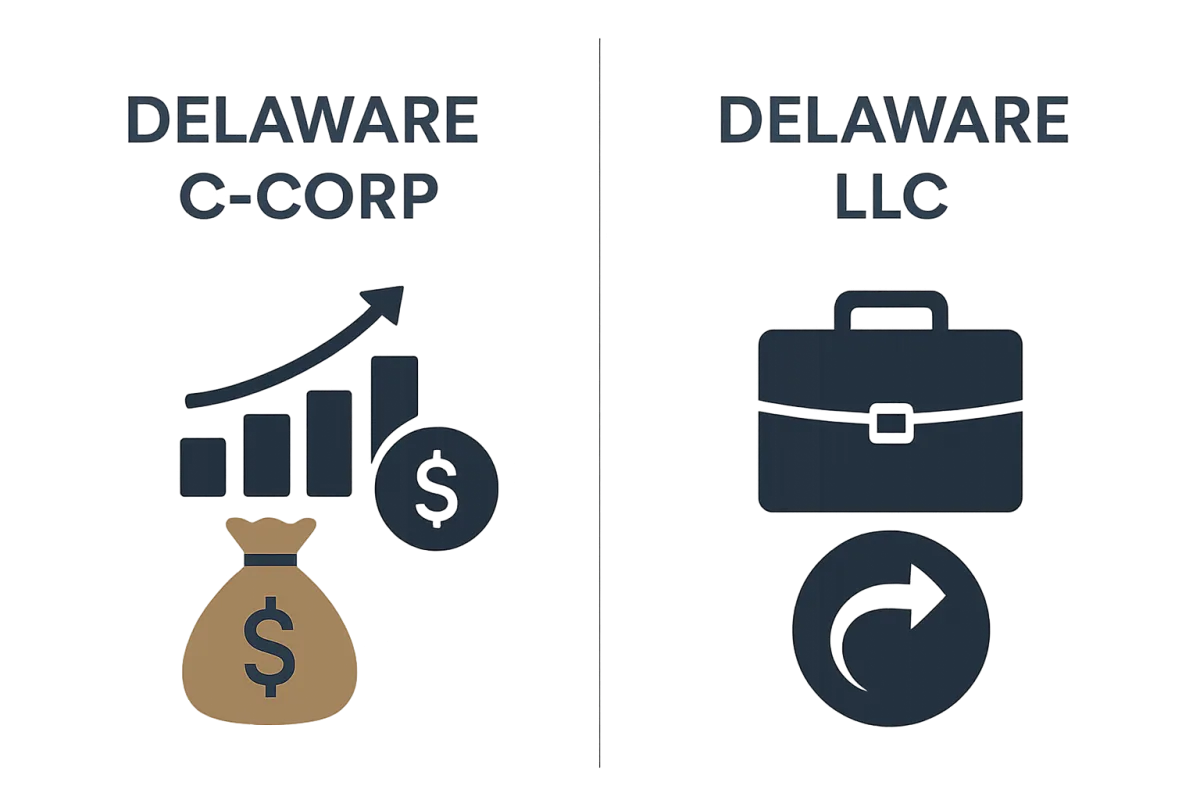
Choosing between a Delaware C-Corp and an LLC for your startup involves understanding the implications of each structure. A C-Corp is often preferred for startups seeking venture capital due to its ability to issue multiple classes of stock and attract investors. Conversely, an LLC offers flexibility in management and taxation, making it suitable for smaller businesses or those prioritizing simplicity. Ultimately, the choice depends on your business goals, funding needs, and operational preferences.
Quick Summary
When deciding between a Delaware C-Corp and an LLC for your startup, consider factors like funding, taxation, and management structure. A C-Corp is ideal for attracting investors, while an LLC provides operational flexibility. Understanding these differences can help you make an informed decision that aligns with your business objectives.
Curator Notes
Delaware is a popular state for business incorporation due to its favorable laws and established legal framework. A Delaware C-Corp is often the preferred choice for startups seeking venture capital. This structure allows for the issuance of multiple classes of stock, making it easier to attract investors.
Additionally, C-Corps are taxed separately from their owners, which can be beneficial for reinvesting profits back into the business. However, this comes with the drawback of double taxation on dividends distributed to shareholders. On the other hand, a Limited Liability Company (LLC) offers a more flexible management structure and pass-through taxation, which means profits are taxed only at the individual level.
This can be advantageous for small businesses or startups that do not plan to seek significant outside investment. LLCs also have fewer formalities and compliance requirements compared to C-Corps, making them easier to manage for entrepreneurs focused on operational efficiency. Ultimately, the decision should align with your long-term business strategy, funding needs, and operational preferences.
Recommended Options
- Delaware C-Corporation: Best for Startups seeking venture capital Allows multiple classes of stock and attracts investors easily. Signal checked: Widely used by tech startups and backed by venture capital firms. Alternative to consider: LLC for simpler management and tax structure.
- Delaware LLC: Best for Small businesses and entrepreneurs prioritizing flexibility Offers pass-through taxation and fewer compliance requirements. Signal checked: Popular among small business owners for operational ease. Alternative to consider: C-Corp for those seeking to raise significant capital.
Best Sources
Videos and Community Signals
If you're building a startup and planning to raise venture capital, choosing between an LLC and a C-Corp could determine ...
Delaware is home to fewer than 1 million people, but more than 60% of Fortune 500 companies are incorporated in the state, ...
Comparison
| Decision Point | Good Starting Choice | When to Go Further |
|---|---|---|
| Funding Potential | LLC for self-funded or small-scale operations. | C-Corp for attracting venture capital and issuing stock. |
| Tax Structure | LLC for pass-through taxation. | C-Corp for reinvestment but subject to double taxation. |
| Management Flexibility | LLC for fewer formalities and easier management. | C-Corp for formal structure, suitable for larger teams. |
FAQ
The main differences lie in taxation, management structure, and funding potential. C-Corps face double taxation but can attract investors, while LLCs offer pass-through taxation and operational flexibility.
A C-Corp is generally better for raising capital as it allows for multiple classes of stock and is favored by venture capitalists.
Yes, you can convert an LLC to a C-Corp if your business needs change, but be aware of the tax implications and legal requirements involved.