Crypto Portfolio Diversification Guide
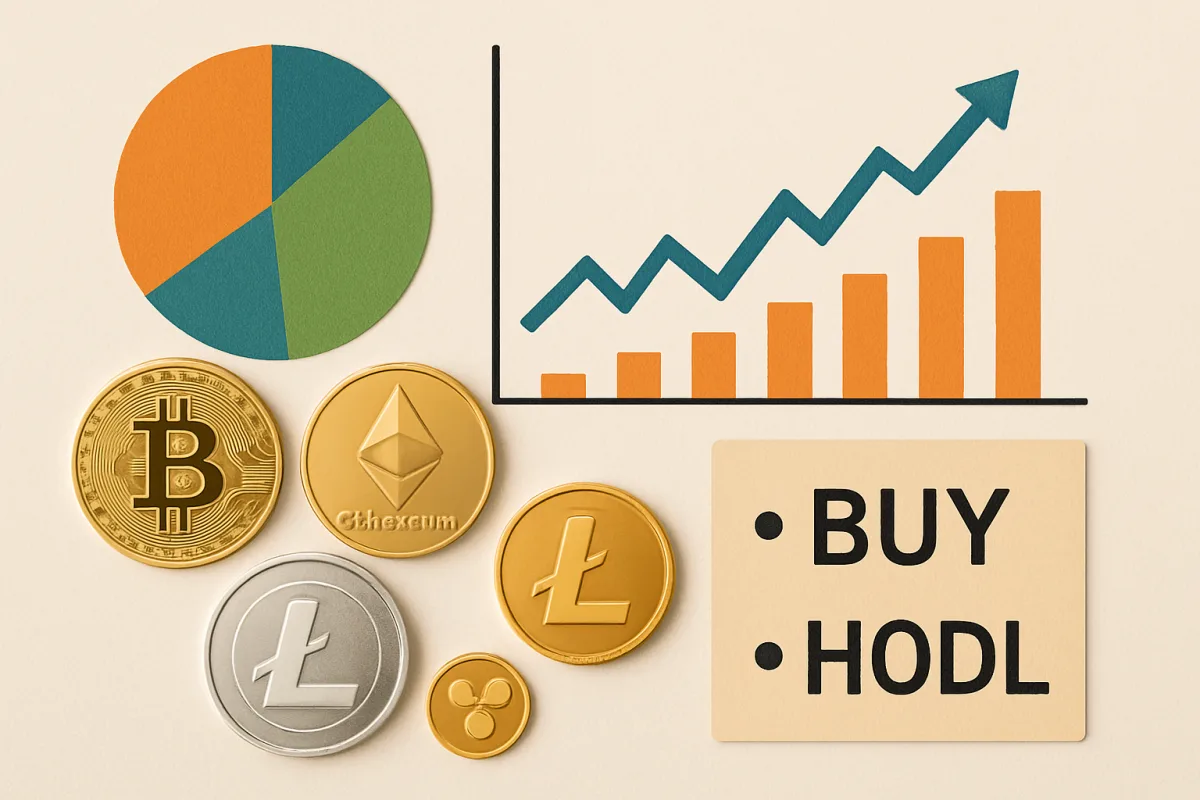
Diversifying your crypto portfolio involves spreading investments across various cryptocurrencies to mitigate risk and enhance potential returns. Key strategies include investing in a mix of large-cap coins like Bitcoin and Ethereum, exploring altcoins with growth potential, and considering stablecoins for stability. Regularly rebalancing your portfolio based on market conditions is also essential to maintain your desired risk level.
Quick Summary
This guide provides essential strategies for diversifying your crypto portfolio. It covers the importance of spreading investments across different cryptocurrencies, including large-cap coins, altcoins, and stablecoins. Learn how to effectively manage and rebalance your portfolio to optimize returns while minimizing risks.
Curator Notes
Diversifying your crypto portfolio is crucial for managing risk and maximizing potential returns. By spreading your investments across various cryptocurrencies, you can reduce the impact of volatility in any single asset. Start with major cryptocurrencies like Bitcoin and Ethereum, which have established market presence and liquidity.
These large-cap coins often provide a stable foundation for your portfolio. In addition to large-cap coins, consider allocating a portion of your investment to altcoins. These smaller, emerging cryptocurrencies can offer significant growth potential, but they also come with higher risk.
Researching projects with strong fundamentals and community support can help identify promising altcoins. Lastly, incorporating stablecoins can provide a buffer against market fluctuations, allowing you to maintain liquidity while minimizing exposure to volatility. Regularly rebalancing your portfolio is essential to align with your risk tolerance and investment goals.
As market conditions change, adjust your allocations to ensure that your portfolio remains diversified and optimized for performance. This proactive approach can help you navigate the unpredictable nature of the crypto market effectively.
Recommended Options
- Bitcoin: Best for Investors seeking stability and market leadership Bitcoin is the first and largest cryptocurrency by market cap, often seen as a digital gold. Signal checked: Widely accepted and recognized, with a strong historical performance. Alternative to consider: Ethereum
- Ethereum: Best for Investors interested in smart contracts and decentralized applications Ethereum supports a robust ecosystem of dApps and DeFi projects, driving innovation. Signal checked: Second largest market cap, with a strong developer community. Alternative to consider: Binance Smart Chain
- Cardano: Best for Investors looking for a research-driven approach to blockchain Cardano emphasizes security and scalability through a peer-reviewed development process. Signal checked: Growing adoption and partnerships in various sectors. Alternative to consider: Polkadot
- Tether: Best for Investors seeking stability and liquidity Tether is the most widely used stablecoin, pegged to the US dollar. Signal checked: High trading volume and liquidity across exchanges. Alternative to consider: USD Coin
Best Sources
Videos and Community Signals
Ready to dive into the world of cryptocurrency but not sure where to start? In this video, we'll take you through a step-by-step ...
Discover expert strategies on diversifying cryptocurrency portfolios and managing risks effectively. #Cryptocurrency #Investing ...
Comparison
| Decision Point | Good Starting Choice | When to Go Further |
|---|---|---|
| Investment Type | Large-cap cryptocurrencies (e.g., Bitcoin, Ethereum) | Diversified portfolio including altcoins and stablecoins |
| Risk Level | Lower risk with established coins | Higher risk with potential for greater returns from altcoins |
| Liquidity | High liquidity with major coins | Consider stablecoins for liquidity during market downturns |
FAQ
Diversification helps mitigate risk by spreading investments across various assets, reducing the impact of volatility in any single cryptocurrency.
Rebalancing should be done regularly, ideally every few months or when significant market changes occur, to maintain your desired risk level.