Crowdfunding Platforms Compared
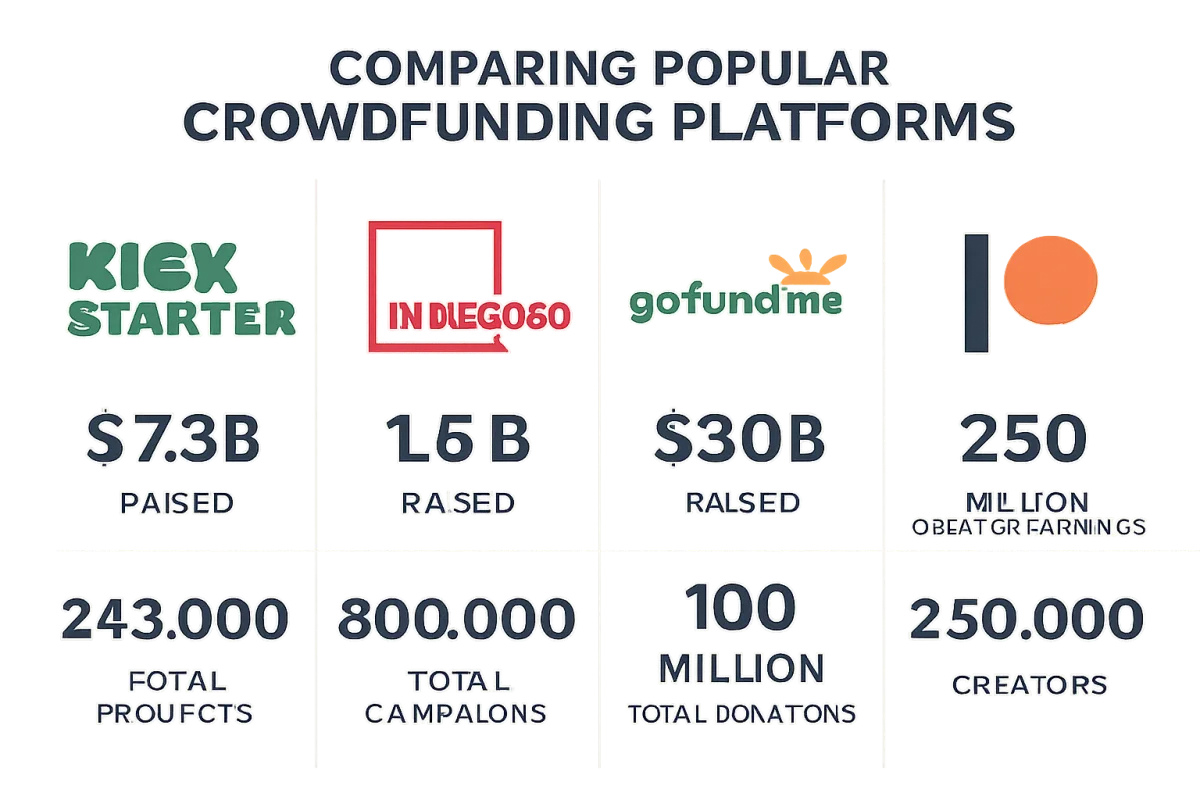
Crowdfunding platforms vary widely in features, fees, and target audiences. Popular options include Kickstarter for creative projects, Indiegogo for flexible funding, and GoFundMe for personal causes. Each platform has its unique strengths, making it essential to choose one that aligns with your project's goals and audience.
Quick Summary
This guide compares popular crowdfunding platforms, highlighting their unique features, fees, and suitability for different types of projects. Key platforms include Kickstarter, Indiegogo, and GoFundMe, each serving distinct needs in the crowdfunding landscape.
Curator Notes
Crowdfunding has become a vital tool for entrepreneurs and creators looking to fund their projects. Each platform offers different features, fees, and target audiences, making it crucial to select the right one for your needs. Kickstarter is ideal for creative projects, focusing on all-or-nothing funding, which encourages backers to support projects they believe in.
It has a strong community of creators and backers, making it a popular choice for artists and inventors. Indiegogo, on the other hand, provides more flexible funding options, allowing creators to keep funds even if they don't reach their goal. This platform is great for both creative and entrepreneurial projects, offering various campaign types, including equity crowdfunding.
GoFundMe is tailored for personal causes and charitable fundraising, making it a go-to for individuals seeking support for medical expenses, education, or community projects. Understanding the unique strengths and limitations of each platform is essential for maximizing your crowdfunding success.
Recommended Options
- Kickstarter: Best for Creative projects like art, music, and technology. Strong community and all-or-nothing funding model. Signal checked: Over 18 million backers and $5 billion pledged. Alternative to consider: Indiegogo for more flexible funding options.
- Indiegogo: Best for Entrepreneurial projects and innovative products. Flexible funding options and various campaign types. Signal checked: Raised over $1.5 billion across 800,000 campaigns. Alternative to consider: Kickstarter for a more community-driven approach.
- GoFundMe: Best for Personal causes and charitable fundraising. No platform fees and easy setup for personal campaigns. Signal checked: Over $9 billion raised for personal causes. Alternative to consider: Fundly for similar personal fundraising.
Best Sources
Videos and Community Signals
Unlock the secrets of crowdfunding. Learn what it is, how it works, and master the art of successful campaigns. This video is your ...
Which crowdfunding platform is best for your independent film? In this video, I'll break down the top options—Kickstarter, ...
Comparison
| Decision Point | Good Starting Choice | When to Go Further |
|---|---|---|
| Funding model | All-or-nothing (Kickstarter) | Flexible funding (Indiegogo) |
| Target audience | Creative projects (Kickstarter) | Entrepreneurial and personal causes (Indiegogo, GoFundMe) |
| Fees | 5% platform fee (Kickstarter) | Variable fees based on funding type (Indiegogo) |
FAQ
Indiegogo is often recommended for startups due to its flexible funding options and support for various project types.
Yes, most platforms charge a percentage of the funds raised, along with payment processing fees.