Compound Interest Explained Simply
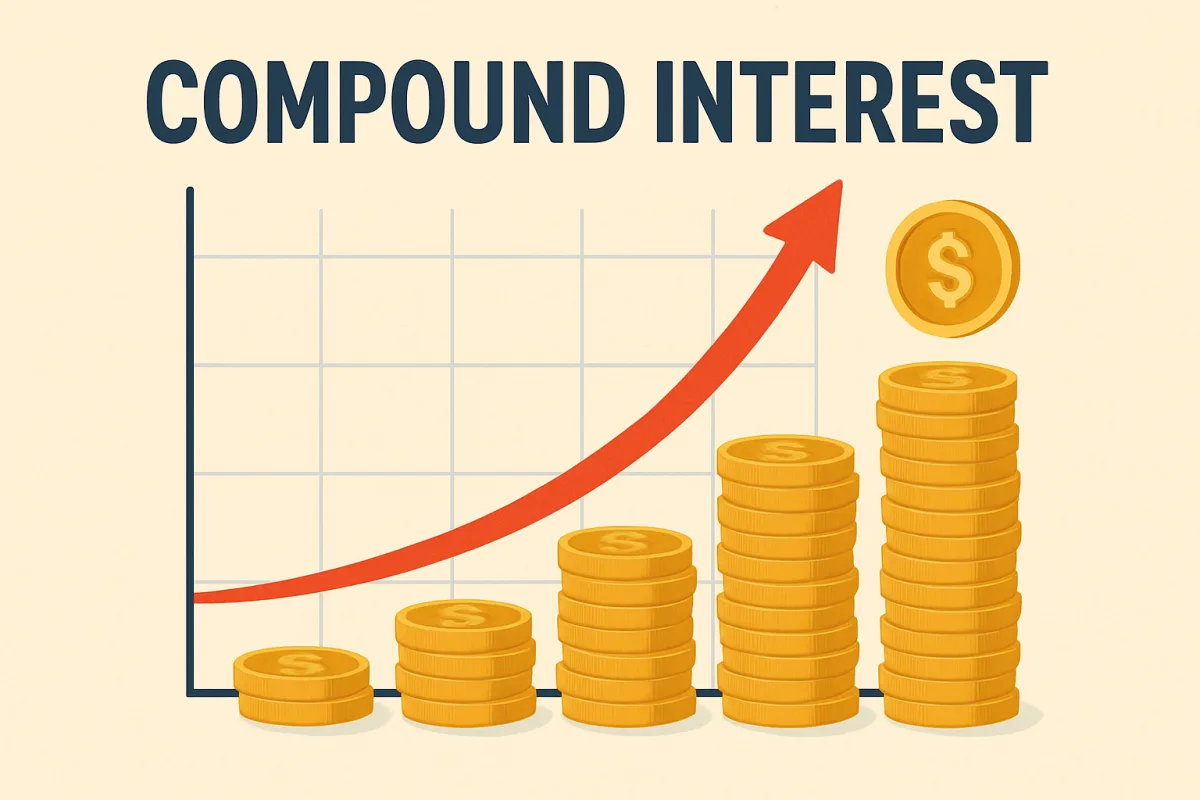
Compound interest is the interest calculated on the initial principal and also on the accumulated interest from previous periods. This means that the interest you earn also earns interest over time, leading to exponential growth of your investment or savings. It is a powerful financial concept that can significantly increase your wealth if applied correctly, especially over long periods.
Quick Summary
Understanding compound interest is crucial for effective personal finance management. It allows your savings to grow exponentially over time, as interest is earned on both the principal and the accumulated interest. This concept is foundational in investing and saving strategies.
Curator Notes
Compound interest is often referred to as 'interest on interest.' Unlike simple interest, which is calculated only on the principal amount, compound interest considers both the principal and the interest that has already been added to it. This compounding effect can lead to significant growth in savings or investments over time, especially when the interest is compounded frequently (e.g., annually, semi-annually, or monthly). For example, if you invest $1,000 at an annual interest rate of 5%, after one year, you will have earned $50 in interest.
In the second year, you will earn interest not just on your initial $1,000 but also on the $50 earned in the first year, resulting in a total of $1,102.50 at the end of the second year. The longer you leave your money to compound, the more pronounced the effects become, making it a vital strategy for long-term financial growth. To maximize the benefits of compound interest, consider starting to save or invest early, as time is a key factor in compounding.
Additionally, reinvesting your earnings can further enhance your returns. Understanding the nuances of how often interest is compounded can also help you make better financial decisions.
Best Sources
Videos and Community Signals
A lot of savers underestimate the power of reinvesting, they don't understand just how much of a difference compound interest ...
Compress Decades Into Days. Get Dan Lok's World-Class Training Solutions to Grow Your Income, Influence and Wealth Today.
Comparison
| Decision Point | Good Starting Choice | When to Go Further |
|---|---|---|
| Online booking | A simple booking page with service duration, staff assignment and confirmation emails. | Multi-location calendars, deposits, cancellation rules and waitlist handling. |
| Client records | Basic notes, visit history and contact details are enough to start. | Segmentation, purchase history, memberships, forms and before-after notes become more important. |
| Reminders | SMS or email reminders help reduce no-shows without adding admin work. | Automated rebooking, follow-up campaigns and missed-appointment recovery matter more. |
| Payments | Card capture and checkout should be simple and transparent. | Packages, memberships, staff commissions, tips and refunds need cleaner reporting. |
| Marketing | Light email or SMS campaigns are useful if they are easy to run. | Automated win-back, birthday offers, review requests and audience segments create more leverage. |
FAQ
Compound interest is calculated on the initial principal and the accumulated interest, while simple interest is calculated only on the principal amount.
The more frequently interest is compounded, the more interest you will earn. For example, monthly compounding yields more than annual compounding.
Yes, if you have debt that accrues compound interest, such as credit card debt, the total amount owed can grow quickly if not paid off.