Chemical Exfoliants Explained
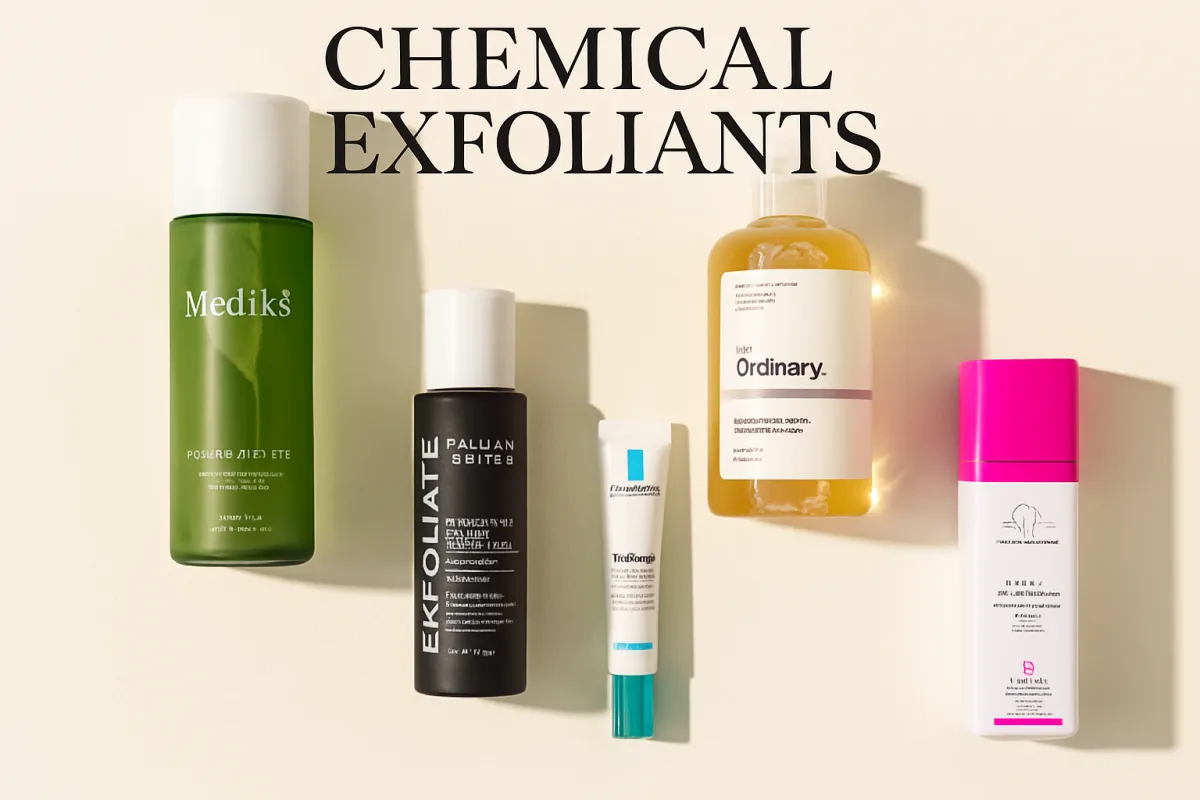
Chemical exfoliants are skincare products that use active ingredients to remove dead skin cells and promote cell turnover. Common types include alpha hydroxy acids (AHAs) like glycolic acid and beta hydroxy acids (BHAs) like salicylic acid. They help improve skin texture, reduce fine lines, and treat acne. Choosing the right exfoliant depends on your skin type and concerns, with AHAs being more suitable for dry skin and BHAs for oily or acne-prone skin.
Quick Summary
Chemical exfoliants are effective skincare tools that enhance skin texture and clarity by using acids to remove dead skin cells. AHAs and BHAs are the two main categories, each catering to different skin types and concerns. Understanding their differences helps in selecting the right product for your skincare routine.
Curator Notes
Chemical exfoliants are integral to modern skincare, offering a more controlled and effective way to slough off dead skin cells compared to physical exfoliants. They work by dissolving the bonds that hold dead skin cells together, allowing for easier removal and promoting the growth of new cells. This process can lead to a brighter complexion, improved texture, and reduced signs of aging.
Alpha hydroxy acids (AHAs) are water-soluble and primarily derived from fruits. They are excellent for dry or sun-damaged skin, as they help to hydrate and improve moisture retention. Glycolic acid, a popular AHA, is known for its small molecular size, allowing deeper penetration into the skin.
On the other hand, beta hydroxy acids (BHAs), such as salicylic acid, are oil-soluble and penetrate deeper into pores, making them ideal for oily and acne-prone skin. Understanding your skin type is crucial in choosing the right chemical exfoliant for optimal results.
Recommended Options
- The Ordinary Glycolic Acid 7% Toning Solution: Best for Dry or sun-damaged skin Affordable and effective, this product helps improve skin texture and brightness. Signal checked: Highly rated by users for its effectiveness and value. Alternative to consider: Paula's Choice Skin Perfecting 8% AHA Gel Exfoliant
- The Ordinary Salicylic Acid 2% Solution: Best for Oily or acne-prone skin Targets acne and helps clear pores effectively. Signal checked: Widely recommended by dermatologists for acne treatment. Alternative to consider: Neutrogena Oil-Free Acne Wash
Best Sources
Videos and Community Signals
Today, discuss how to exfoliate your skin to improve texture, pigmentation, and fine lines / wrinkles Shop everything mentioned in ...
AHA and BHA are commonly used terms in skin care. Alpha hydroxy acids cause gentle skin exfoliation, removes dead cross and ...
Comparison
| Decision Point | Good Starting Choice | When to Go Further |
|---|---|---|
| Skin Type | AHAs for dry skin | BHAs for oily/acne-prone skin |
| Hydration | Choose AHAs for added moisture | BHAs for oil control |
| Usage Frequency | Start with 1-2 times a week | Increase to 3-4 times as tolerated |
FAQ
Chemical exfoliants improve skin texture, reduce fine lines, and help treat acne by promoting cell turnover.
Start with 1-2 times a week and gradually increase based on your skin's tolerance.
Yes, but be cautious when combining with retinoids or other active ingredients to avoid irritation.