Chainlink Explained Simply
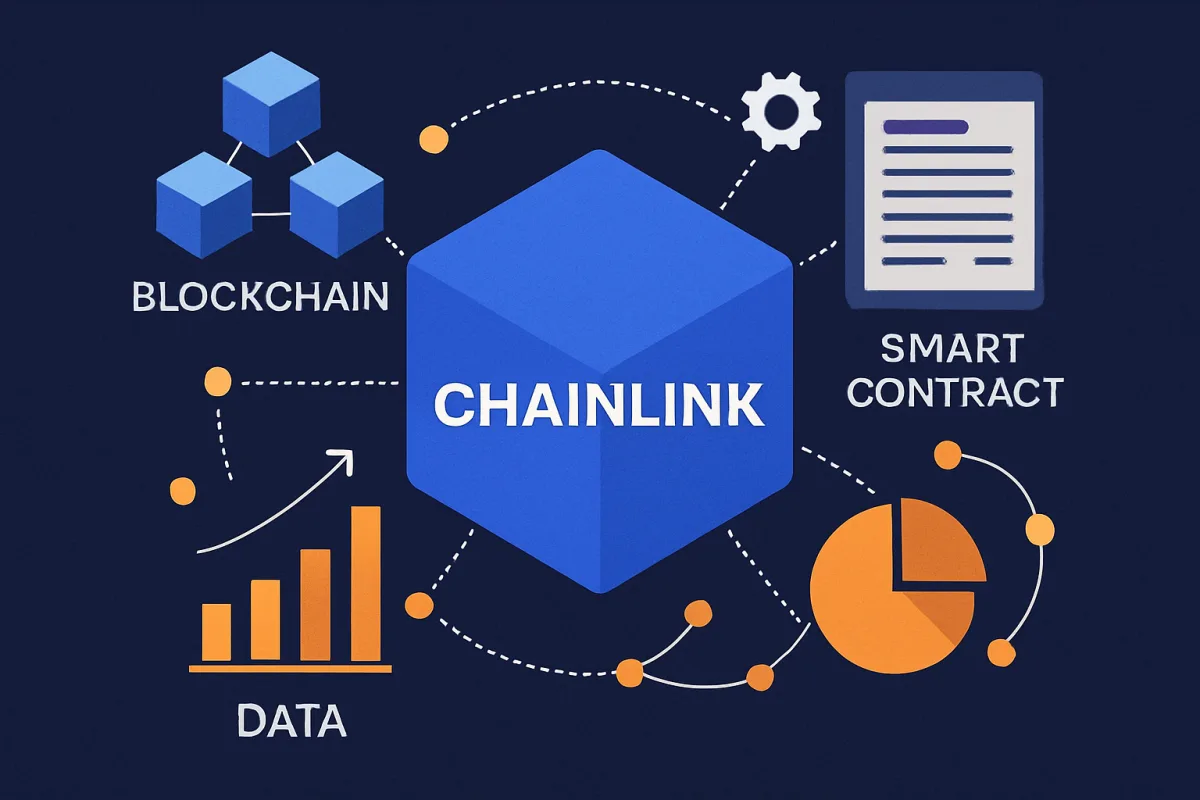
Chainlink is a decentralized oracle network that enables smart contracts on various blockchains to securely interact with real-world data. By connecting blockchain-based applications with external data sources, Chainlink addresses a critical limitation of smart contracts, which typically cannot access off-chain information. This capability allows for more complex and useful applications in finance, insurance, and other sectors. Chainlink's native token, LINK, is used to pay for services on the network, incentivizing node operators to provide accurate data. Its robust architecture and widespread adoption make it a key player in the blockchain ecosystem.
Quick Summary
Chainlink is revolutionizing how smart contracts interact with real-world data through its decentralized oracle network. By bridging the gap between on-chain and off-chain information, Chainlink enhances the functionality of blockchain applications. Its native token, LINK, plays a crucial role in incentivizing data providers. This makes Chainlink essential for industries requiring reliable data feeds, such as finance and insurance. The platform's growing adoption and partnerships signal its importance in the evolving blockchain landscape.
Curator Notes
Chainlink stands out in the blockchain ecosystem as a decentralized oracle network, crucial for enabling smart contracts to access real-world data. Traditional smart contracts operate in isolation, unable to pull in external information. Chainlink solves this by acting as a bridge, allowing smart contracts to interact with APIs, data feeds, and other off-chain resources.
This capability opens up a range of possibilities for decentralized applications (dApps) across various sectors, including finance, insurance, and supply chain management. The architecture of Chainlink consists of multiple independent node operators who fetch and verify data from various sources. This decentralization ensures that the data provided is not only accurate but also resistant to manipulation.
The LINK token is integral to this ecosystem, as it is used to pay node operators for their services. This creates a financial incentive for nodes to provide reliable data, enhancing the overall integrity of the network. One of the significant advantages of Chainlink is its ability to facilitate complex smart contracts that require real-time data.
For example, in the insurance industry, smart contracts can automatically execute claims based on weather data, significantly speeding up the claims process. This level of automation and reliability is a game-changer for many industries. However, potential users should be aware of some challenges.
While Chainlink is widely adopted, the reliance on external data sources introduces a level of risk. If a data provider fails or provides inaccurate information, it could impact the smart contract's execution. Therefore, users must carefully select their data sources and consider the implications of using Chainlink.
Chainlink's partnerships with major companies and platforms, such as Google Cloud and Oracle, further validate its importance in the blockchain space. These collaborations enhance its credibility and expand its use cases, making it a go-to solution for developers looking to integrate real-world data into their applications. In summary, Chainlink is not just a technology; it's a foundational layer for the future of decentralized applications.
Its ability to connect smart contracts with real-world data is essential for the growth of the blockchain ecosystem. As industries continue to explore blockchain solutions, Chainlink's role will likely become even more prominent, making it a critical area of focus for developers and businesses alike. For those interested in diving deeper, exploring Chainlink's documentation and community resources can provide valuable insights into its functionality and potential applications.
This will help users understand how to leverage Chainlink effectively in their projects, ensuring they maximize its benefits while mitigating risks.
Recommended Options
- Chainlink Labs Chainlink: Best for Developers and businesses looking to integrate real-world data into smart contracts. Chainlink's decentralized oracle network is widely recognized for its reliability and extensive partnerships. Signal checked: Chainlink has secured numerous collaborations with major tech companies and has a strong presence in the DeFi space. Alternative to consider: Band Protocol offers similar oracle services but may have different scalability features.
Best Sources
Videos and Community Signals
Keep watching to find out what the role of Chainlink in Web3 is and how Chainlink powers DeFi, smart contracts, blockchains, and ...
This content is not intended or suitable for individuals residing in the UK. Please see https://www.youtube.com/@Exodus-UK .
Comparison
| Decision Point | Good Starting Choice | When to Go Further |
|---|---|---|
| Data Source Reliability | Use Chainlink for high-stakes applications requiring verified data. | Consider alternative oracles like Band Protocol for specific use cases with different data needs. |
| Integration Complexity | Chainlink is user-friendly for developers familiar with Ethereum. | Explore other oracles if you need simpler integration for non-Ethereum platforms. |
FAQ
Chainlink is a decentralized oracle network that connects smart contracts with real-world data, enhancing their functionality.
Chainlink operates through independent node operators who fetch and verify data from various sources, ensuring accuracy and reliability.
The LINK token is used to pay node operators for their services and incentivize them to provide accurate data.