Capital Gains Tax Rates Explained
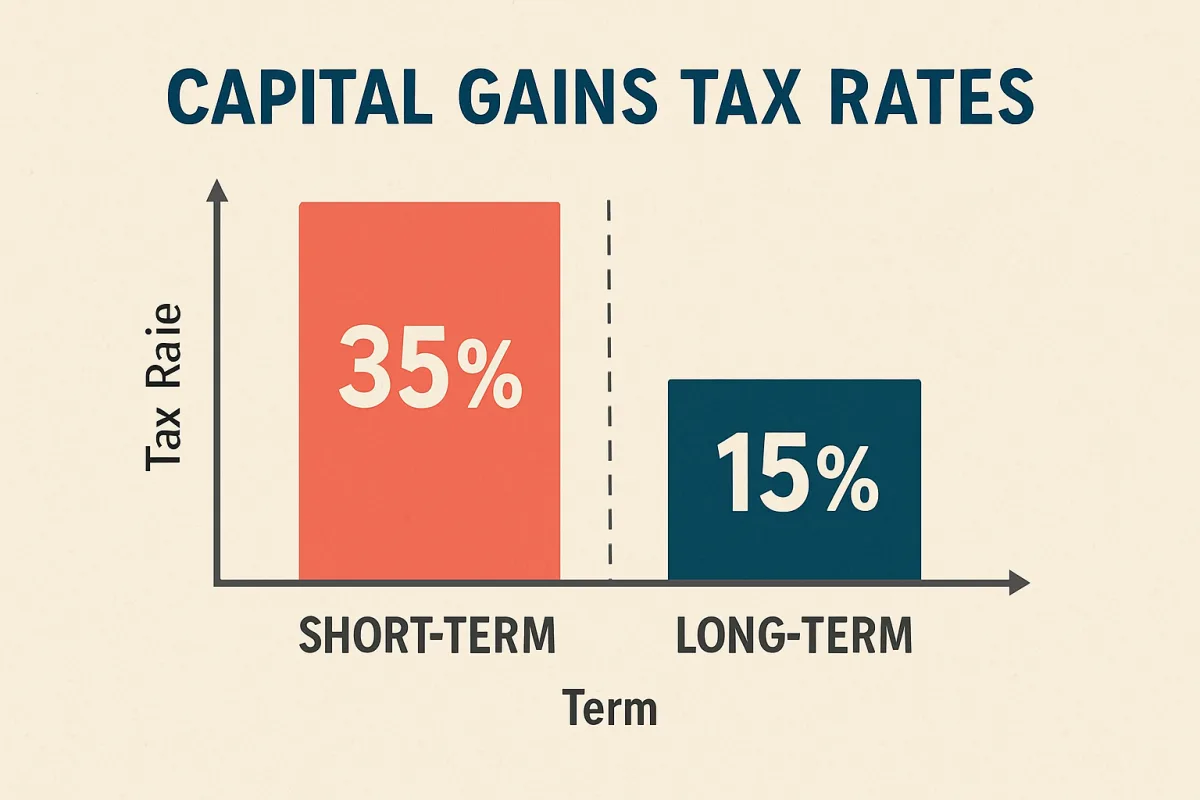
Capital gains tax rates vary based on the holding period of the asset and the taxpayer's income level. Short-term capital gains, from assets held for one year or less, are taxed as ordinary income, while long-term capital gains, from assets held for more than one year, benefit from reduced tax rates, typically ranging from 0% to 20%. Understanding these rates is crucial for effective tax planning and investment strategies.
Quick Summary
Capital gains tax rates are determined by how long an asset is held and the taxpayer's income. Short-term gains are taxed as ordinary income, while long-term gains have lower rates. This guide explains the nuances of these rates to help with tax planning.
Curator Notes
Capital gains tax rates are essential for investors to understand, as they directly impact the profitability of investments. Short-term capital gains, which apply to assets held for one year or less, are taxed at the individual's ordinary income tax rate. This can be significantly higher than long-term capital gains rates, which apply to assets held for more than one year.
The long-term rates are tiered based on income levels, typically set at 0%, 15%, or 20%, depending on the taxpayer's income bracket. For example, a single filer with a taxable income of up to $44,625 may pay a 0% long-term capital gains tax, while those earning between $44,626 and $492,300 may face a 15% rate. Understanding these brackets is crucial for making informed investment decisions.
Additionally, certain factors like the type of asset and the taxpayer's overall financial situation can influence the effective tax rate. Therefore, consulting with a tax professional can provide personalized insights and strategies for minimizing tax liabilities.
Best Sources
Videos and Community Signals
The IRS just released the 2025 long-term capital gains tax brackets. They're very important for people actively investing for F.I.R.E. ...
Understand how capital gains tax affects your investments and how to calculate what you owe. Take control of your finances!
Comparison
| Decision Point | Good Starting Choice | When to Go Further |
|---|---|---|
| Online booking | A simple booking page with service duration, staff assignment and confirmation emails. | Multi-location calendars, deposits, cancellation rules and waitlist handling. |
| Client records | Basic notes, visit history and contact details are enough to start. | Segmentation, purchase history, memberships, forms and before-after notes become more important. |
| Reminders | SMS or email reminders help reduce no-shows without adding admin work. | Automated rebooking, follow-up campaigns and missed-appointment recovery matter more. |
| Payments | Card capture and checkout should be simple and transparent. | Packages, memberships, staff commissions, tips and refunds need cleaner reporting. |
| Marketing | Light email or SMS campaigns are useful if they are easy to run. | Automated win-back, birthday offers, review requests and audience segments create more leverage. |
FAQ
Short-term capital gains apply to assets held for one year or less and are taxed as ordinary income. Long-term capital gains apply to assets held for more than one year and are taxed at reduced rates.
Capital gains tax rates depend on the holding period of the asset and the taxpayer's income level, with long-term gains benefiting from lower rates.
Yes, certain exemptions exist, such as the primary residence exclusion, where homeowners may exclude up to $250,000 ($500,000 for married couples) of capital gains on the sale of their home.