Brand Deal Red Flags to Watch For
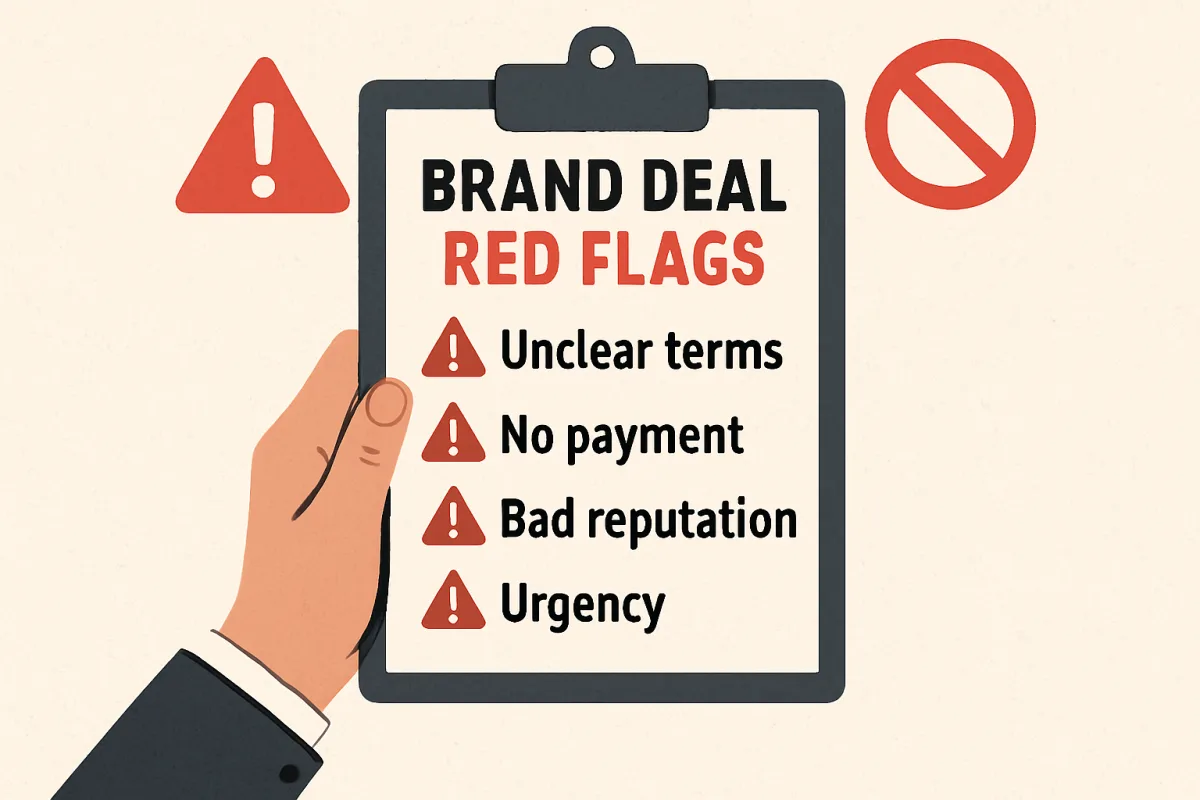
When engaging in brand deals, creators should be vigilant about several red flags that may indicate potential issues. Key warning signs include lack of transparency regarding payment terms, unrealistic expectations for deliverables, and vague or poorly defined contracts. Additionally, if a brand is unwilling to provide references or examples of past collaborations, it may signal a lack of credibility. Creators should also be cautious if the brand's values do not align with their own, as this can lead to reputational risks. Overall, thorough vetting and clear communication are essential to avoid pitfalls in brand partnerships.
Quick Summary
Navigating brand deals can be tricky, especially when red flags arise. Creators should watch for signs like unclear payment terms, unrealistic expectations, and vague contracts. A brand's reluctance to share past collaboration examples or misalignment of values can also indicate potential problems. By staying informed and conducting due diligence, creators can protect themselves and ensure successful partnerships.
Curator Notes
Brand deals can offer exciting opportunities for creators, but they also come with risks. One of the most significant red flags to watch for is a lack of transparency regarding payment terms. If a brand is unclear about how and when they will compensate you, it may lead to misunderstandings or financial loss down the line.
Always ask for detailed payment structures and timelines before committing to a deal. Unrealistic expectations are another common issue. Brands may expect creators to deliver high-quality content within tight deadlines or without adequate resources.
If the demands seem excessive or unfeasible, it’s crucial to address these concerns upfront. A healthy partnership should involve reasonable expectations that align with your capabilities. Contracts are the backbone of any brand deal, and vague or poorly defined agreements can lead to disputes.
If the contract lacks clarity on deliverables, timelines, or rights to content, it’s a significant red flag. Always ensure that the terms are explicitly stated and that you fully understand your obligations and rights. A brand's unwillingness to provide references or examples of past collaborations can also indicate a lack of credibility.
If they are hesitant to share their previous work or testimonials from other creators, it may be wise to reconsider the partnership. Credible brands should have a portfolio of successful collaborations to showcase. Alignment of values is crucial in any partnership.
If a brand's mission or values clash with your own, it could lead to reputational risks. Always evaluate whether the brand's image aligns with your personal brand and audience expectations. If there’s a disconnect, it might be better to walk away.
Finally, communication is key. If a brand is unresponsive or difficult to communicate with during the negotiation phase, it may foreshadow future challenges. A successful partnership relies on open and effective communication, so ensure that you feel comfortable discussing concerns with the brand.
By being aware of these red flags and conducting thorough due diligence, creators can navigate brand deals more effectively and protect their interests. Always trust your instincts and prioritize partnerships that feel right for you and your audience.
Best Sources
Videos and Community Signals
Finding creators with excellent brand fit can be a huge challenge in and of itself. But how do you get those creators to want to work ...
Are you treating your content creation as a hobby? That's an IRS red flag that could cost you! If the IRS considers your work a ...
Comparison
| Decision Point | Good Starting Choice | When to Go Further |
|---|---|---|
| Online booking | A simple booking page with service duration, staff assignment and confirmation emails. | Multi-location calendars, deposits, cancellation rules and waitlist handling. |
| Client records | Basic notes, visit history and contact details are enough to start. | Segmentation, purchase history, memberships, forms and before-after notes become more important. |
| Reminders | SMS or email reminders help reduce no-shows without adding admin work. | Automated rebooking, follow-up campaigns and missed-appointment recovery matter more. |
| Payments | Card capture and checkout should be simple and transparent. | Packages, memberships, staff commissions, tips and refunds need cleaner reporting. |
| Marketing | Light email or SMS campaigns are useful if they are easy to run. | Automated win-back, birthday offers, review requests and audience segments create more leverage. |
FAQ
Common red flags include unclear payment terms, unrealistic expectations, vague contracts, reluctance to share references, and misalignment of values.
Conduct thorough research on the brand, ensure clear communication, and have a well-defined contract that outlines all terms and expectations.
Address the concern directly with the brand. If they are unwilling to clarify or adjust terms, consider walking away from the deal.