Angel Investors vs Venture Capital
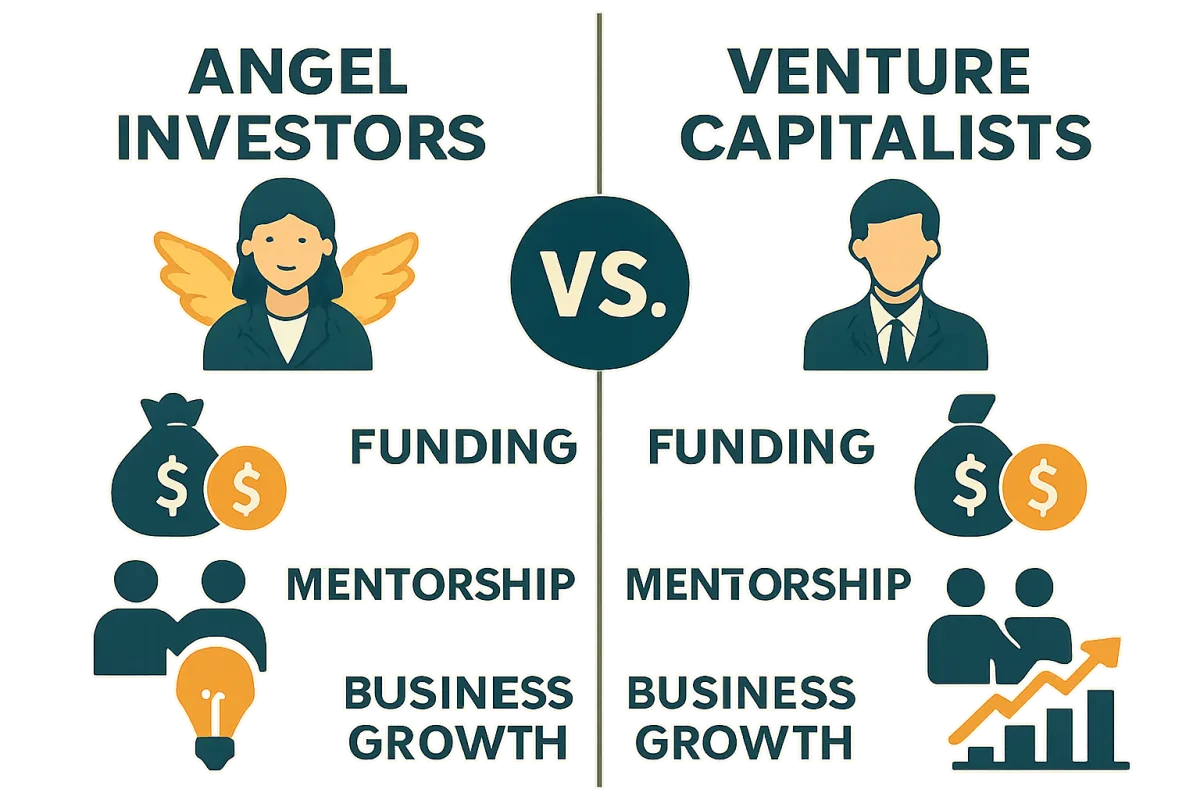
Angel investors and venture capitalists both provide funding to startups, but they differ significantly in their approach and expectations. Angel investors are typically individuals who invest their personal funds and often provide mentorship, while venture capitalists manage pooled funds from various investors and seek higher returns. Angel investors usually invest smaller amounts in earlier stages, whereas venture capitalists invest larger sums in more established companies with growth potential. Understanding these differences can help entrepreneurs choose the right funding source for their business needs.
Quick Summary
Angel investors and venture capitalists are key funding sources for startups, but they operate differently. Angel investors are individuals investing personal funds, often in early-stage companies, while venture capitalists manage larger funds and invest in more mature businesses. This guide explores their differences, advantages, and when to choose each funding option.
Curator Notes
Angel investors are typically high-net-worth individuals who provide capital to startups in exchange for equity. They often invest in the early stages of a business and may also offer mentorship and guidance. This personal involvement can be invaluable for entrepreneurs who need not just funding but also strategic advice.
The investment amounts are usually smaller, ranging from a few thousand to a few million dollars, making them a suitable option for startups that are still in the ideation or early development phases. On the other hand, venture capitalists (VCs) manage pooled funds from various investors and focus on companies that have demonstrated some level of market traction. VCs usually invest larger sums, often millions of dollars, and expect a significant return on their investment within a few years.
They typically seek companies with high growth potential and may require a more structured business plan and financial projections. While VCs can offer extensive networks and resources, their involvement often comes with more stringent expectations and oversight. Choosing between angel investors and venture capitalists depends on the stage of your business, the amount of funding needed, and the level of control you wish to maintain.
For early-stage startups looking for mentorship and smaller amounts of capital, angel investors may be more suitable. Conversely, if you have a more established business with significant growth potential, venture capital may be the better route to secure larger funding and resources.
Best Sources
Videos and Community Signals
Angel Investors and Venture Capital Investors can both provide funding but the differences are important for startups looking to ...
In this video, we explore how venture capitalists and angel investors can turn tens of thousands of dollars into millions and how ...
Comparison
| Decision Point | Good Starting Choice | When to Go Further |
|---|---|---|
| Investment Size | Angel investors typically invest smaller amounts (up to $1 million). | Venture capitalists invest larger sums (often $1 million to $10 million or more). |
| Stage of Investment | Angel investors often fund early-stage startups. | Venture capitalists usually invest in more mature companies with proven business models. |
| Involvement Level | Angel investors may provide mentorship and guidance. | Venture capitalists often require more oversight and may influence business decisions. |
| Return Expectations | Angel investors may have flexible return expectations. | Venture capitalists typically seek high returns within a specific timeframe. |
FAQ
Angel investors are individuals investing personal funds in early-stage startups, while venture capitalists manage pooled funds and invest in more mature companies.
You should consider approaching an angel investor if you are in the early stages of your startup and need smaller amounts of capital along with mentorship.
Venture capitalists typically invest larger amounts, often ranging from $1 million to $10 million or more, depending on the company's growth potential.