AI Tools For Students Review
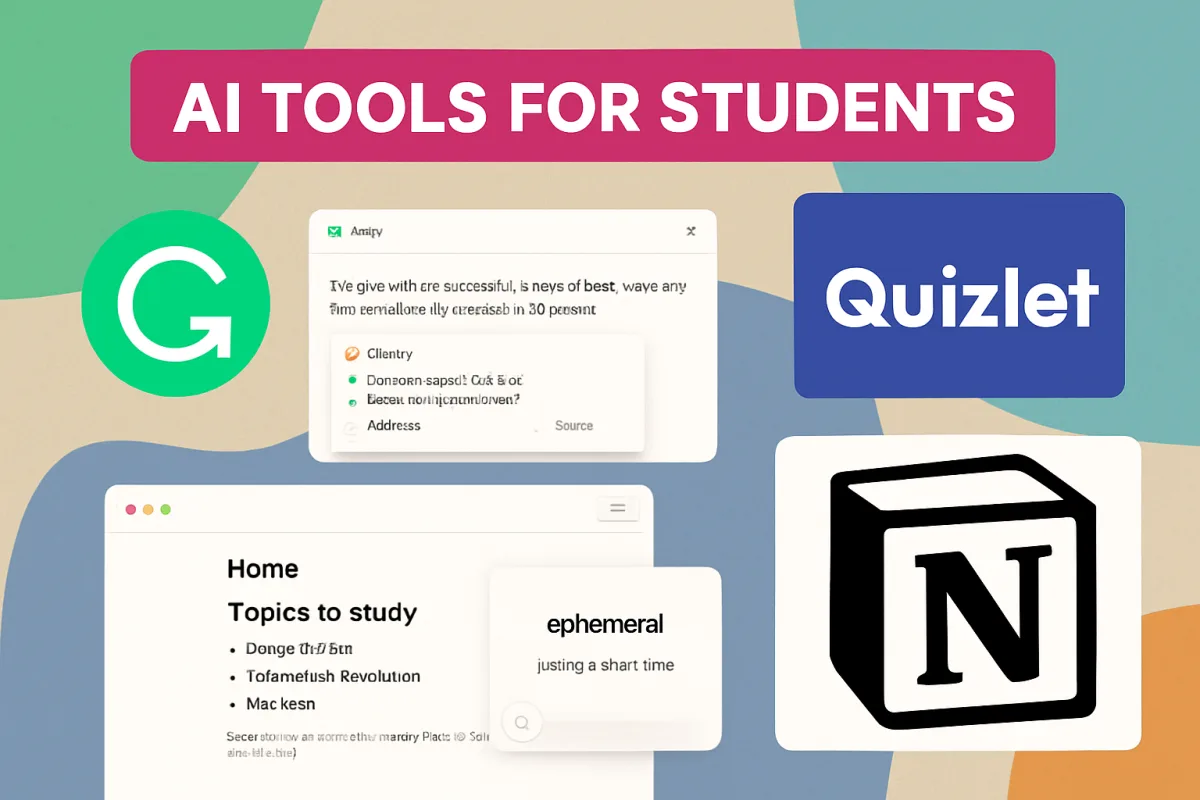
Several AI tools can significantly enhance the learning experience for students. Notable options include Grammarly for writing assistance, Quizlet for study aids, and Notion for organization. Grammarly stands out for its real-time grammar and style suggestions, making it ideal for students looking to improve their writing skills. Quizlet offers customizable flashcards and games, perfect for memorization and active recall. Notion serves as an all-in-one workspace, allowing students to manage notes, tasks, and projects efficiently. Each tool has unique strengths that cater to different aspects of student life, from writing to studying to organization.
Quick Summary
AI tools have become indispensable for students aiming to enhance their academic performance. Tools like Grammarly, Quizlet, and Notion provide tailored support for writing, studying, and organization. Grammarly excels in improving writing quality, while Quizlet offers effective study aids through flashcards and interactive games. Notion stands out as a versatile platform for managing notes and tasks. Understanding the specific needs of students can help in selecting the most suitable AI tools for their educational journey.
Curator Notes
The landscape of AI tools for students is diverse, offering various functionalities that cater to different academic needs. Grammarly is a standout choice for students who want to elevate their writing. It provides real-time feedback on grammar, punctuation, and style, making it an essential tool for essays and reports.
The premium version also offers advanced suggestions, which can be beneficial for more complex writing tasks. However, some users may find the subscription cost a barrier, especially if they only need basic features. Quizlet is another excellent tool, particularly for students who thrive on active recall and interactive learning.
It allows users to create customized flashcards and engage in various study modes, including games and quizzes. This flexibility makes it suitable for a wide range of subjects. However, while Quizlet is effective for memorization, it may not offer in-depth explanations, which could leave some students wanting more context.
Notion serves as a comprehensive organizational tool that combines note-taking, task management, and collaboration features. Its versatility makes it ideal for students juggling multiple projects and deadlines. Users can create databases, to-do lists, and even collaborative workspaces.
The learning curve can be steep for new users, but once mastered, it can significantly streamline a student’s workflow. For students focused on coding or technical subjects, tools like GitHub Copilot can be invaluable. This AI-powered code assistant helps with coding tasks by suggesting code snippets and solutions, which can save time and enhance learning.
However, reliance on such tools may hinder the development of problem-solving skills if not used judiciously. While these tools offer substantial benefits, students should also be mindful of potential drawbacks. Subscription costs can add up, and over-reliance on AI for writing or studying may impede the development of critical thinking and independent learning skills.
Balancing the use of these tools with traditional study methods is crucial for long-term academic success. In conclusion, the right AI tools can significantly enhance a student's academic experience. By understanding the unique strengths and limitations of each tool, students can make informed decisions that align with their educational goals.
Exploring free trials or basic versions can also help students find the best fit without financial commitment. Ultimately, the choice of AI tools should reflect individual learning styles and needs. Whether it’s improving writing, enhancing study habits, or managing tasks, there’s likely an AI tool that can help students achieve their academic objectives.
Recommended Options
- Grammarly: Best for Writing improvement Real-time grammar and style suggestions Signal checked: Widely used with positive reviews from students Alternative to consider: Hemingway Editor for style clarity
- Quizlet: Best for Study aids and memorization Customizable flashcards and interactive games Signal checked: Popular among students for various subjects Alternative to consider: Anki for spaced repetition learning
- Notion: Best for Organization and task management All-in-one workspace for notes and projects Signal checked: Highly rated for versatility and collaboration Alternative to consider: Evernote for note-taking
- GitHub Copilot: Best for Coding assistance AI-powered code suggestions Signal checked: Gaining traction among coding students Alternative to consider: Replit for collaborative coding
Best Sources
Videos and Community Signals
EDU Arena - https://www.eduarena.ai/ ➡️ In this video, I'll show you the most powerful AI tools every student should know in ...
Follow us on Instagram: https://www.instagram.com/fulldisclosure.ig/ Discover Atlas.org – the ultimate study companion!
Comparison
| Decision Point | Good Starting Choice | When to Go Further |
|---|---|---|
| Writing Assistance | Grammarly for grammar and style | ProWritingAid for in-depth analysis |
| Study Tools | Quizlet for flashcards | Anki for spaced repetition |
| Organization | Notion for task management | Trello for project tracking |
| Coding Support | GitHub Copilot for code suggestions | Codewars for coding challenges |
FAQ
AI tools can be highly effective, but their success depends on individual learning styles and needs.
Many AI tools offer free versions, but premium features often require a subscription.
AI tools should complement traditional methods, not replace them, to ensure comprehensive learning.