Agile vs Lean Startup Compared
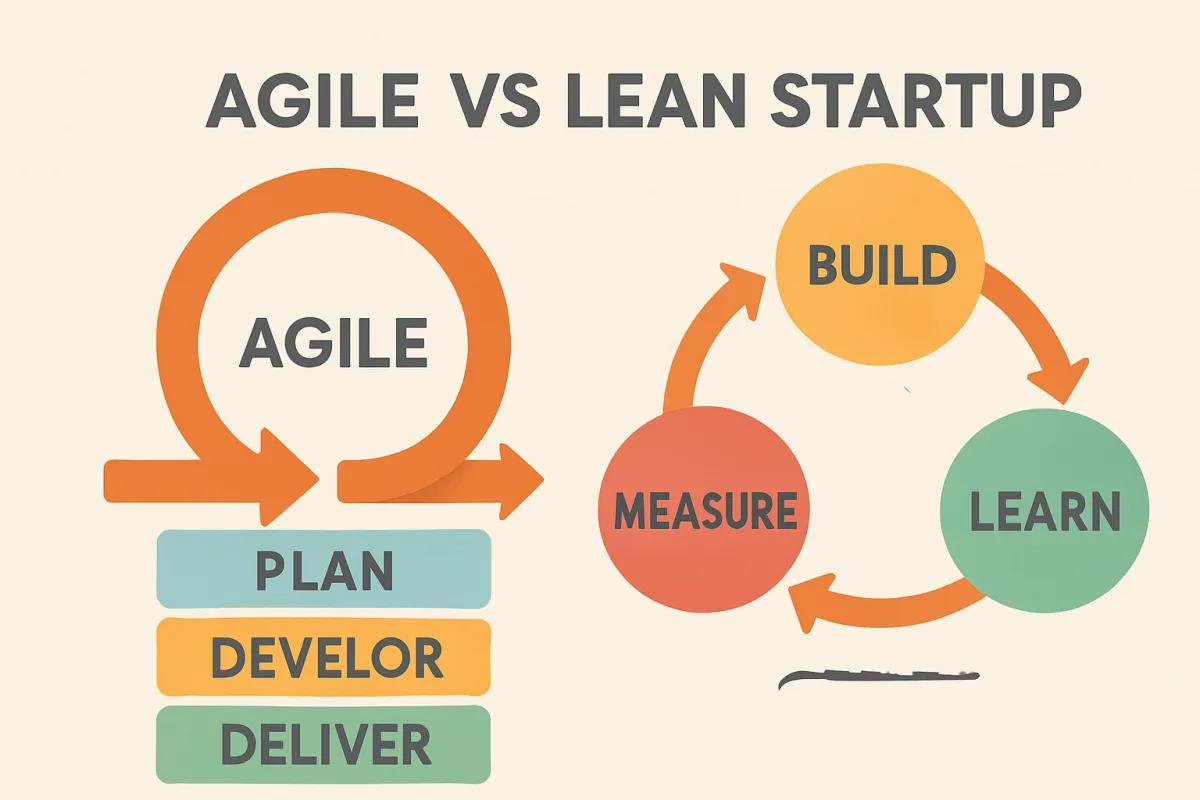
Agile and Lean Startup methodologies both aim to enhance product development efficiency, but they approach this goal differently. Agile focuses on iterative development and flexibility, allowing teams to adapt to changing requirements quickly. In contrast, Lean Startup emphasizes validated learning through experimentation and customer feedback, aiming to minimize waste and maximize value. Choosing between them depends on your project's nature: Agile is ideal for projects requiring rapid iteration, while Lean Startup is suited for startups seeking to validate their business model before scaling.
Quick Summary
Agile and Lean Startup methodologies serve distinct purposes in product development. Agile is centered around iterative cycles, enabling teams to adapt and improve products based on feedback. Lean Startup, however, focuses on validating business ideas through experiments and customer insights, reducing waste. The choice between them hinges on your specific needs: Agile is best for projects needing flexibility, while Lean Startup is tailored for startups testing their market fit. Understanding these differences can guide your approach to product development effectively.
Curator Notes
Agile methodology is rooted in iterative development, where teams work in short cycles called sprints. This approach allows for regular reassessment and adaptation of plans based on stakeholder feedback. Agile emphasizes collaboration, customer involvement, and continuous improvement, making it particularly effective in environments where requirements are likely to change.
Teams using Agile can pivot quickly, responding to new information or market shifts, which is essential in fast-paced industries. On the other hand, Lean Startup methodology is designed for startups and new ventures aiming to validate their business ideas with minimal resources. It emphasizes the Build-Measure-Learn feedback loop, where entrepreneurs create a minimum viable product (MVP), test it in the market, gather customer feedback, and iterate based on what they learn.
This approach minimizes waste by focusing on what customers truly want, rather than what the team assumes they need. While both methodologies prioritize customer feedback, their applications differ significantly. Agile is often applied in software development, where teams can afford to iterate on features and functionalities.
Lean Startup, however, is more suited for new business models, where the focus is on finding product-market fit before scaling operations. This distinction is crucial; using Agile in a startup context without validating the business model can lead to building products that no one wants. Another key difference lies in the metrics used to measure success.
Agile teams often track velocity and sprint completion rates, focusing on delivery efficiency. In contrast, Lean Startup metrics revolve around customer engagement and learning milestones, assessing whether the product meets market needs. This shift in focus can significantly impact decision-making processes within a team.
When deciding between Agile and Lean Startup, consider your project's stage and goals. If you are in the early stages of developing a product and need to validate your ideas, Lean Startup is the safer choice. Conversely, if you have a clear product vision and need to refine it based on user feedback, Agile will likely serve you better.
Ultimately, some organizations find value in blending both methodologies. By adopting Agile practices within a Lean Startup framework, teams can maintain flexibility while ensuring they are building products that resonate with customers. This hybrid approach can lead to more successful outcomes, especially in dynamic markets.
In conclusion, both Agile and Lean Startup offer valuable frameworks for product development, but their effectiveness depends on the context in which they are applied. Understanding their core principles and differences will help you choose the right approach for your specific needs.
Best Sources
Videos and Community Signals
In this video, I'll talk about processes and methods when it comes to product and service delivery. The book I feature is by Jeff ...
Welcome to our video on Intrapreneurship, where we explore the exciting intersection of Design Thinking and Lean Startup.
Comparison
| Decision Point | Good Starting Choice | When to Go Further |
|---|---|---|
| Development Focus | Agile: Iterative development with frequent feedback. | Lean Startup: Validating business ideas through experiments. |
| Customer Involvement | Agile: Continuous customer feedback during development. | Lean Startup: Customer feedback to shape the product before full development. |
| Metrics of Success | Agile: Velocity and sprint completion rates. | Lean Startup: Customer engagement and learning milestones. |
| Best Use Case | Agile: Projects with evolving requirements. | Lean Startup: Startups needing to validate market fit. |
FAQ
Yes, many organizations blend Agile practices within a Lean Startup framework to maintain flexibility while ensuring product-market fit.
Lean Startup is generally better for startups as it focuses on validating business ideas before scaling, minimizing waste.
An MVP is a basic version of a product that includes only the essential features needed to gather feedback from early users.