AI Tools for DevOps
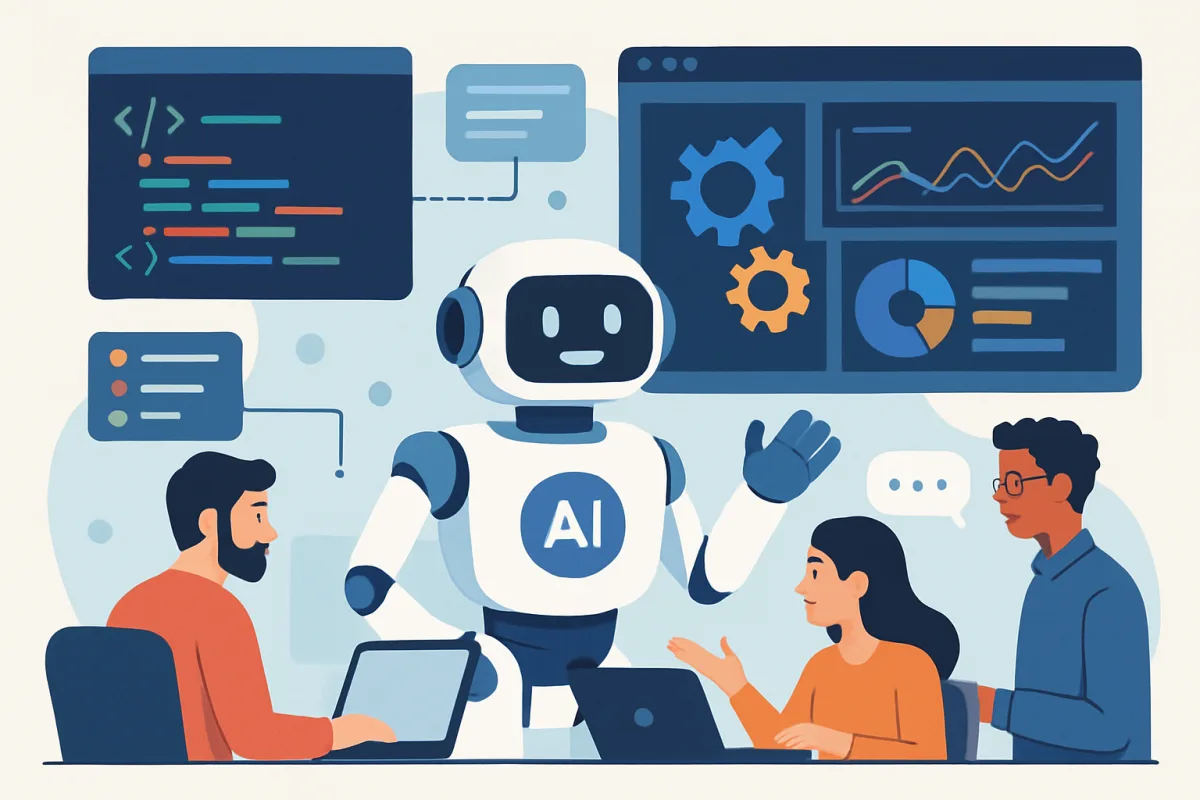
AI tools for DevOps enhance automation, monitoring, and collaboration, streamlining workflows and improving efficiency. Popular options include GitHub Copilot for code assistance, Datadog for monitoring, and Jenkins for CI/CD automation. Each tool caters to specific needs, from code generation to performance tracking, making them essential for modern DevOps practices.
Quick Summary
This guide explores various AI tools for DevOps, highlighting their functionalities and benefits. Key recommendations include GitHub Copilot for coding support, Datadog for monitoring, and Jenkins for CI/CD processes. Each tool is tailored to improve efficiency and collaboration in DevOps environments.
Curator Notes
AI tools are transforming the DevOps landscape by automating repetitive tasks, enhancing monitoring capabilities, and facilitating better collaboration among teams. For instance, GitHub Copilot leverages machine learning to assist developers in writing code more efficiently, reducing the time spent on routine coding tasks. This tool is particularly beneficial for teams looking to accelerate their development cycles without compromising code quality.
On the other hand, Datadog provides comprehensive monitoring solutions that integrate seamlessly with various cloud services, offering real-time insights into application performance. This is crucial for teams that need to ensure uptime and reliability in their deployments. Jenkins, a widely used CI/CD tool, can be enhanced with AI plugins to optimize build processes and automate testing, making it a staple in many DevOps toolchains.
Choosing the right AI tool depends on your team's specific needs, such as whether you prioritize coding assistance, monitoring, or automation. Each tool has its strengths and can significantly impact your DevOps efficiency when integrated properly.
Recommended Options
- GitHub Copilot: Best for Developers seeking coding assistance Uses AI to suggest code snippets and functions, enhancing productivity. Signal checked: Widely adopted by developers with positive reviews on its ability to speed up coding. Alternative to consider: Tabnine for AI-driven code completion.
- Datadog: Best for Teams needing comprehensive monitoring solutions Offers real-time performance monitoring and analytics across cloud applications. Signal checked: High customer satisfaction ratings and extensive integration capabilities. Alternative to consider: New Relic for performance monitoring.
- Jenkins: Best for Teams focused on CI/CD automation Highly customizable with a vast plugin ecosystem for automation. Signal checked: Long-standing popularity in the DevOps community. Alternative to consider: CircleCI for cloud-based CI/CD solutions.
Best Sources
Videos and Community Signals
AI tools for DevOps | AI for DevOps | Top 3 AI tools in DevOps In this devops short you will learn the top 3 AI tools in devops in ...
Learn about useful AI tools in DevOps and Cloud to speed up coding, optimize cloud costs or drastically improve your monitoring ...
Comparison
| Decision Point | Good Starting Choice | When to Go Further |
|---|---|---|
| Coding Assistance | GitHub Copilot for quick code suggestions. | Tabnine for more extensive AI-driven completions. |
| Monitoring Capabilities | Datadog for real-time insights. | New Relic for deeper analytics and reporting. |
| CI/CD Automation | Jenkins for customizable pipelines. | CircleCI for cloud-native CI/CD workflows. |
FAQ
AI tools in DevOps are software solutions that leverage artificial intelligence to automate tasks, enhance monitoring, and improve collaboration within development and operations teams.
They streamline processes, reduce manual work, and provide insights that help teams make data-driven decisions, ultimately leading to faster and more reliable software delivery.
Costs vary widely based on the tool and its features. Some tools offer free tiers or trial versions, while others may require a subscription or licensing fee.