50/30/20 Rule Budgeting Explained
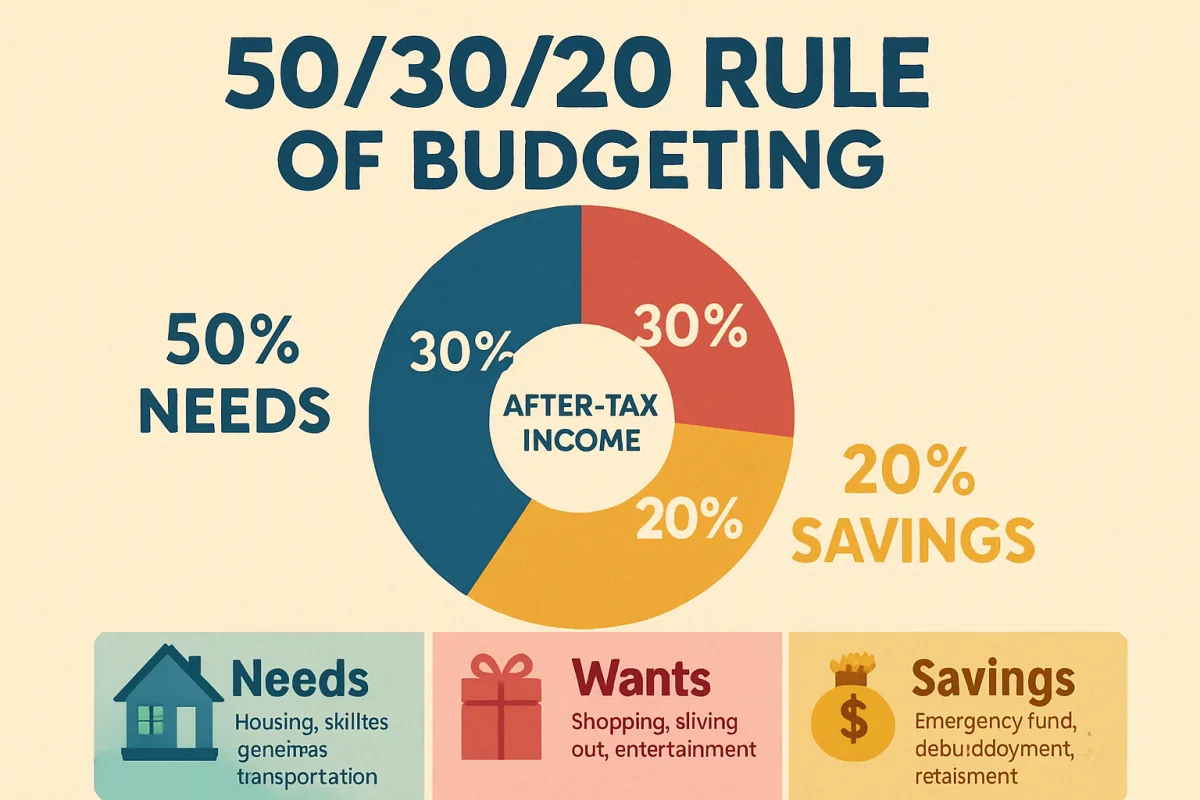
The 50/30/20 rule is a budgeting framework that divides your after-tax income into three categories: 50% for needs, 30% for wants, and 20% for savings or debt repayment. This method simplifies budgeting by providing clear guidelines on how to allocate your income effectively, ensuring that essential expenses are covered while also allowing for discretionary spending and savings.
Quick Summary
The 50/30/20 rule is a straightforward budgeting strategy that helps individuals manage their finances by allocating 50% of income to needs, 30% to wants, and 20% to savings or debt repayment. This method promotes financial health and encourages responsible spending and saving habits.
Curator Notes
The 50/30/20 rule is a popular budgeting strategy designed to help individuals allocate their income effectively. By dividing your after-tax income into three distinct categories, this method provides a clear framework for managing finances. The first category, 'needs,' encompasses essential expenses such as housing, utilities, groceries, and healthcare, which should not exceed 50% of your income.
This ensures that your basic living requirements are met without financial strain. The second category, 'wants,' includes discretionary spending like dining out, entertainment, and vacations, which should account for 30% of your income. This allocation allows for enjoyment and leisure while still maintaining a budget.
Finally, the last category, 'savings and debt repayment,' should take up 20% of your income. This portion is crucial for building an emergency fund, saving for future goals, or paying down debt, promoting long-term financial stability. Using the 50/30/20 rule can simplify budgeting and help individuals make informed financial decisions.
It encourages a balanced approach to spending and saving, making it easier to achieve financial goals while enjoying life in the present.
Best Sources
Videos and Community Signals
In this video I present a high level overview on how to manage your money using the 50/30/20 Rule. Money management is 90% ...
Struggling to manage your money? The 50/30/20 budgeting rule is a simple yet powerful way to divide your income into needs, ...
Comparison
| Decision Point | Good Starting Choice | When to Go Further |
|---|---|---|
| Income Allocation | 50% for needs (essentials) | Consider adjusting percentages based on personal financial goals. |
| Discretionary Spending | 30% for wants (non-essentials) | Evaluate wants regularly to prioritize spending. |
| Savings and Debt Repayment | 20% for savings or debt repayment | Increase savings percentage if debt is low. |
FAQ
'Needs' refer to essential expenses such as housing, utilities, groceries, and healthcare that are necessary for survival.
Yes, you can adjust the percentages based on your financial goals, but it's important to maintain a balance.
You can use budgeting apps or spreadsheets to categorize your expenses and ensure you adhere to the 50/30/20 allocations.